How to Become an IAF Pilot: Every Entry Route After 12th and Graduation
Want to know how to become air force pilot in India? This guide covers every IAF flying branch entry after 12th and graduation, the AFSB selection process, the pilot aptitude test, medical standards, training at AFA Dundigal and career growth.
Every year, thousands of students search for exactly how to become an air force pilot in India, yet most guides either stop at exam names or skip the selection stages that actually matter. This article covers every official entry route, the AFSB selection process, PABT rules, medical standards, and training stages in one place, so you can match the right path to your current qualification and act on it without second-guessing the details. Keep this in mind especially for IAF pilot entry after 12th.
Who Can Become an IAF Pilot? Basic Eligibility at a Glance
Before choosing a route, confirm you meet the baseline requirements for the Indian Air Force flying branch. That check is particularly important when understanding how to become an air force pilot from scratch.
-
Nationality: Indian citizen (or subject of Nepal/Bhutan under specific conditions)
-
Education: PCM subjects for IAF are mandatory; Physics and Mathematics at 12th level with at least 50% marks in each
-
Age: 16.5 to 19.5 years for NDA; up to 24 years for AFCAT Flying Branch
-
Gender: Men and women are both eligible; women can apply through AFCAT
-
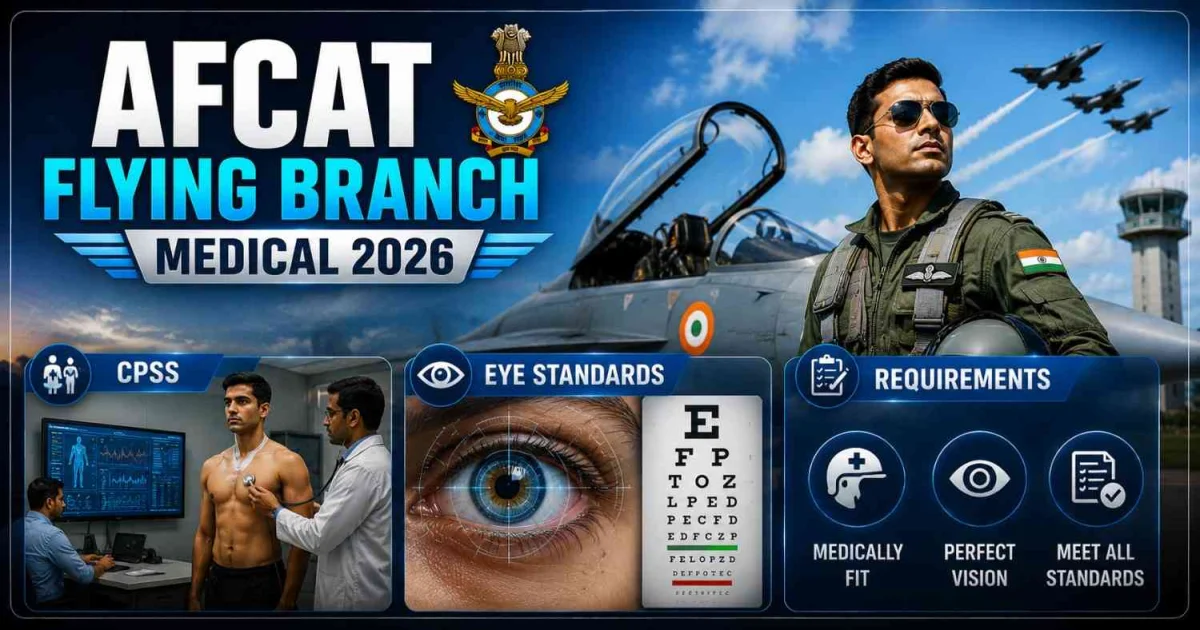
Medical fitness: Must clear the IAF medical board, including strict vision and physical standards
Check the Join Indian Air Force official page for the current notification cycle and any updates to eligibility criteria for 2026, since norms around how to become an air force pilot do get revised between cycles.
Entry Routes After 12th: NDA Is Your Primary Path
If you have just cleared your Class 12 board exams with PCM, the NDA exam UPSC is your one and only route into the IAF flying branch. AFCAT is not available at this stage because it requires a graduate degree. The NDA exam is conducted twice a year by the Union Public Service Commission. This is not a detail to overlook, particularly regarding AFCAT flying branch eligibility and the psychomotor aptitude test that follows later in selection.
Eligibility snapshot for IAF pilot entry after 12th through NDA:
-
Age: 16.5 to 19.5 years on the date of commencement of the course
-
Education: 12th pass or appearing, with Physics and Mathematics
-
Exam pattern: Mathematics (300 marks) and General Ability Test (600 marks), followed by SSB interview
Qualifying NDA makes you eligible for the three-year course at the National Defence Academy in Pune, after which successful cadets move to Air Force Academy Dundigal training for flying.
Entry Routes After Graduation: AFCAT, CDS, and Short Service Commission
Graduates have three distinct pathways into the IAF flying branch. AFCAT flying branch eligibility requires a graduation degree with Physics and Mathematics at 12th level, and candidates must be under 24 years of age at the time of course commencement.
-
AFCAT (Air Force Common Admission Test): Conducted by the IAF twice a year; covers reasoning, military aptitude, verbal ability, and numerical ability; leads to short service commission IAF for Flying Branch
-
CDS (Combined Defence Services): Conducted by UPSC; graduates up to 23 years can apply for the Air Force Academy entry; exam includes English, General Knowledge, and Elementary Mathematics
-
SSC Meteorology and other routes: Specific short service commission IAF entries exist for science graduates in non-flying branches, but the flying branch route remains AFCAT or CDS
NDA vs AFCAT vs CDS: Which Route Should You Choose?
The NDA vs AFCAT vs CDS decision depends entirely on your current education level and age. Use this comparison to pick the path that actually fits your situation.
-
NDA: 12th pass, age 16.5 to 19.5 years; earliest possible entry; leads to permanent commission; UPSC conducts it twice a year
-
AFCAT: Graduate, age up to 24 years; conducted by IAF; leads to short service commission with an option for permanent commission later; exam is generally considered more accessible than CDS
-
CDS: Graduate, age up to 23 years for AFA entry; conducted by UPSC; more competitive; permanent commission route
If you are still in Class 12, NDA is non-negotiable. Graduates who missed NDA or are slightly older should prioritise AFCAT. CDS suits graduates who prefer the UPSC route and are within the 23-year ceiling. For broader service context, see also our comparison of Indian Army vs Navy after 12th.
IAF Pilot Selection Process: From AFSB to Final Merit List
Regardless of the entry route, all candidates go through the Air Force Selection Board stages after clearing the written exam. The AFSB selection process follows a fixed sequence.
-
Written exam qualified (NDA, AFCAT, or CDS result declared)
-
AFSB Stage 1: Officer Intelligence Rating test and the PABT test IAF (for flying branch candidates only); non-qualifiers are screened out on Day 1
-
AFSB Stage 2: Psychological tests, Group Testing Officer tasks, and the personal interview board
-
Medical Board: Conducted at an IAF Central Medical Establishment; strict aviation medical standards apply
-
Merit List: Final selection based on written score, AFSB marks, and medical fitness
The PABT Test Explained: What It Tests and What Happens If You Fail
The pilot aptitude battery test is a computerised assessment conducted at Stage 1 of the AFSB, designed to measure whether a candidate has the natural aptitude to fly military aircraft. It evaluates psychomotor aptitude, instrument reading accuracy, multi-tasking under time pressure, and hand-eye coordination through a series of simulated tasks.
The most critical rule to know: the PABT test IAF is a one-attempt-only test. A candidate who fails the PABT is permanently barred from the IAF flying branch across all future attempts and all entry routes, including NDA and AFCAT. PABT failure does not, however, bar you from IAF ground duty branches such as Administration, Logistics, or Accounts. Knowing this distinction early prevents candidates from wasting attempts on flying branch applications after a failed PABT.
IAF Pilot Medical Standards: Vision, Height, and Fitness Requirements
IAF pilot medical standards for the flying branch are among the strictest of any defence service entry. The checklist below covers the primary requirements.
-
Distant vision: 6/6 in each eye without glasses (corrected vision may be acceptable in some entries; verify current norms before applying)
-
Near vision: N-5 in the better eye and N-10 in the worse eye
-
Colour vision standard pilot: CP-1 (normal colour perception); any colour blindness disqualifies a flying branch applicant
-
Height: Minimum 162.5 cm; sitting height between 81.5 cm and 96 cm
-
Weight: Proportionate to height as per IAF norms
-
No history of fits, psychiatric illness, or substance dependency
IAF Pilot Training: Stages at AFA Dundigal and the Wings Ceremony
Candidates who clear all selection stages report to Air Force Academy Dundigal training in Telangana, the sole flying training institution for IAF commissioned officers.
-
Stage 1 (Basic Flying Training): Trainees learn on the PC-7 Mk II turboprop; covers basic airmanship, navigation, and instrument flying; approximately one year
-
Stage 2 (Advanced Flying Training): Trainees move to Hawk Mk 132 advanced jet trainers; includes formation flying, combat manoeuvres, and weapons training; approximately one year
-
Wings Ceremony AFA Dundigal: Held on successful completion of training; the Chief of Air Staff or a senior officer presents Wings to each new pilot, marking their formal entry as a commissioned flying officer
Total flying training at AFA spans approximately two years before a pilot is posted to an operational squadron.
IAF Pilot Career Progression: Ranks, Pay, and What Comes After Wings
IAF pilot rank progression begins at Flying Officer immediately after Wings and follows a structured ladder based on years of service and performance.
-
Flying Officer (on commissioning): Level 10 under 7th Pay Commission defence pay; basic pay starting at approximately Rs 56,100 per month
-
Flight Lieutenant (after about 2 years): Level 10B
-
Squadron Leader (after about 6 years): Level 11
-
Wing Commander (after about 13 years): Level 12A
-
Group Captain, Air Commodore, and above for high-performers in the permanent commission stream
Short service commission IAF officers serve an initial tenure of 10 to 14 years with an option to apply for permanent commission. Flying allowances and field postings add significantly to total compensation beyond base pay under the 7th Pay Commission structure. The difference between IAF ground duty vs flying branch in pay comes down primarily to the flying allowance, which is exclusive to pilots and observers.
FAQs
Can I become an IAF pilot after 12th without NDA?
No. NDA is the only route into the Indian Air Force flying branch directly after Class 12. AFCAT and CDS both require a graduation degree. If you are between 16.5 and 19.5 years old and have PCM at 12th level, apply for the NDA exam UPSC in the nearest cycle.
What is the PABT test and what happens if I fail it?
The PABT, or pilot aptitude battery test, is a one-time computerised aptitude test at AFSB Stage 1 that measures psychomotor aptitude and multi-tasking ability. Failure permanently closes the flying branch, but you remain eligible for IAF ground duty branches in future attempts.
What eye vision is required for the IAF pilot flying branch?
The colour vision standard for a pilot is CP-1, meaning normal colour perception. Distant vision must be 6/6 in each eye without glasses for most flying branch entries, and near vision must meet N-5 and N-10 norms as specified in the IAF flying branch medical standards.
What is the difference between AFCAT and CDS for the IAF flying branch?
AFCAT is conducted by the IAF and leads to short service commission; the age ceiling is 24 years. CDS is conducted by UPSC, carries a 23-year age ceiling for the Air Force Academy entry, and can lead to a permanent commission. Both require graduation with PCM at 12th level.
How long is IAF pilot training at AFA Dundigal?
Air Force Academy Dundigal training for the flying branch covers two broad stages over approximately two years. Stage 1 is basic flying on turboprop aircraft; Stage 2 is advanced flying on jet trainers. Successful completion earns the pilot their Wings at a formal Wings Ceremony AFA Dundigal.