AFCAT English Preparation 2026: Vocabulary, RC & Grammar Strategy
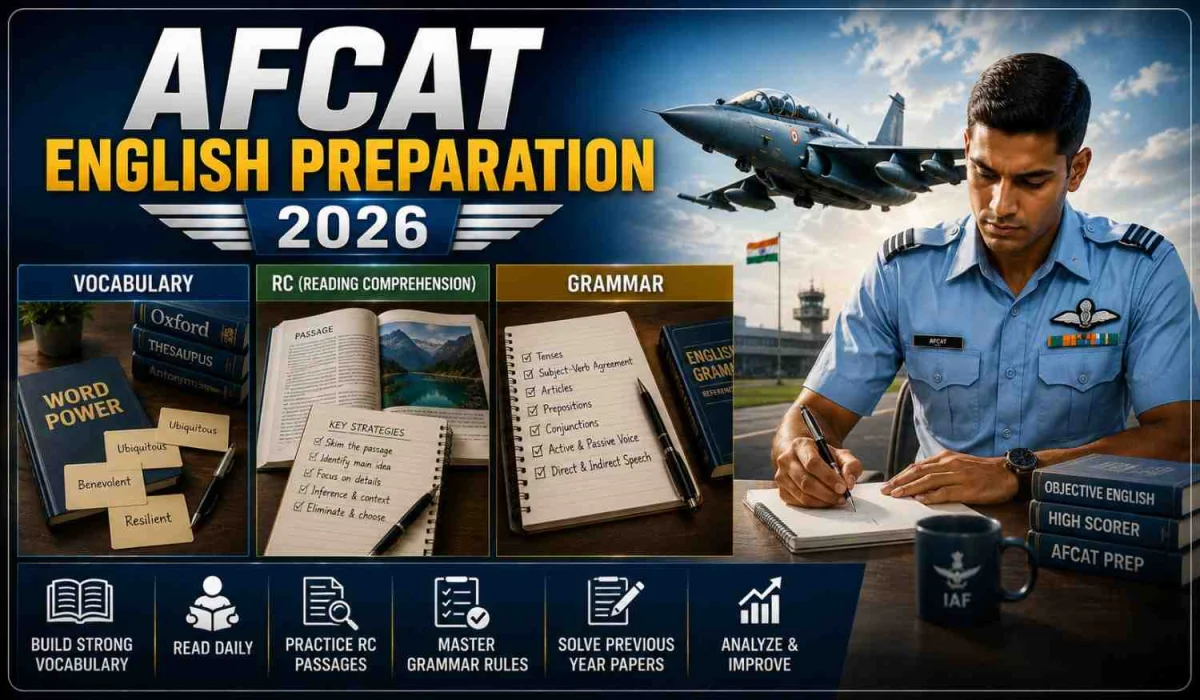
The English section in AFCAT is often underestimated by defence aspirants. Many students spend months preparing for reasoning, numerical ability, and current affairs while assuming English can be handled easily in the final weeks. However, when they actually attempt AFCAT mock tests, they realize that the English section is not as simple as it looks.
Unlike many other competitive exams where English remains basic and predictable, AFCAT English focuses heavily on vocabulary, contextual understanding, reading comprehension, and grammar accuracy. Candidates who do not read regularly or who have weak vocabulary often struggle to maintain speed and accuracy during the exam.
At the same time, English can become one of the most scoring sections in AFCAT if prepared correctly. Since it does not involve lengthy calculations like Maths or Numerical Ability, candidates who build strong reading habits and vocabulary can solve questions much faster and improve their overall score significantly.
The good part is that AFCAT English does not require advanced literature-level preparation. You do not need perfect spoken English or extremely difficult grammar knowledge. What you actually need is regular reading, vocabulary exposure, understanding of basic grammar rules, and consistent practice.
If you are preparing for AFCAT 2026 and want to improve your English section properly, this detailed guide will help you understand the right strategy for vocabulary, reading comprehension, grammar, and overall English preparation.
Recent AFCAT exam analyses continue to show that English remains one of the highest-scoring sections for candidates who prepare consistently.
Why AFCAT English Feels Difficult for Many Candidates
One of the biggest reasons candidates struggle in AFCAT English is lack of regular exposure to the language. Many students study English only for exams instead of making it part of their daily routine.
As a result, they face problems in understanding unfamiliar words, reading passages quickly, identifying grammar mistakes, and understanding sentence structure. Vocabulary becomes especially challenging because AFCAT often asks contextual synonym-antonym questions rather than extremely direct textbook-based questions.
Candidates who rely only on memorizing grammar rules usually realize that language understanding matters much more than theoretical knowledge. The reality is simple — English improves gradually through exposure and practice, not through last-minute cramming.
Understanding the AFCAT English Section
Before starting preparation, candidates should understand what AFCAT English actually tests.
The section mainly focuses on:
The questions are objective, but they test practical understanding rather than rote learning. Most candidates notice that AFCAT English feels slightly vocabulary-heavy compared to other defence exams. This is why reading habits play a major role in scoring well.
Vocabulary Preparation Strategy for AFCAT 2026
Vocabulary is probably the most feared part of AFCAT English preparation. Many aspirants feel overwhelmed when they see long word lists and difficult synonyms online. Because of this, students often start memorizing hundreds of random words without understanding how vocabulary actually improves.
The truth is that vocabulary building is a slow process. It improves through repeated exposure, revision, and contextual understanding. Trying to memorize too many difficult words at once usually fails because the brain forgets them quickly.
Why Vocabulary Matters So Much in AFCAT
Vocabulary directly affects multiple areas of the English section. Strong vocabulary helps in synonyms and antonyms, reading comprehension, sentence completion, idioms and phrases, and context-based understanding.
Candidates with weak vocabulary often waste extra time understanding questions, which affects overall exam speed. This is why vocabulary preparation should become a daily habit rather than a one-time activity.
Best Way to Improve Vocabulary
One of the smartest methods for vocabulary improvement is reading regularly. When candidates read newspapers, editorials, or English articles daily, they naturally encounter new words repeatedly. This repeated exposure improves memory much more effectively than memorizing isolated word lists.
A good approach is:
-
Learn 10–15 new words daily
-
Write meanings with example sentences
-
Revise old words regularly
-
Use vocabulary in context instead of memorizing mechanically
Maintaining a vocabulary notebook can also help tremendously. Candidates should focus more on understanding how words are used inside sentences rather than simply remembering dictionary meanings.
Importance of Reading for AFCAT English
Reading is probably the single most effective habit for improving AFCAT English preparation. Many candidates search for shortcut tricks for English, but there is no real substitute for regular reading.
Reading improves vocabulary, comprehension speed, sentence understanding, grammar familiarity, and contextual interpretation. Even 20–30 minutes of daily reading creates major improvement over time.
Good reading sources include:
-
Newspaper editorials
-
Defence-related articles
-
English blogs
-
Magazine articles
-
Current affairs content
Candidates who read regularly usually perform much better in Reading Comprehension and vocabulary questions.
Reading Comprehension Strategy for AFCAT
Reading Comprehension is another important part of AFCAT English. Many students panic when they see RC passages because they assume the passages will be lengthy or difficult. However, the actual challenge is usually speed and concentration rather than complexity.
Why Candidates Struggle in RC
Most students struggle in RC because they read too slowly, translate every sentence mentally, lose concentration midway, or focus too much on individual words.
One common mistake is translating every English sentence into Hindi while reading. This slows down comprehension speed significantly. Instead, candidates should gradually train themselves to understand English directly without mental translation.
This habit takes time initially, but it improves reading speed massively.
Smart RC Solving Technique
While solving Reading Comprehension passages, candidates should first focus on understanding the overall idea instead of analyzing every sentence deeply.
A better strategy is:
-
Read the passage calmly
-
Identify the central theme
-
Understand the tone of the passage
-
Then solve questions carefully
This approach saves time and reduces confusion. Regular RC practice is extremely important because comprehension speed improves only through repetition.
Grammar Preparation Strategy for AFCAT
Grammar is one of the most scoring parts of AFCAT English if concepts are clear. Unlike vocabulary, grammar is rule-based. This means candidates can improve accuracy significantly through proper concept understanding and practice.
However, many students make the mistake of directly solving mock questions without learning grammar fundamentals properly.
Important Grammar Topics for AFCAT
Candidates should focus strongly on the following areas:
These topics frequently appear in AFCAT English sections. The key is not memorizing complicated grammar theory but understanding how grammar works in practical sentence construction.
Why Error Detection Practice Matters
Error detection questions are highly common in AFCAT. These questions test whether candidates can identify grammatical mistakes inside sentences.
The only way to improve here is regular practice. Candidates should solve grammar exercises daily because repeated exposure improves sentence familiarity and rule recognition automatically.
Over time, identifying errors becomes much faster and more natural.
Best Books for AFCAT English Preparation
Many aspirants waste time collecting too many resources. The smarter approach is using limited but reliable books consistently.
Candidates should avoid switching books repeatedly because consistency matters more than quantity.
Daily Study Routine for AFCAT English
One of the biggest mistakes candidates make is studying English randomly without structure. A balanced daily routine works much better.
Suggested Daily Routine
A simple and practical daily plan may include:
-
20 minutes vocabulary revision
-
30 minutes grammar practice
-
30 minutes reading practice
-
20 minutes mock question solving
Even 1–1.5 hours of focused English preparation daily can create strong improvement within a few months. Consistency matters far more than studying aggressively for one or two days.
Common Mistakes Candidates Make in AFCAT English
Many aspirants lose marks because of avoidable preparation mistakes. One common mistake is focusing only on grammar while ignoring reading habits. Another mistake is trying to memorize extremely difficult vocabulary without revision.
Some students also keep changing resources repeatedly, which creates confusion instead of improvement. The biggest mistake, however, is expecting English improvement overnight.
Language skills improve gradually through continuous exposure and practice.
How Much Time is Needed for AFCAT English Preparation?
The preparation time depends on your current English level.
For Beginners
Candidates with weak basics may need around 3–4 months of regular preparation to improve vocabulary, comprehension, and grammar accuracy comfortably.
For Average Students
Candidates with average English skills usually improve significantly within 2–3 months of consistent preparation and mock practice.
The important thing is regularity. Even small daily improvement creates major long-term results.
Final Tips for AFCAT English 2026
The smartest strategy for AFCAT English preparation is keeping the process simple and consistent.
Instead of trying to learn everything quickly:
-
Read daily
-
Learn vocabulary gradually
-
Revise regularly
-
Practice RC passages consistently
-
Improve grammar step by step
English is not a subject that improves through pressure and cramming. It improves through habit and repetition. Candidates who stay patient and consistent usually notice major improvement within a few months.
Conclusion
The AFCAT English section can become one of the highest-scoring parts of the exam if prepared properly. Vocabulary, reading comprehension, and grammar all improve naturally through consistent practice, regular reading, and smart revision.
Candidates who develop reading habits, strengthen vocabulary gradually, and practice grammar consistently usually perform much better during the actual exam.
The key is not studying English aggressively for a short period — it is building steady improvement every single day. With the right approach, AFCAT English can easily become your scoring advantage in 2026.
FAQs on AFCAT English Preparation 2026
Is AFCAT English difficult?
The level is moderate, but vocabulary questions can feel challenging without preparation.
Which book is best for AFCAT English?
SP Bakshi and Wren & Martin are commonly recommended for AFCAT preparation.
How can I improve vocabulary for AFCAT?
Daily reading, revision, and learning words in context work best.
Is Reading Comprehension important in AFCAT?
Yes, RC is very important because it tests both reading speed and understanding ability.
Can average English students score well in AFCAT?
Yes, with regular reading and consistent practice, average students can score very well.