AFCAT Flying Branch Medical 2026: CPSS, Eye Standards & Requirements
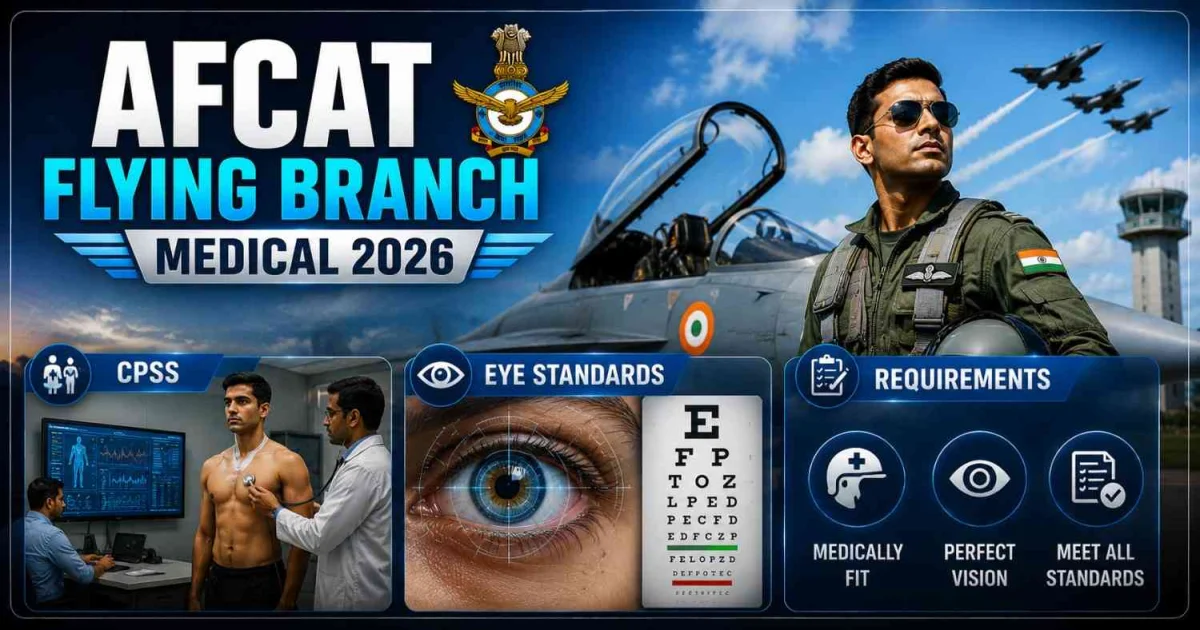
Clearing the AFCAT written exam and AFSB interview is a major achievement, but for Flying Branch aspirants, the journey does not end there. One of the toughest and most misunderstood stages of the entire selection process is the Flying Branch medical examination.
Every year, many candidates successfully clear the written exam and even perform well in the SSB interview, yet fail during the medical stage because they do not meet the strict standards required for pilot training. Unlike Ground Duty branches, the Flying Branch has extremely high medical and physical standards because Air Force pilots operate advanced aircraft in highly demanding operational conditions.
The Indian Air Force expects Flying Branch candidates to possess excellent eyesight, physical fitness, coordination, reflexes, and mental sharpness. Even small medical issues related to vision, body measurements, or neurological balance can become reasons for rejection.
Apart from medical testing, Flying Branch aspirants also need to clear the CPSS (Computerised Pilot Selection System), which is one of the most important pilot aptitude tests in the Air Force selection process.
Because of this, candidates preparing for AFCAT 2026 should understand the medical and CPSS process much earlier instead of waiting until after the SSB interview.
This detailed guide explains:
-
AFCAT Flying Branch medical standards
-
CPSS test details
-
Eye and vision requirements
-
Height and anthropometric standards
-
Common rejection reasons
-
LASIK and spectacle eligibility
-
Preparation tips for medicals and CPSS
Recent AFCAT and Indian Air Force guidelines continue to confirm that Flying Branch candidates must satisfy strict medical and visual standards before final selection.
Why Flying Branch Medical Standards Are So Strict
Many candidates wonder why the Flying Branch medical process is tougher than other defence entries.
The reason is simple military pilots operate under extreme physical and operational conditions. Fighter aircraft, helicopters, and transport aircraft involve high-speed maneuvers, altitude pressure, rapid reflexes, and precise coordination.
Even a minor issue related to vision, balance, or reaction time can affect operational safety.
Because of this, the Air Force follows extremely detailed medical screening procedures for Flying Branch candidates.
The purpose is not to reject candidates unnecessarily but to ensure operational safety and pilot performance.
What is CPSS in AFCAT Flying Branch?
One of the most important stages for Flying Branch aspirants is CPSS.
CPSS stands for Computerised Pilot Selection System.
This test evaluates whether a candidate possesses the natural aptitude and coordination required for pilot training.
The Indian Air Force clearly states that CPSS is conducted only for Flying Branch candidates recommended by the AFSB.
Why CPSS is Important
CPSS is not a normal written examination. It checks:
-
Hand-eye coordination
-
Multi-tasking ability
-
Reaction speed
-
Spatial orientation
-
Decision-making under pressure
The Air Force wants to identify candidates who can naturally adapt to flying-related challenges.
Unlike written exams, CPSS focuses more on practical aptitude rather than academic knowledge.
CPSS is a Once-in-a-Lifetime Test
One of the most important things candidates must understand is that CPSS can generally be attempted only once in a lifetime.
If a candidate fails CPSS, they cannot appear for Flying Branch pilot selection again in the future.
This is why candidates should take the test seriously and remain mentally calm during the process.
The official AFCAT guidelines also mention that CPSS is a once-in-a-lifetime assessment for Flying Branch aspirants.
What Happens During CPSS?
CPSS usually includes:
-
Computer-based coordination tasks
-
Control-based simulation activities
-
Reflex testing
-
Multi-task handling exercises
The test is designed to evaluate natural pilot aptitude rather than preparation-based memorization.
Candidates who remain calm and focused generally perform better than those who panic under pressure.
AFCAT Flying Branch Eye Standards 2026
Eyesight standards are among the most critical parts of Flying Branch medical eligibility.
Many candidates get screened out because of vision-related issues.
Minimum Vision Requirements
Flying Branch vision standards are very strict compared to Ground Duty entries.
Recent AFCAT medical standards mention:
Recent AFCAT medical documents continue to list CP-I colour vision and strict visual acuity standards for Flying Branch candidates.
Myopia, Hypermetropia & Astigmatism Limits
The Air Force also defines strict refractive error limits.
These standards are much stricter than Ground Duty branches because flying duties require near-perfect vision.
Are Spectacles Allowed in Flying Branch?
This is one of the most common questions among AFCAT aspirants.
Flying Branch candidates who habitually wear spectacles may face eligibility restrictions because the Air Force expects extremely high unaided vision standards.
Several recent AFCAT eligibility discussions continue to mention strict limitations regarding spectacles for Flying Branch aspirants.
Candidates should therefore verify their vision condition early instead of waiting until medical examination.
Is LASIK Allowed in AFCAT Flying Branch?
LASIK eligibility remains a common area of confusion.
Recent Air Force-related medical discussions indicate that LASIK or PRK candidates may be considered under specific conditions if all visual standards are met and required recovery timelines are satisfied.
However, Flying Branch medical rules are extremely strict, and eligibility depends on:
-
Surgery type
-
Recovery period
-
Corneal thickness
-
Stable vision standards
Candidates considering LASIK should consult certified ophthalmologists and official Air Force medical guidelines carefully.
AFCAT Flying Branch Height & Anthropometric Standards
Flying Branch eligibility also depends heavily on body measurements and anthropometric compatibility.
The Air Force checks whether candidates can safely fit inside cockpit and aircraft operational systems.
Minimum Height Requirement
The minimum acceptable height for Flying Branch candidates is generally:
Recent AFCAT eligibility standards continue to mention 162.5 cm as the minimum height for Flying Branch aspirants.
Leg Length, Sitting Height & Thigh Length
Apart from standing height, the Air Force also measures:
These standards ensure proper cockpit compatibility and safe aircraft operation.
Other Important Medical Requirements
Flying Branch medical testing goes far beyond eyesight and height.
Candidates are also evaluated for:
-
Hearing ability
-
Dental health
-
Spine condition
-
Cardiovascular fitness
-
Neurological stability
-
ENT conditions
Any serious abnormality may lead to temporary or permanent rejection.
Common Reasons for Flying Branch Medical Rejection
Many medically unfit cases happen because candidates ignore health issues during preparation.
Common rejection reasons include:
-
Poor eyesight
-
Colour blindness
-
Flat feet
-
Knock knees
-
Spine problems
-
Ear or sinus issues
-
Excessive refractive error
Some candidates discover these problems only after clearing SSB, which becomes emotionally difficult.
This is why early medical checkups are strongly recommended.
How to Prepare for AFCAT Flying Branch Medicals
Medical preparation should begin long before the final selection stage.
Get Eye Checkups Early
Candidates interested in Flying Branch should get professional eye testing done early during AFCAT preparation.
This helps identify:
-
Refractive error issues
-
Colour vision problems
-
LASIK eligibility concerns
Early awareness prevents last-minute surprises.
Maintain Overall Fitness
Flying Branch officers must maintain high physical standards.
Candidates should focus on:
-
Healthy weight
-
Regular exercise
-
Good posture
-
Proper sleep schedule
Fitness helps not only during medicals but also during training.
Avoid Panic During Medicals & CPSS
Many candidates perform poorly simply because of nervousness.
Medical and CPSS assessments require calmness and focus.
Staying mentally relaxed improves performance significantly.
Is Flying Branch Medical Really Tough?
Yes, Flying Branch medical standards are genuinely strict compared to most other defence entries.
However, the standards are not impossible.
Candidates who:
-
Meet natural physical requirements
-
Maintain fitness
-
Have healthy vision
-
Prepare mentally
usually clear the process successfully.
The key is understanding the requirements early rather than ignoring them.
Final Verdict
The AFCAT Flying Branch medical process is one of the most important stages of Air Force pilot selection. CPSS, eyesight standards, anthropometric measurements, and overall medical fitness all play critical roles in determining final eligibility.
Many candidates focus entirely on the written exam and SSB interview while ignoring medical preparation, which becomes a major mistake later.
The smartest approach is understanding Flying Branch requirements early, getting proper medical evaluation done in advance, and maintaining consistent physical fitness throughout preparation.
Flying in the Indian Air Force is one of the most prestigious careers in the country, but it also demands exceptional standards, discipline, and operational readiness.
FAQs on AFCAT Flying Branch Medical 2026
What is CPSS in AFCAT?
CPSS is the Computerised Pilot Selection System used to test pilot aptitude for Flying Branch candidates.
Can I attempt CPSS multiple times?
No, CPSS is generally a once-in-a-lifetime test.
What is the minimum height for AFCAT Flying Branch?
The minimum height requirement is generally 162.5 cm.
Are spectacles allowed in Flying Branch?
Flying Branch has strict vision standards, and habitual spectacle use may affect eligibility.
Is LASIK allowed for AFCAT Flying Branch?
LASIK may be permitted under specific medical conditions and Air Force guidelines.