AFCAT Syllabus 2027: Topic-Wise Weightage for GA, Verbal, Numerical and Reasoning

Quick summary
Know the AFCAT syllabus 2027 section by section: approximate questions and marks, the most asked topics in GA, English, Numerical Ability and Reasoning, and a study plan built around where the marks are.
Most aspirants preparing for the Air Force Common Admission Test already know the four sections. The real problem is that knowing the section names doesn’t tell you where to spend your limited study time. With 100 questions across General Awareness, Verbal Ability in English, Numerical Ability, and Reasoning and Military Aptitude, the AFCAT syllabus 2027 rewards candidates who know which topics come up most often, not just which topics are listed.
The AFCAT 1 2027 notification is out: the short notice was released on 2 November 2026, and applications are open from 12 November to 11 December 2026 on afcat.edcil.co.in. That makes now the right time to plan your preparation section by section.
This guide maps each section to its approximate question count, marks and most asked topics, so you can build a study plan around where the marks actually are.
AFCAT Syllabus 2027: Section-Wise Questions and Marks
The AFCAT exam pattern 2027 is a single two-hour online test with four sections. Under the AFCAT marking scheme, every correct answer earns +3 marks and every wrong answer costs −1 mark.
The IAF does not officially fix how many questions come from each section, so the split varies slightly between papers. Based on recent papers, the approximate AFCAT question distribution looks like this:
Candidates applying for Ground Duty (Technical) also take the Engineering Knowledge Test (EKT): 50 questions, 150 marks, in 45 minutes. Flying Branch and Ground Duty (Non-Technical) candidates do not take the EKT.
AFCAT General Awareness: High-Weightage Topics
General Awareness carries around 25 questions worth 75 marks. It’s the third-largest section by marks, but it has the widest spread of topics, which makes focused preparation important.
Based on recent papers, these areas come up most often:
History: Freedom movement, ancient and medieval India, and major world events
Geography: Physical features, rivers, climate, and world capitals
Defence and Military Awareness: Indian Air Force history, military exercises, aircraft, and tri-service operations
Science and Technology: Space missions, defence technology, and basic science
Current Affairs: Events from the last 12 months, especially defence, sports, awards and international relations
Others: Polity, environment, art and culture
Short on time? If you have less than eight weeks, start with defence awareness and current affairs. They overlap: a news story about a new IAF induction can be asked as both a defence and a current affairs question. Since AFCAT cut-off marks change every cycle, aim to score comfortably in GA rather than just scraping through.
Numerical Ability: Most Asked Topics
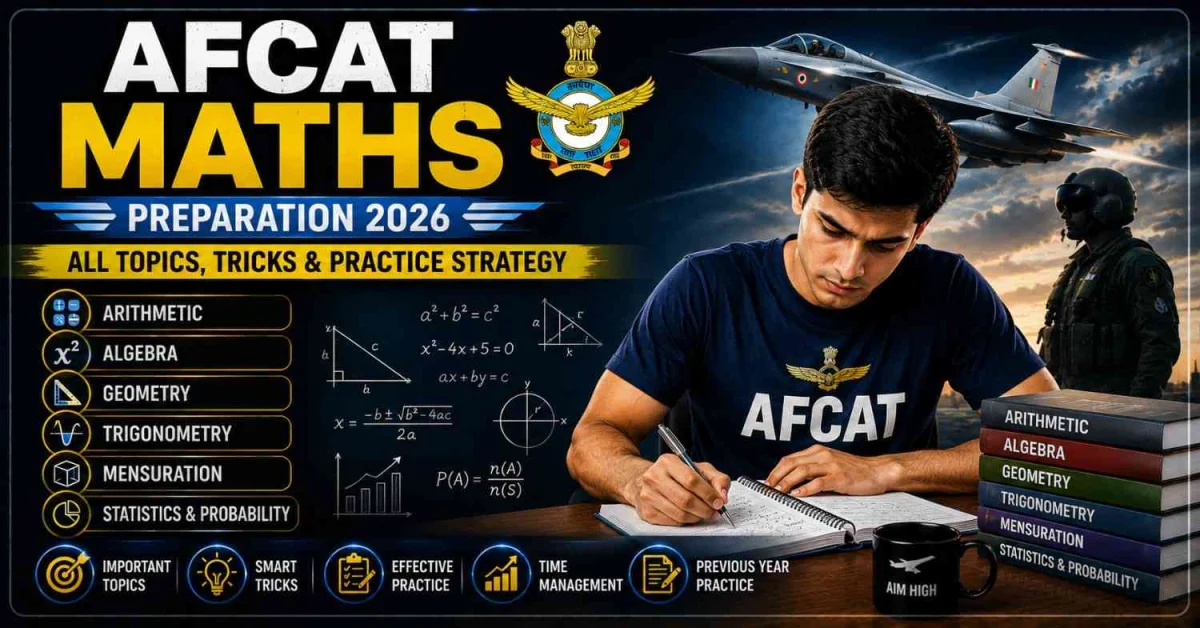
The Numerical Ability section has around 18 questions worth 54 marks. It’s the smallest section, but each question still carries 3 marks, so solid preparation here protects your total score. The level is roughly Class 10.
Most frequently asked topics:
Decimal Fractions and Simplification
Average
Percentage
Profit and Loss
Ratio and Proportion
Simple Interest
Time and Work
Speed, Distance and Time
Speed, Distance and Time questions are usually moderate in difficulty, which makes them reliable scoring opportunities with regular practice.
Reasoning and Military Aptitude: Most Asked Topics
This section carries around 27 questions worth 81 marks, the second-highest after English. It’s split into two parts:
Verbal Reasoning:
Analogy
Coding-Decoding
Series (number and letter)
Odd one out
Spatial Ability (Non-Verbal):
Pattern Completion
Figure Classification
Dot Situation
Embedded Figures
Mirror and Water Images
Among the AFCAT reasoning most asked topics, Analogy, Coding-Decoding and Pattern Completion appear in almost every paper. Spatial questions are often quick to solve once you’ve practised enough of them, which makes this section one of the best places to gain marks.
Verbal Ability in English: What to Focus On
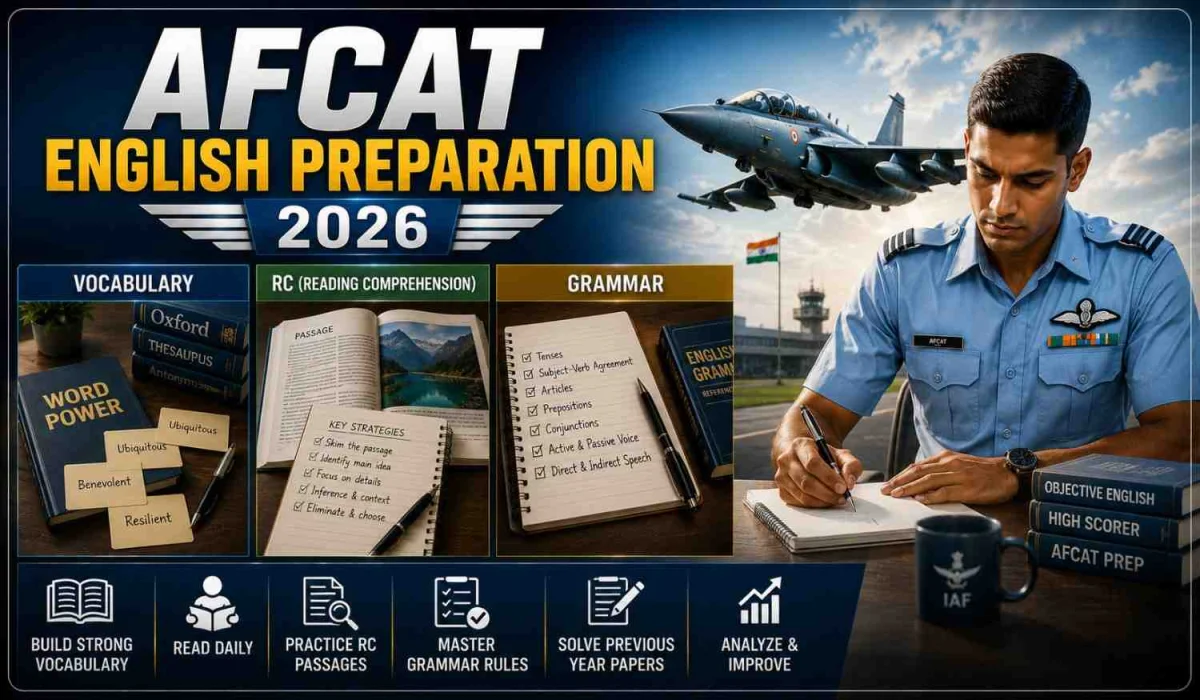
The English section carries around 30 questions worth 90 marks, the highest of all four sections. It deserves more attention than most aspirants give it.
Topics tested:
Reading comprehension
Error detection
Sentence completion
Synonyms and antonyms
Idioms and phrases
Cloze test
Vocabulary and comprehension usually make up the largest share of questions. Building vocabulary steadily works much better than cramming in the last week. A practical routine is learning 10–15 new words daily and practising one or two comprehension passages.
AFCAT 2027 Study Priority Plan Based on Marks
Knowing the AFCAT section-wise marks helps you decide where to spend your time. Here’s a simple priority order:
First priority: English and Reasoning. Together they account for around 57 questions and 171 marks, more than half the paper.
Second priority: General Awareness. Focus on History, Defence news and Current Affairs, which form the bulk of the GA section.
Third priority: Numerical Ability. Drill Percentage, Profit and Loss, Time and Work, and Speed-Distance-Time.
Pure random guessing gains nothing on average, because with four options the +3 for a lucky guess is cancelled by the −1 for the three likely wrong ones. But if you can eliminate even one option, attempting the question improves your expected score. So don’t guess blindly, and don’t skip questions you can narrow down either.
Good defence entrance exam preparation also means taking full-length timed mocks regularly, so the two-hour time limit feels routine on exam day. Confirm the final syllabus in the detailed AFCAT 1 2027 notification on afcat.edcil.co.in before finalising your plan.
FAQs
How many questions appear in each section of the AFCAT exam?
The AFCAT exam has 100 questions for 300 marks in 2 hours. The IAF does not fix the split officially, but recent papers have had roughly 30 questions in English, 25 in General Awareness, 18 in Numerical Ability and 27 in Reasoning and Military Aptitude.
What is the marking scheme for AFCAT 2027?
Each correct answer earns 3 marks and each wrong answer deducts 1 mark. Unattempted questions carry no penalty. Pure random guessing gains nothing on average, but eliminating even one option before answering improves your expected score.
What does the AFCAT numerical ability syllabus cover?
Numerical Ability covers Decimal Fractions, Simplification, Average, Percentage, Profit and Loss, Ratio and Proportion, Simple Interest, Time and Work, and Speed, Distance and Time, at roughly Class 10 level.
Which topics appear most in AFCAT verbal ability?
The English section tests reading comprehension, error detection, sentence completion, synonyms, antonyms, idioms and phrases, and cloze test. Vocabulary and comprehension usually make up the largest share of questions.
Is coding-decoding a high-priority reasoning topic in AFCAT?
Yes. Coding-Decoding, Analogy and spatial topics such as Pattern Completion and Figure Classification appear regularly in the Reasoning and Military Aptitude section and reward daily practice.
Tags
- AFCAT syllabus 2027
- AFCAT topic-wise weightage
- AFCAT General Awareness topics
- AFCAT reasoning most asked topics
- AFCAT exam pattern 2027
- AFCAT 1 2027 notification
- Air Force Common Admission Test
- Indian Air Force recruitment
- AFCAT marking scheme
- AFCAT section-wise marks
- military aptitude test
- defence entrance exam preparation
- AFCAT question distribution