AFCAT Preparation Books: Subject-Wise Books and Study Resources
Quick summary
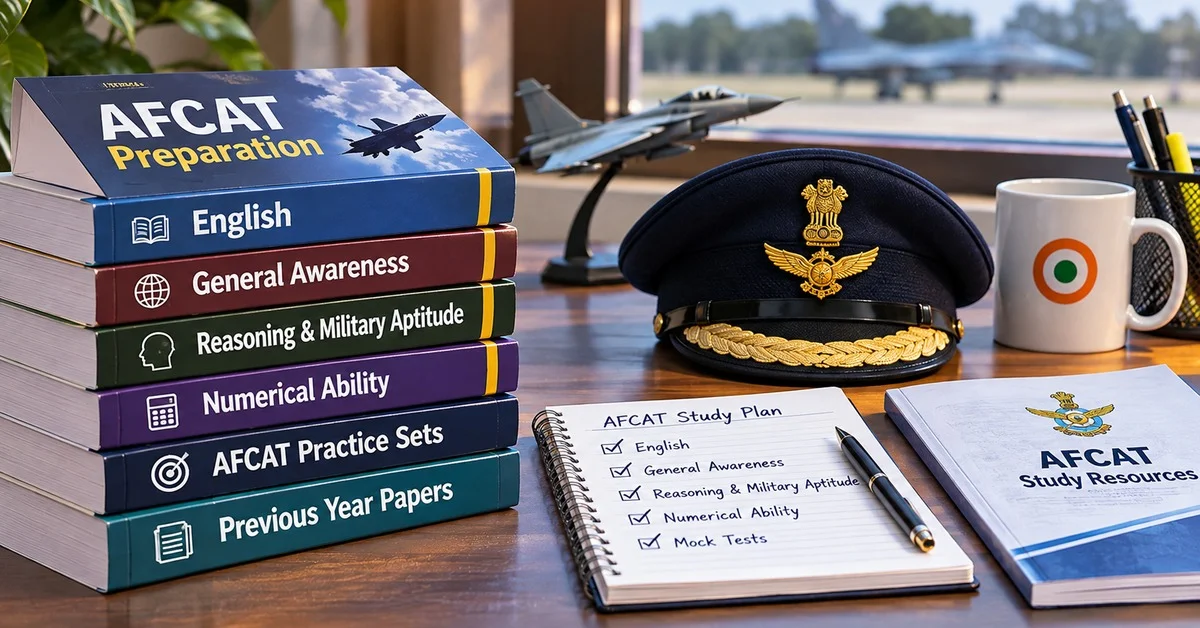
Not sure which books to buy for AFCAT? Here is a short subject-wise list for English, numerical ability, reasoning, GK and EKT, plus practice resources and a simple study plan.
AFCAT rewards strong basics and steady practice more than a long book list. Pick one or two books per section, finish them properly, then spend most of your time on mock tests.
Know the Paper First
AFCAT has 100 questions of 3 marks each (300 marks) in 2 hours, with 1 mark deducted for each wrong answer. The sections are General Awareness, Verbal Ability in English, Numerical Ability, and Reasoning and Military Aptitude. Technical branch candidates also take the Engineering Knowledge Test (EKT), which has 50 questions in 45 minutes. Patterns can change, so confirm everything in the current official notification.
English
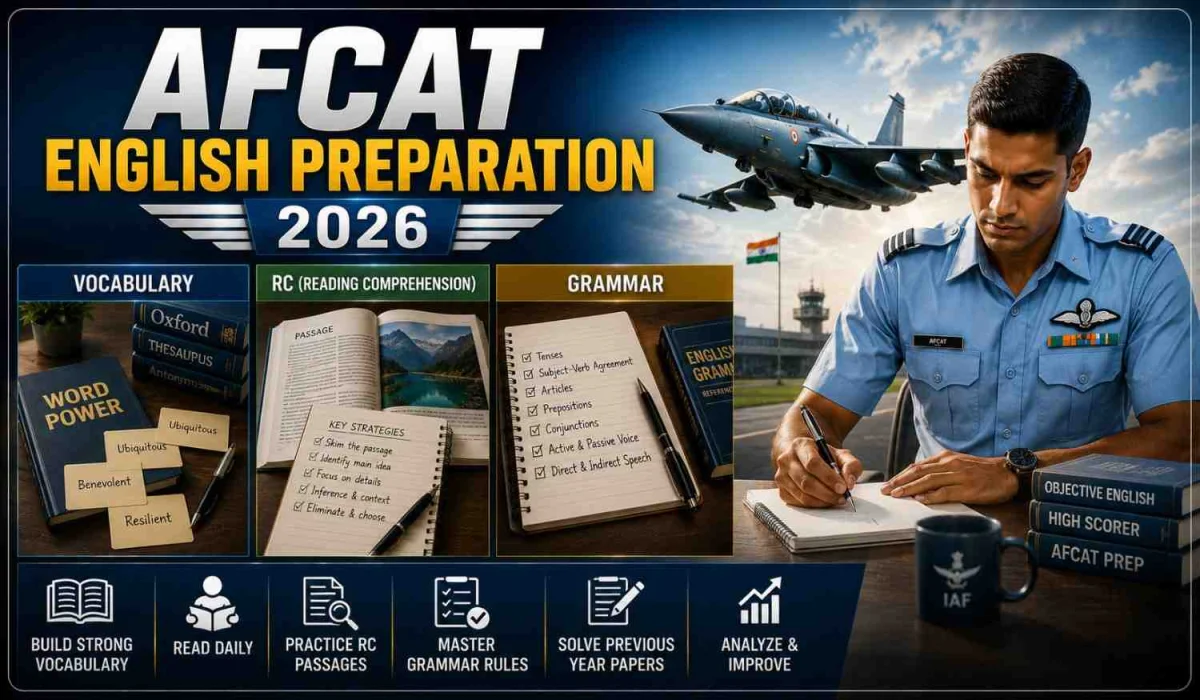
- Word Power Made Easy (Norman Lewis): builds vocabulary step by step.
- High School English Grammar and Composition (Wren and Martin): covers grammar rules.
- Objective General English (S.P. Bakshi): objective practice on comprehension, error spotting and synonyms.
Read one newspaper editorial daily for 20 minutes. It improves comprehension speed more than any single book.
Numerical Ability
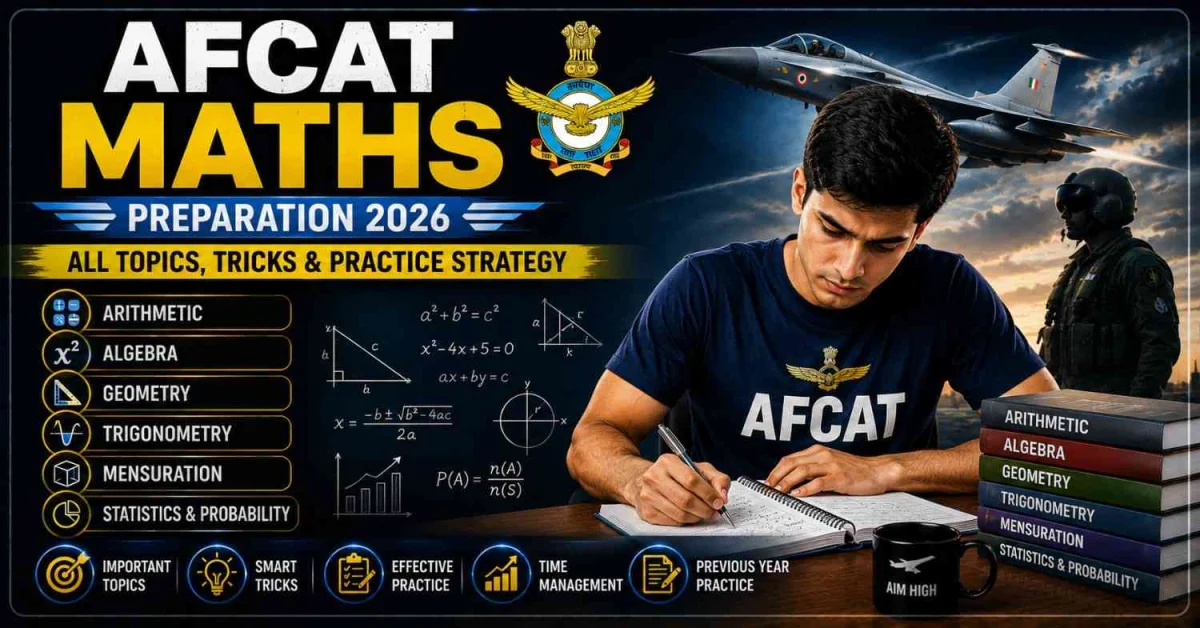
- Quantitative Aptitude (R.S. Aggarwal): concepts plus a large question bank.
- Fast Track Objective Arithmetic (Rajesh Verma): shortcuts and speed practice.
- NCERT Maths, Classes 6 to 10: use only if your basics are weak.
Focus on percentages, ratio, average, time and work, speed and distance, interest, and number system. Learn tables up to 20 and squares up to 30, because speed decides your score here.
Reasoning and Military Aptitude
- A Modern Approach to Verbal and Non-Verbal Reasoning (R.S. Aggarwal): the standard practice book.
- Previous year papers: the best source for Military Aptitude question styles, such as patterns, directions, series and spatial questions.
General Awareness
- NCERT books (Classes 6 to 12): history, geography, polity and science basics.
- Lucent's General Knowledge: for quick revision.
- Newspaper, PIB and a monthly current affairs magazine: for current affairs.
- Defence topics: Air Force aircraft, exercises, bases and defence news. Make short notes.
EKT (Technical Branches)
Use your own college or diploma books for Mechanical, Electrical, Electronics or Computer Science. Revise from semester notes and practice objective questions. GATE-style objective books also help.
Practice Resources
- Solved previous papers and mock tests: guides from Arihant and Disha are commonly used. Buy the latest edition.
- Official site (afcat.cdac.in): for notification, syllabus and pattern.
- Error notebook: write every mistake and the correct method. Review it weekly.
Simple 3-Month Plan
- Month 1: finish basics in all four sections.
- Month 2: topic-wise practice and current affairs notes.
- Month 3: full-length timed mocks, then analyse each one.
FAQs
Which books are best for AFCAT preparation?
Word Power Made Easy and Wren and Martin for English, R.S. Aggarwal for maths and reasoning, and NCERT plus Lucent's for General Awareness. Add previous papers and mock tests.
Are NCERT books enough for AFCAT General Awareness?
NCERT gives a strong base, but you also need current affairs and defence-related news. Combine both.
Do I need separate books for the AFCAT EKT?
Yes, for technical branches. Use your engineering core subject books and objective practice questions.
How many books should I follow?
One or two per section is enough. Finishing fewer books and doing more mocks works better than starting many.
Tags
- AFCAT preparation books
- AFCAT books subject wise
- best books for AFCAT
- AFCAT English books
- AFCAT maths books
- AFCAT reasoning books
- AFCAT general awareness books
- AFCAT EKT books
- AFCAT study material
- AFCAT previous year papers
- AFCAT mock tests
- Word Power Made Easy
- R.S. Aggarwal reasoning