AFCAT Coaching vs Self Study: What Toppers Actually Recommend
AFCAT Coaching vs Self Study: What Toppers Actually Recommend
One of the biggest questions every AFCAT aspirant faces during preparation is whether to join coaching or prepare through self-study. Some students believe coaching is absolutely necessary to crack AFCAT, while others argue that online resources, YouTube lectures, and mock tests are enough.
This confusion becomes even stronger when candidates hear different success stories. One topper says they cracked AFCAT completely through self-study, while another credits coaching for providing discipline and proper guidance.
So, what actually works?
The truth is that both coaching and self-study can help candidates clear AFCAT successfully. However, the right choice depends on your learning style, discipline level, academic background, and preparation strategy.
Many defence aspirants make the mistake of blindly following trends instead of understanding what suits them personally. Some join expensive coaching institutes but never study seriously at home. Others rely completely on self-study but lack consistency and proper direction.
If you are preparing for AFCAT 2026 and are confused between coaching and self-study, this detailed analysis will help you understand what toppers actually recommend and which preparation approach may work best for you.
Discussions around competitive exam preparation consistently show that both coaching and self-study can succeed when combined with discipline, mock practice, and consistency.
Why AFCAT Preparation Feels Confusing for Beginners
AFCAT preparation often looks simple at first because the syllabus is not as vast as exams like UPSC Civil Services. However, once candidates begin preparation, they realize the exam tests multiple skills simultaneously.
AFCAT includes:
-
English
-
Reasoning
-
Numerical Ability
-
General Awareness
The challenge is not just understanding concepts but also managing speed, accuracy, and consistency.
This is why many beginners feel unsure about whether they need structured coaching support or whether self-study alone is enough.
What Coaching Actually Provides for AFCAT Aspirants
Many students assume coaching guarantees selection, but that is not true. Coaching is not a magic solution it is simply a structured support system.
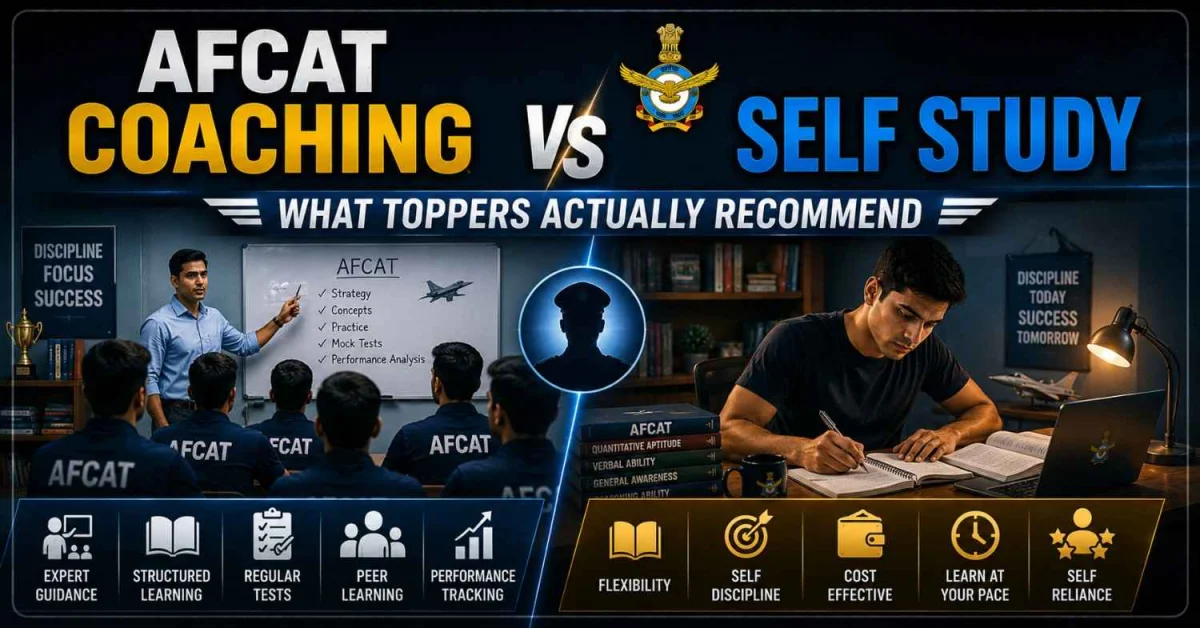
A good coaching institute mainly provides:
-
Structured study plan
-
Fixed schedule
-
Faculty guidance
-
Mock tests and analysis
-
Peer competition
-
Doubt-solving support
For students who struggle with discipline or consistency, coaching can create accountability.
Recent preparation discussions across competitive exam communities repeatedly highlight that coaching mainly helps with structure, planning, and mock analysis rather than replacing self-effort.
Structured Preparation Environment
One of the biggest advantages of coaching is structure.
Many self-study aspirants waste months figuring out:
-
What to study first
-
Which books to follow
-
Which topics are important
-
How much time to spend on each section
Coaching institutes simplify this process by creating organized schedules and study flow.
This saves time and reduces confusion.
Guidance and Mentorship
AFCAT preparation becomes easier when experienced mentors guide candidates.
Teachers can help students:
-
Identify weak areas
-
Improve time management
-
Learn shortcut methods
-
Avoid common mistakes
For beginners, this guidance can significantly improve preparation efficiency.
Peer Competition and Motivation
Another underrated advantage of coaching is the competitive environment.
When students prepare alongside serious aspirants, it naturally creates motivation and discipline.
Peer competition often pushes candidates to:
-
Study more consistently
-
Attempt regular mocks
-
Improve performance faster
This atmosphere can benefit students who struggle to study alone.
Problems With Coaching That Many Students Ignore
Although coaching offers benefits, it also has limitations that many aspirants overlook.
Coaching Cannot Replace Self-Study
One of the biggest myths is that attending classes alone is enough.
In reality, no coaching institute can crack AFCAT for you.
Many students attend classes regularly but never revise seriously at home. As a result, they remain dependent on teachers and fail to develop independent problem-solving ability.
Even toppers who join coaching spend most of their preparation time in self-study.
Expensive Coaching Does Not Guarantee Success
Another common mistake candidates make is assuming expensive coaching automatically means better selection chances.
Success in AFCAT depends far more on:
-
Consistency
-
Mock test practice
-
Revision
-
Daily effort
than classroom fees.
Many successful candidates have cleared AFCAT through affordable online resources and disciplined self-study.
Coaching Can Sometimes Waste Time
Not every student learns at the same speed.
In classroom environments:
-
Fast learners may feel slowed down
-
Weak students may feel pressured
-
Time may get wasted on already familiar topics
This is why some aspirants eventually shift toward self-study even after joining coaching.
What Self Study Actually Offers AFCAT Aspirants
Self-study has become extremely powerful in recent years because high-quality learning resources are now widely available online.
Today, aspirants can access:
-
YouTube lectures
-
Online mock tests
-
PDF notes
-
Current affairs apps
-
AFCAT PYQs
without joining physical coaching institutes.
This has changed the preparation landscape completely.
Flexibility and Personalized Learning
The biggest advantage of self-study is flexibility.
Candidates can:
-
Study according to personal schedule
-
Spend extra time on weak topics
-
Revise difficult concepts repeatedly
-
Learn at their own pace
This becomes especially useful for:
-
College students
-
Working professionals
-
Repeat aspirants
who cannot follow rigid classroom schedules.
Cost-Effective Preparation
Coaching fees can be expensive for many students.
Self-study allows aspirants to prepare using:
-
NCERT books
-
Free online lectures
-
Affordable test series
-
Standard preparation books
This makes preparation financially accessible to more candidates.
Better Independent Thinking
Self-study forces candidates to become more responsible and disciplined.
Students gradually learn:
-
Time management
-
Self-analysis
-
Problem-solving independence
-
Planning skills
These habits become valuable not only for AFCAT but also for future competitive exams and military life.
Biggest Challenges in Self Study
While self-study offers flexibility, it also demands strong discipline.
This is where many aspirants struggle.
Lack of Consistency
Many students begin preparation enthusiastically but lose consistency after a few weeks.
Without external accountability, candidates may:
-
Skip study sessions
-
Delay mock tests
-
Procrastinate frequently
This becomes one of the biggest reasons self-study fails.
Too Many Resources Create Confusion
The internet provides unlimited resources, but this can become a problem.
Many aspirants waste time collecting:
-
PDFs
-
Telegram notes
-
Multiple YouTube channels
-
Random mock materials
instead of actually studying consistently.
Too many resources often create more confusion than improvement.
No Expert Guidance
Self-study candidates sometimes struggle identifying:
-
Important topics
-
Exam trends
-
Weak areas
-
Strategy mistakes
Without proper analysis, preparation may become inefficient.
What AFCAT Toppers Actually Recommend
Most successful AFCAT candidates recommend a balanced approach rather than extreme dependence on either coaching or self-study.
Toppers usually agree on one important truth:
Coaching can provide direction, but self-study creates selection.
Many successful aspirants use a hybrid model where they:
-
Learn concepts from coaching or online lectures
-
Practice independently through self-study
-
Analyze mocks personally
-
Revise regularly on their own
Competitive exam discussions consistently show that discipline, consistency, and mock analysis matter more than preparation mode itself.
Who Should Choose Coaching for AFCAT?
Coaching may benefit candidates who:
-
Lack study discipline
-
Need regular guidance
-
Struggle with planning
-
Need doubt-solving support
-
Prefer classroom learning environments
Beginners with weak basics often improve faster with structured guidance initially.
Who Should Choose Self Study?
Self-study may work best for candidates who:
-
Are self-disciplined
-
Can follow schedules independently
-
Already have basic aptitude clarity
-
Prefer flexible study hours
-
Can analyze mocks honestly
Many serious aspirants successfully clear AFCAT through self-study alone.
Is Online Coaching Better Than Offline Coaching?
In recent years, many aspirants have shifted toward online coaching because of flexibility and affordability.
Online coaching offers:
-
Recorded lectures
-
Flexible timings
-
Lower fees
-
Access from anywhere
However, offline coaching may still help students who need strict discipline and physical classroom environments.
The best option depends on personal learning style.
The Hybrid Model: What Most Serious Aspirants Follow
Today, many serious AFCAT aspirants follow a hybrid strategy.
This approach combines:
-
Online/offline guidance
-
Self-study practice
-
Mock test analysis
-
Independent revision
The hybrid model often provides the best balance between structure and flexibility.
Common Mistakes Candidates Make
Many aspirants fail not because of coaching or self-study choice, but because of poor habits.
Some common mistakes include:
-
Depending completely on coaching
-
Ignoring mock tests
-
Switching resources constantly
-
Studying without revision
-
Avoiding self-analysis
No preparation method works without consistency.
Final Verdict: Coaching vs Self Study for AFCAT
There is no universal answer to whether coaching or self-study is better for AFCAT.
Coaching provides:
-
Structure
-
Guidance
-
Accountability
-
Competitive environment
Self-study provides:
-
Flexibility
-
Independence
-
Cost efficiency
-
Personalized learning pace
The best preparation method is the one that keeps you disciplined, consistent, and focused for months.
Most toppers ultimately agree that success in AFCAT depends less on coaching and more on:
-
Daily effort
-
Smart revision
-
Mock practice
-
Self-discipline
Whether you choose coaching, self-study, or a hybrid approach, your consistency will decide your result.
FAQs on AFCAT Coaching vs Self Study
Can I crack AFCAT without coaching?
Yes, many candidates clear AFCAT successfully through self-study and mock practice.
Is coaching necessary for AFCAT beginners?
Not always, but coaching may help beginners who need structure and guidance.
Which is better: online or offline coaching?
It depends on your learning style and discipline level.
What do AFCAT toppers recommend?
Most toppers recommend a balance of guidance, mock practice, and strong self-study.
Is self-study enough for AFCAT Maths?
Yes, with regular practice and proper resources, self-study can be enough.