AFCAT 1 2027: What to Do After Applying: Exam Preparation and AFSB Roadmap

Applied for AFCAT 1 2027? This AFCAT roadmap walks you through the exam pattern, syllabus priorities and a 6-week study schedule, then covers the AFSB selection process, PPDT, CPSS for pilots, GTO tasks and the personal interview.
Submitting your AFCAT application is the easy part. The real question every serious candidate faces immediately after is: what do I do now, and in what order? This AFCAT roadmap answers that question with a structured, phase-by-phase plan that takes you from the day after application all the way to the AFSB conference board. Follow it sequentially and you will never face the paralysis of not knowing what to study next.
AFCAT 1 2027 preparation rewards candidates who treat the written exam and the AFSB as two distinct phases with their own calendars, rather than one blurred stretch of study. The sections below build that clarity, one stage at a time.
Your Two-Phase Roadmap at a Glance
The entire journey from application to selection breaks into two clean phases. Keeping these phases mentally separate helps you avoid the common mistake of jumping between exam prep and AFSB drills without mastering either.
-
Phase 1 (Weeks 1 to 6): Written exam preparation covering the full AFCAT syllabus 2027, mock tests, and paper analysis. Your goal here is to clear the written exam and cross the AFCAT cut-off marks.
-
Phase 2 (Weeks 7 onward): AFSB readiness, covering psychology tests, Group Testing Officer tasks, PPDT preparation, CPSS for pilot aspirants, and the personal interview.
Most competitor guides cover one phase in isolation. This roadmap connects both, so you know exactly when to switch focus. According to the official AFCAT portal, shortlisted candidates are called for AFSB after written results are declared, giving you a defined window for each phase.
AFCAT 1 2027 Exam Pattern and Marking Scheme
Understanding the AFCAT exam pattern before opening a single textbook prevents wasted effort. The Air Force Common Admission Test is a 2-hour computer-based exam with 100 questions carrying a maximum of 300 marks.
The marking scheme is straightforward: every correct answer earns +3 marks and every incorrect answer deducts 1 mark. There is no penalty for unattempted questions, so strategic skipping is a legitimate tool on exam day.
The paper is divided into four sections:
-
General Awareness (GK)
-
Verbal Ability in English
-
Numerical Ability
-
Reasoning and Military Aptitude
Engineering branch aspirants sit an additional paper called the EKT (Engineering Knowledge Test), a 45-minute, 50-question test specific to their engineering discipline. The EKT engineering knowledge test is conducted immediately after the main AFCAT paper. Candidates who do not meet the section-wise AFCAT cut-off marks will not be shortlisted regardless of their total score, so no section can be ignored entirely. Check the detailed AFCAT cut-off data to set realistic targets per section before Week 1 begins.
Subject-wise AFCAT Syllabus and Study Priority
The AFCAT syllabus 2027 spans four subjects, each with distinct sub-topics and approximate weightage. Mapping your time to that weightage is the single most effective study decision you can make early on.
General Awareness typically carries the highest weightage and covers Indian history, geography, civics, defence and military news, sports, and science. Current affairs from the past 12 months appear frequently. This section, alongside Reasoning, historically pushes candidates past the cut-off threshold.
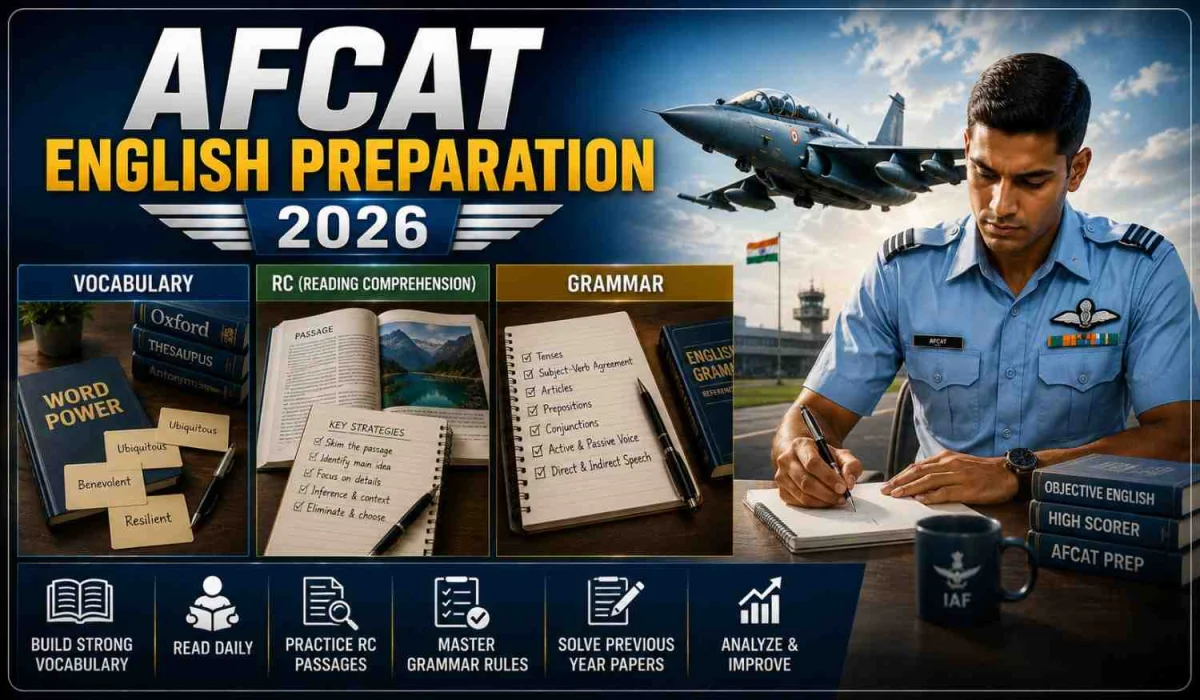
Verbal Ability tests comprehension, grammar, vocabulary, and error spotting. In the verbal ability defence exam context, candidates consistently underestimate this section and drop easy marks on fill-in-the-blank and sentence completion questions.
Numerical Ability covers arithmetic, time-distance, percentages, ratio, and basic algebra. Numerical ability AFCAT questions are not advanced mathematics, but they are time-sensitive, making speed just as important as accuracy.
Reasoning and Military Aptitude includes spatial, verbal, and non-verbal reasoning along with the Officer Intelligence Rating test component that measures logical deduction speed.
For engineers, the EKT engineering knowledge test runs as a parallel track and covers core concepts from Mechanical, Computer Science, or Electronics streams depending on your branch.
Phase 1 Study Plan: Week-by-Week AFCAT Preparation
A focused six-week AFCAT study schedule removes ambiguity and builds subject depth progressively. Here is the recommended structure:
-
Week 1: General Awareness foundation. Cover static GK across history, geography, and civics, and begin a daily current affairs habit using a reliable news source. Spend 30 minutes daily on defence news specifically.
-
Week 2: Verbal Ability. Work through grammar rules, practice comprehension passages, and build a vocabulary list of 10 new words daily. Engineers should begin EKT topic mapping simultaneously.
-
Week 3: Numerical Ability. Drill core arithmetic formulas and time each practice set strictly. Allocate no more than 72 seconds per numerical question during practice to simulate real conditions.
-
Week 4: Reasoning and Military Aptitude. Focus on spatial reasoning and series-based questions. The Officer Intelligence Rating test component rewards speed, so timed drills matter more than lengthy theory review here.
-
Week 5: Full-length mock tests. Sit one complete mock test every two days under timed conditions. After each test, categorise errors as conceptual, careless, or time-related before touching the next paper.
-
Week 6: Revision and weak-area targeting. Use your error logs from Week 5 to identify the two weakest sub-topics per section and revise only those. Avoid starting new material this week.
EKT aspirants should fold 45 minutes of engineering revision into Weeks 3, 4, and 5 without compressing the core AFCAT schedule.
AFSB Selection Process: Every Stage Explained
The AFSB selection process is a structured, multi-day assessment conducted at Air Force Selection Boards across India. It operates in two stages, and only candidates who clear Stage 1 are permitted to continue.
Stage 1 (Day 1): AFSB Stage 1 screening consists of two tests conducted on the first day:
-
The Officer Intelligence Rating (OIR) test, a verbal and non-verbal reasoning paper designed to measure cognitive speed and accuracy.
-
The PPDT (Picture Perception and Discussion Test), in which candidates write a short story about an ambiguous image and then discuss it in a group.
Candidates who do not clear Stage 1 are screened out on Day 1 and sent home. Those who qualify proceed to Stage 2.
Stage 2 (Days 2 to 5) covers:
-
Psychology tests (Thematic Apperception Test, Word Association Test, Situation Reaction Test, Self-Description)
-
Group Testing Officer tasks (outdoor and indoor GTO exercises)
-
Personal Interview with a Psychologist and an IO (Interviewing Officer)
-
Conference Board, where all assessors finalise the recommendation
The entire Indian Air Force officer selection through AFSB assesses Officer-Like Qualities across all three assessors simultaneously, so performance in one activity shapes the overall picture they build of you.
How to Prepare for PPDT: Picture Perception and Discussion Test
PPDT preparation is one area where deliberate, structured practice produces visible improvement within two weeks. Many candidates treat it as an improvised activity and drop marks that are genuinely available to them.
The PPDT involves viewing an ambiguous image for 30 seconds, writing a short story in 4 minutes, and then taking part in a group discussion where all candidates narrate their stories and arrive at a common story together.
Story-writing rules that assessors reward:
-
Create a positive hero who takes clear, decisive action. Avoid passive or victim characters.
-
Give your story a defined theme and a logical resolution within three sentences: situation, action, outcome.
-
Keep the character's age, mood, and background consistent with what you actually see in the image.
During the group discussion: Assert your story's position clearly within the first 30 seconds. Build constructively on others' narratives rather than dismissing them. The Officer-Like Qualities assessed here are leadership and social adaptability, specifically your ability to guide the group toward a coherent common story without dominating or going silent.
Collect ambiguous images online, write timed stories, and run mock group discussions with fellow aspirants or in a study group. Ten practice rounds over two weeks will produce a noticeable shift in your confidence and structure.
CPSS: What Pilot Aspirants Must Know
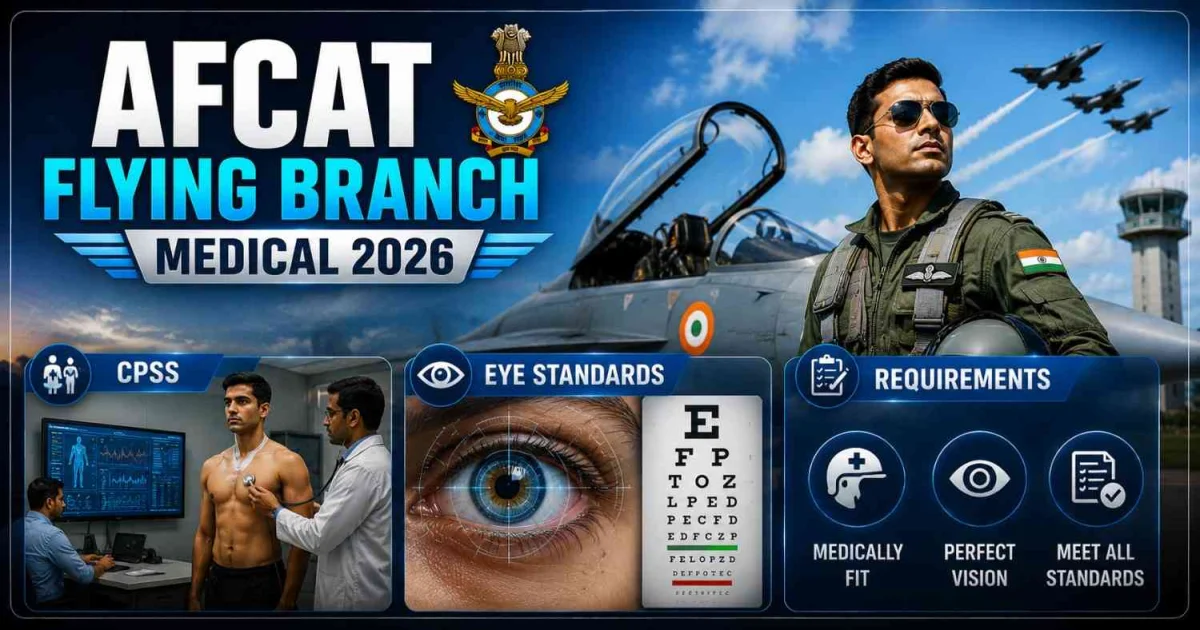
The CPSS test AFSB, or Computerised Pilot Selection System, is mandatory for candidates applying to the Flying Branch. It is conducted at designated AFSBs and typically takes place on Day 1 of Stage 2.
The CPSS test AFSB evaluates three cognitive and psychomotor dimensions:
-
Psychomotor coordination: The psychomotor coordination test measures your ability to control multiple inputs simultaneously, mimicking the dual-task environment of a cockpit.
-
Instrument comprehension: You will read aviation instruments and interpret flight attitude, altitude, and heading from graphical displays.
-
Spatial reasoning: Tasks assess your ability to mentally rotate aircraft positions and determine orientation in three dimensions.
No prior flying experience is required or expected. Candidates who practise instrument-reading exercises using free online attitude indicator simulators consistently report greater comfort during the actual test. Spend at least 20 minutes daily in Weeks 6 and 7 on instrument comprehension drills. A candidate who fails CPSS at one AFSB is not eligible to appear for it again, which makes thorough preparation a one-shot priority.
AFSB Personal Interview: Preparation and Officer-Like Qualities
The personal interview at AFSB is not a traditional job interview. It is a structured conversation designed to verify the personality profile that the psychologist and GTO have already built from your earlier assessments. The interviewing officer will probe for consistency between your PIQ form answers, your psychology test responses, and what you say in the room.
The PIQ form AFSB refers to the Personal Information Questionnaire you fill out on Day 1 of Stage 2. Every answer you write there becomes a potential interview question. Know your PIQ form answers cold, meaning you can speak about every hobby, achievement, and family detail you have listed without hesitation.
Expect questions across four themes:
-
Self-awareness: your strengths, weaknesses, and formative experiences
-
Motivation for IAF: specific reasons rooted in your background, not generic patriotism statements
-
Current affairs: recent defence, national, and international events
-
Situation-based OLQ assessment: hypothetical scenarios to test your decision-making and Officer-Like Qualities under pressure
Prepare a structured self-narrative of three to four minutes that covers your background, why you chose the Air Force, and what you bring to the service. Rehearse it until it sounds natural, not memorised.
Phase 2 Prep Calendar: AFSB Readiness in 4 Weeks
Once your written exam is over and results are awaited, shift entirely to AFSB preparation. This four-week block runs parallel with your result wait period and ensures you arrive at the AFSB fully prepared.
-
Weeks 1 and 2: Focus on psychology test practice. Write Thematic Apperception Test stories daily, complete Word Association Test word lists, and answer Situation Reaction Test booklets under timed conditions. Fill out a practice PIQ form in full and review it for consistency and clarity.
-
Week 3: Shift to Group Testing Officer tasks. Study the structure of outdoor GTO activities, including Command Task, Group Obstacle Race, and Progressive Group Task, and run group discussion drills with peers. Focus on building assertive, collaborative communication habits rather than trying to dominate every exercise.
-
Week 4: Conduct mock interviews with a senior aspirant or mentor. Revise current affairs from the preceding three months with a specific focus on Indian defence news. Run a final review of your PIQ form and self-narrative.
For pilot aspirants, weave CPSS instrument comprehension drills into Weeks 1 and 2 so you arrive sharp at the AFSB.
FAQs
What is the best AFCAT roadmap to follow after applying for AFCAT 1 2027?
Start with a six-week written exam plan: spend the first four weeks on subject-wise AFCAT 1 2027 preparation following the AFCAT syllabus 2027, then use Weeks 5 and 6 for full-length mock tests and mock test analysis. After results, shift to a four-week AFSB preparation block covering psychology tests, GTO tasks, and interview prep.
What are all the stages of the AFSB and how do I prepare for PPDT?
The AFSB selection process has two stages. AFSB Stage 1 screening consists of the Officer Intelligence Rating test and PPDT, and only qualifiers proceed to Stage 2. For PPDT preparation, write structured stories featuring a positive, action-taking hero, and practice assertive group discussion techniques that build on others' narratives rather than dismissing them.
What is the CPSS test at AFSB and what should a pilot aspirant expect?
The CPSS test AFSB is the Computerised Pilot Selection System, a computerised battery assessing psychomotor coordination, instrument comprehension, and spatial reasoning. It is mandatory for Flying Branch candidates and conducted at designated AFSBs. No prior flying experience is needed, but daily instrument-reading practice in the weeks before your AFSB significantly improves performance.
What is the AFCAT marking scheme and how does the cut-off affect my study plan?
The AFCAT exam pattern awards +3 for each correct answer and deducts 1 mark for each wrong answer across 100 questions in 2 hours. AFCAT cut-off marks operate section-wise, meaning a high total score does not compensate for a weak section. Prioritise General Awareness and Reasoning first, since these sections carry the highest weightage and historically determine whether a candidate clears the cutoff.