US Proposes Up to 25% Tariffs on Indian Goods, India Rejects Charge

Quick summary
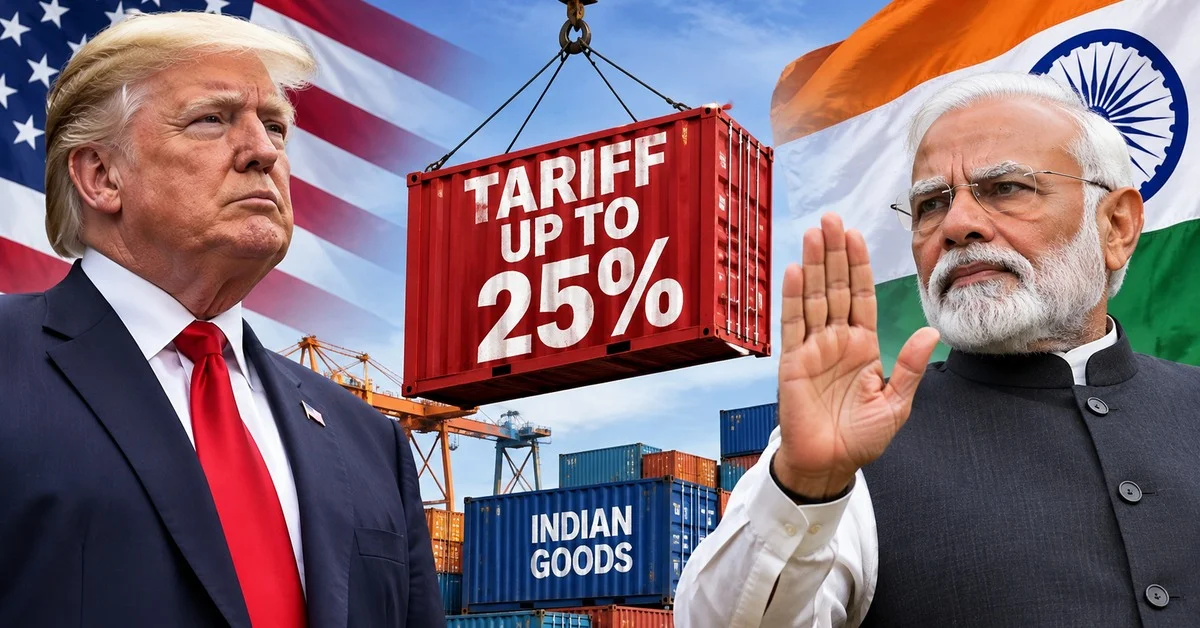
The US has proposed tariffs of up to 25 per cent on Indian goods over alleged excess manufacturing capacity. India has rejected the charge and wants trade concerns settled through negotiations.
The United States has proposed new tariffs of up to 25 per cent on Indian goods, adding fresh pressure to trade ties between the two countries. The Office of the United States Trade Representative (USTR) announced the plan on November 25, 2026, with exemptions for certain products.
India has rejected the reasoning behind the move. The tariffs are still a proposal and have not been imposed.
Why Has the US Proposed New Tariffs?
The proposal follows a Section 301 investigation into what Washington calls structural excess capacity in manufacturing. In simple terms, this refers to production capacity that is larger than demand, often supported by government policies.
US Trade Representative Jamieson Greer determined that the policies and practices of 14 economies, including India, are unreasonable and burden or restrict American commerce. China and the European Union are also on the list.
For India, the proposed rate of up to 25 per cent is net of existing Section 301 tariffs. The USTR has also proposed possible adjustments for duties under Section 301 and Section 232 of US trade law.
Trade Deal Could Lower Rate to 17%
Washington has also outlined a route to a lower tariff. The proposed rate could fall to 17 per cent if India agrees to a reciprocal trade pact that addresses the investigation's findings.
This links the tariff plan closely with the ongoing trade talks between New Delhi and Washington.
India Rejects Excess Capacity Claim
India's commerce ministry has maintained that the country has no structural excess capacity in any sector. The government is examining the USTR notice.
New Delhi has also said that US trade concerns should be handled through negotiations for the Bilateral Trade Agreement (BTA). It remains committed to working with Washington to conclude the agreement early.
Expert Sees Show of Authority by Trump
Foreign affairs expert Sushant Sareen believes US President Donald Trump is using the latest move to show that he remains in charge. In his view, Trump appears ready to start a wider trade war and has been openly threatening one.
Sareen pointed out that the pressure is not limited to India. He named China and the European Union as other targets and suggested that more countries could follow.
What Could It Mean for India-US Trade?
If imposed, the tariffs could affect Indian exports, supply chains and the course of trade negotiations. The impact on individual businesses will depend on the final rate and the list of exempted products.
The proposal also adds to uncertainty in global trade. For India, the next phase will be important as the government studies the notice and continues to support a negotiated solution. Progress on the trade agreement could play a major role in deciding what Indian exporters ultimately face.
Tags
- US tariffs on Indian goods
- India-US trade
- USTR
- Section 301 investigation
- structural excess capacity
- Jamieson Greer
- reciprocal trade pact
- Bilateral Trade Agreement
- Donald Trump