SSB Interview: How to Prepare for Rapid-Fire Questions
Quick summary
SSB interview rapid fire questions, SSB rapid fire questions and answers, how to answer SSB rapid fire questions, rapid fire round in SSB, SSB personal interview questions, SSB interview PIQ questions, SSB interview preparation, SSB interview mistakes
Rapid-fire questions are a quick run of short questions in the personal interview stage, drawn from your PIQ form. Prepare by knowing every line you wrote, answering in one or two short sentences, and practising aloud. Keep answers truthful and consistent. Confirm the current process on official recruitment sites.
You walk in calm, and then the questions arrive in a rush: school, marks, your best friend, your favourite sport. Pause for two seconds and you feel behind. Most defence aspirants hit this wall at least once.
This guide covers SSB interview rapid fire questions the way the board uses them. You'll see where they fit, which topics to prepare, ten sample answers, a practice method and the mistakes to avoid.
What Are Rapid-Fire Questions in the SSB Interview?
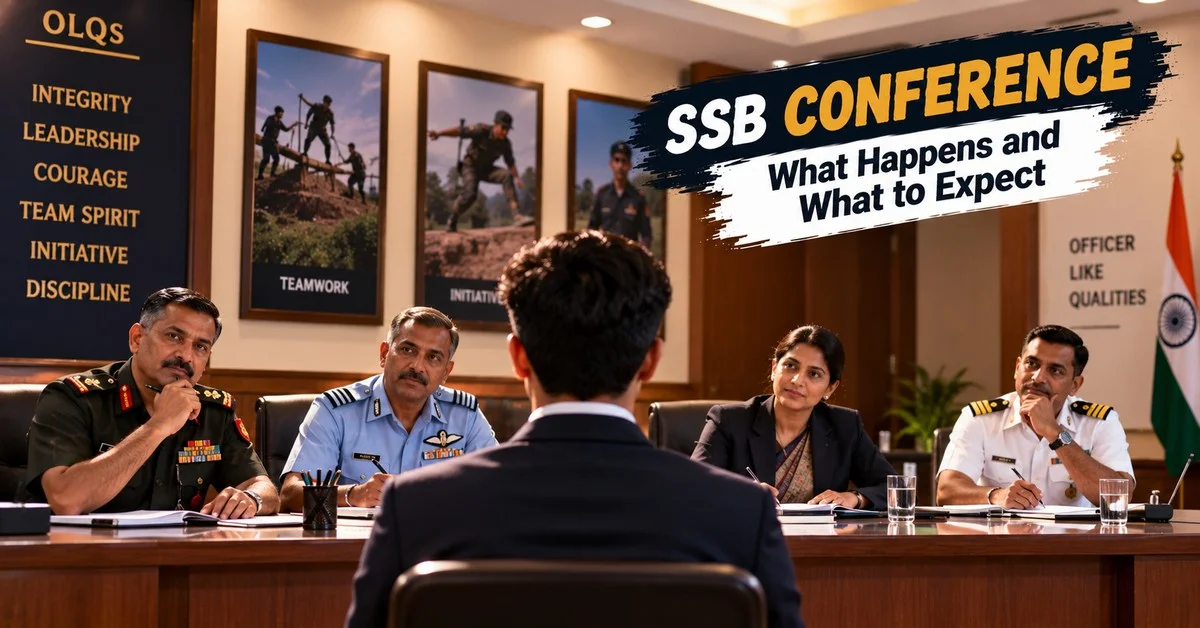
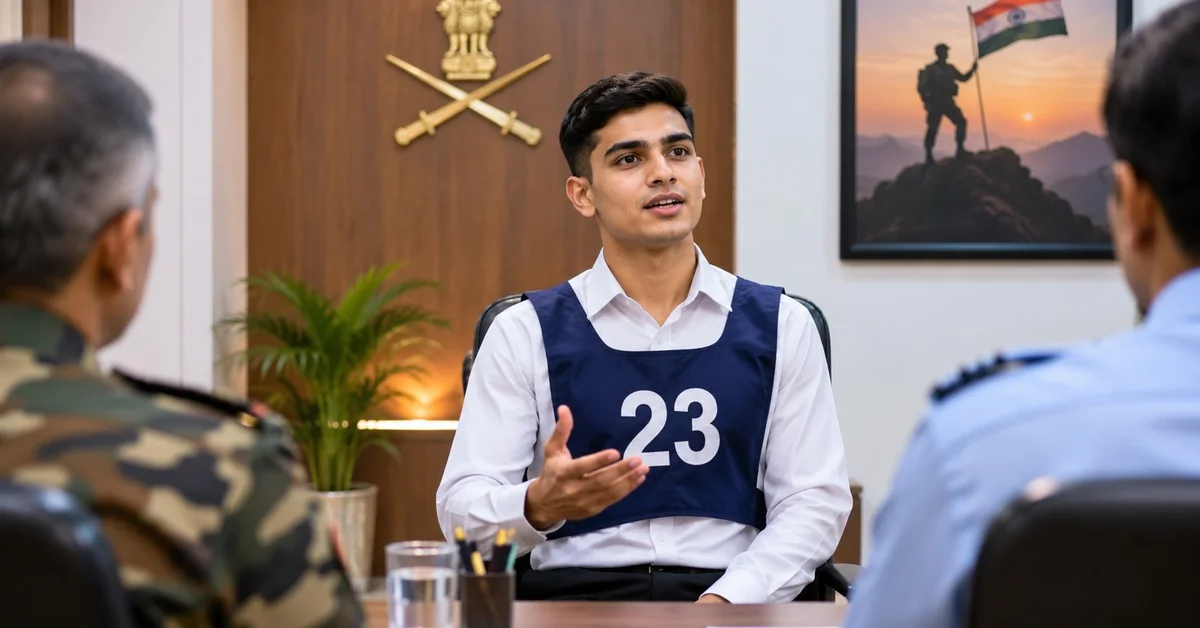
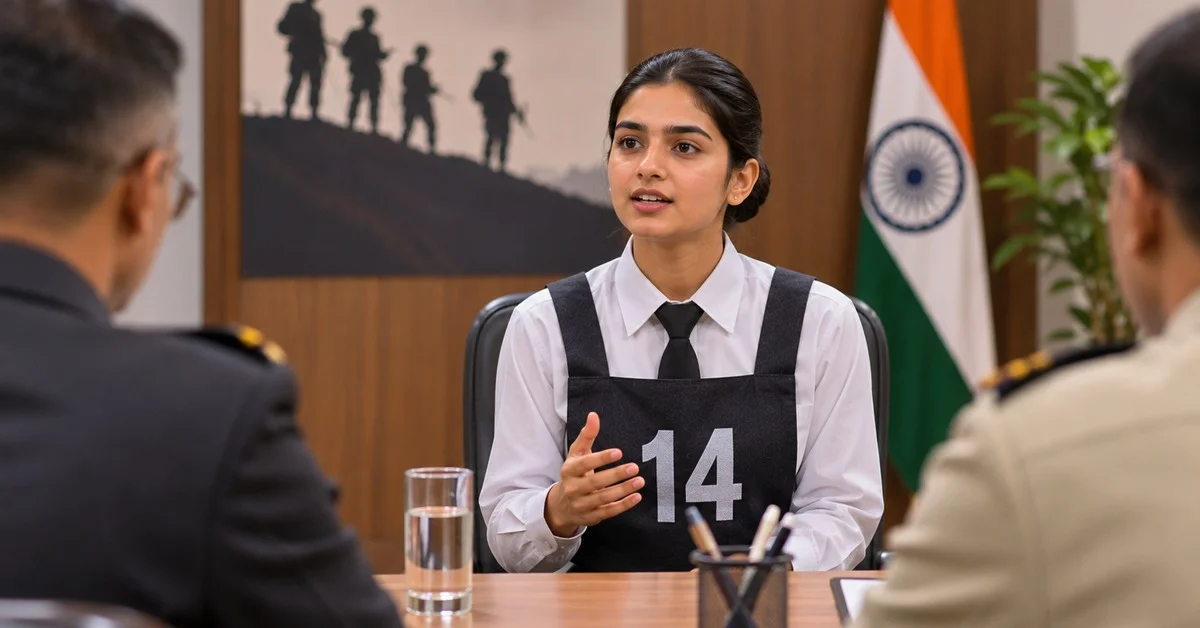
Rapid-fire questions are short, direct questions the interviewing officer asks one after another, with little gap between them. They sit inside the personal interview and are built from the details you gave in your Personal Information Questionnaire (PIQ).
How many come in one go depends on the officer. One source describes a combined set of 7-10 questions, while another puts a run at 10-15 questions asked in one go. So don't fix a number in your head. Expect a burst, and be ready for the officer to interrupt or add a follow-up.
The format is simple. One question, one short answer, next question.
The board uses it for reasons that go beyond facts:
- Spontaneity: a quick question leaves little room to build a story, so your natural answer shows.
- Power of expression: can you say a clear thing in a few words, without rambling?
- Composure: do you stay steady when the pace picks up?
- Consistency: do your spoken answers match what you wrote on the form?
One guide explains that this round tests calm and structure at speed, not memory. That's good news. You can't memorise a person's whole life, but you can know it.
For a wider list of what interviewers ask, the BYJU'S Exam Prep rapid-fire guide is a useful second read. The sections ahead turn SSB rapid fire questions and answers into something you can practise, step by step.
Where Rapid-Fire Questions Appear in the 5-Day SSB Process
Rapid-fire questions come in the personal interview, which sits in the second stage of the five-day SSB process. They don't appear in the Day 1 screening, and they aren't part of the group tasks.
Day 1 is the screening. It holds the Officer Intelligence Rating test, with about 50 questions each in verbal and non-verbal reasoning, and the PPDT, where you see a picture for 30 seconds. Stage two brings the psychology tests, the group tasks and your personal interview.
Which day your interview falls on varies. Sources place it anywhere between the psychology day and the last group-task day, so check your call letter and the official recruitment site for the live schedule.
Each assessor sees a different side of you:
- The psychologist: works through written tests, such as a booklet of 60 situations to answer in 30 minutes.
- The group testing officer: watches you in outdoor and group tasks.
- The interviewing officer: talks to you one on one, and the rapid-fire burst belongs here.
The whole interview generally runs 45 to 60 minutes. Rapid fire is one stretch of it, often followed by slower, deeper questions.
The Six Question Clusters You Must Prepare
Most of the rapid fire round in SSB falls into six clusters, and each one traces back to your form or to the world around you. Prepare all six, and fewer questions will surprise you.
Personal and Family Background
Expect names, jobs and a few details about parents, siblings and your home. Place-based questions have their own guide on hometown, district and state questions.
Strengths, Weaknesses and Self-Assessment
You may be asked to name a strength, a weakness and how you handle both. Pick real ones from your own life, because the officer can test them with a follow-up.
Hobbies and Extracurricular Activities (PIQ-linked)
Whatever you listed becomes a question. Don't list a sport you don't play. It will cost you more than it earns.
Service Preference and Motivation
Why this force, why an officer's role, and what you'd do if you weren't selected. Keep the answer personal and short.
Current Affairs and Defence Awareness
Basic questions on recent national news and the forces are fair game. It's fine to say you don't know a detail, as long as you say it plainly.
Situational and Moral-Dilemma Questions
A short what-would-you-do question tests your values, your Officer Like Qualities and your quick judgement. Answer with the action first, then one reason.
10 Sample Rapid-Fire Questions With Model Short Answers
Below are ten sample questions with short model answers, grouped across personal, awareness and situational types. Treat them as shapes to copy, not scripts to learn. Every fact must come from your own life and match your PIQ, which is the base for most SSB personal interview questions.
Tell Me About Your Family
"There are four of us. My father runs a small shop, my mother is a teacher, and my younger sister is in school. We eat dinner together most days."
Which School Did You Study In?
"I studied at [your school] till Class 12, in the science stream. Maths was my favourite subject, because I like problems with a clear answer."
Who Is Your Best Friend and Why?
"His name is [name]. We've known each other since school, and he tells me the truth even when I don't want to hear it."
What Is Your Biggest Weakness?
"I take on too much and then run short of time. I now write a short list each morning and drop what doesn't fit."
Which Sport Do You Play?
"I play football on weekends with my college team. I'm a defender, and I enjoy it because the whole team has to work as one."
Why Do You Want to Join the Forces?
"I want a life with discipline and responsibility. I also like the idea of leading a team towards a clear goal."
What Will You Do If You Are Not Selected?
"I'll look at my feedback, improve and try again within my age limit. I'll also keep a degree or a job as a solid second path."
What Defence News Do You Remember Recently?
"I read about [event] in [newspaper] this week. It was about [one line]. If you'd like, I can tell you what I understood from it."
Your Friend Copied in an Exam. What Do You Do?
"I'd speak to him privately and ask him to stop. If it continued, I'd tell the teacher, because honesty matters more than a friendship built on a shortcut."
What Did You Do Last Sunday?
"I helped at home in the morning and revised for two hours. In the evening I went for a run and called my grandparents."
How to Practise Without Sounding Rehearsed
Practise the facts and the pace, never the exact words. When you learn sentences by heart, they sound learned. When you learn your own story, they sound like you.
Here's a drill that works for SSB interview rapid fire questions without turning answers into scripts:
- Mirror drill: stand in front of a mirror and answer five PIQ questions aloud. Watch your face, your posture and where your eyes go.
- The 10-second rule: start every short answer within about 10 seconds and finish it in a sentence or two. If you need longer, say it in your own words, not a speech.
- Voice-recording review: record your answers on your phone and listen once. Count the fillers, the long pauses and the answers that wander.
- A random questioner: ask a friend or a family member to fire SSB interview PIQ questions in any order, with no warning. Ask them to interrupt you now and then.
Keep each session short, around 15 minutes, and repeat it on most days of the week. Daily short sessions beat one long Sunday.
For slightly longer questions, such as why you chose a force, one guide suggests keeping good answers within 30-45 seconds unless a follow-up is asked. Rapid-fire replies should be shorter than that.
The goal is composure under pressure. Once speed feels normal, honest answers come out easily, and rehearsed ones fall away.
How to Build Your PIQ Answer Bank Before the Interview
An answer bank is a one-page sheet that maps every line of your PIQ to the quick questions it can produce. It's the most useful piece of SSB interview preparation you can do at your desk, because the officer's questions grow out of your form.
Open a copy of what you submitted, and for each field write the facts and two likely follow-ups:
| PIQ field | Likely quick questions | What to note down |
|---|---|---|
| Education | Which school, which subjects, favourite teacher? | Names, board, one subject you enjoy and why |
| Family | What do your parents do? Who are you closest to? | Names, work, one honest line about each person |
| Hobbies and sports | Since when do you play? Who is your favourite player? | Years played, your position, one recent match or event |
| Positions and activities | What did you do as a team leader or captain? | Your actual role and one thing you learned |
| Service preference | Why this force? What is your second choice? | Your own reason in one clear sentence |
Keep every note factual. Write dates, names and places as they appear on your form, and don't add details you can't back up. If your sheet and your form disagree, the form wins, so correct the sheet.
Read the sheet aloud once a day, then close it and answer from memory. The aim isn't to recite lines. It's to know your own life so well that no quick question feels new.
Mistakes to Avoid in Rapid-Fire Questions
Most SSB interview mistakes in this round come from habit, not lack of knowledge. These five show up again and again, and each one is fixable.
- Monologue answers: a quick question needs a quick reply. If you speak for a minute on "Which school?", you lose the pace and the next question. Answer in a sentence or two, then stop.
- Clashing with your PIQ form: saying one thing aloud and another on paper is the fastest way to lose trust. Reread your form the night before and the morning of the interview.
- Language discomfort: many defence aspirants worry about fluent English. Speak the language you can think in, keep sentences short, and stay clear rather than fancy.
- Freezing on a negative: a question about a weakness or a failure can make you go silent. Name it plainly, then add what you did about it.
- Faking a hobby: claiming a sport or a skill you barely have invites a follow-up you can't answer. Write and say only what's real.
One more slip is common. After one answer goes badly, you carry the worry into the next. Forget it. The officer hears the next answer fresh, and so should you.
It's also fine to say "I'm not sure" when you truly don't know, then give your best honest guess. That's far better than a confident bluff.
The board isn't hunting for a perfect speaker. It wants a steady, honest person who can think under a little pressure.
FAQs
Are SSB rapid-fire questions based on the PIQ form?
Mostly, yes. Sources describe them as built from your PIQ and self-description, so every line you wrote can turn into a question. Know your form well, and keep your answers consistent with it.
How do I answer quickly without sounding rehearsed?
Learn your facts, not your sentences. Practise aloud with a friend who asks questions in random order, and record yourself once to spot rambling. Natural short answers beat polished long ones.
What happens if I don't know the answer to a current affairs question?
Say so plainly, then offer what you do know about the topic. An honest "I'm not sure, but I read that." is better than a guess presented as fact. Then move on to the next question.
How long should my answer be in the rapid-fire round?
Keep it to a sentence or two. The round rewards pace, and the officer will ask a follow-up if they want more. Longer answers belong to the slower questions that come later.
Tags
- SSB interview rapid fire questions
- SSB rapid fire questions and answers
- how to answer SSB rapid fire questions
- rapid fire round in SSB
- SSB personal interview questions
- SSB interview PIQ questions
- SSB interview preparation
- SSB interview mistakes