India, EU Expected to Sign Free Trade Agreement on 16 December During Modi's Europe Visit

Quick summary
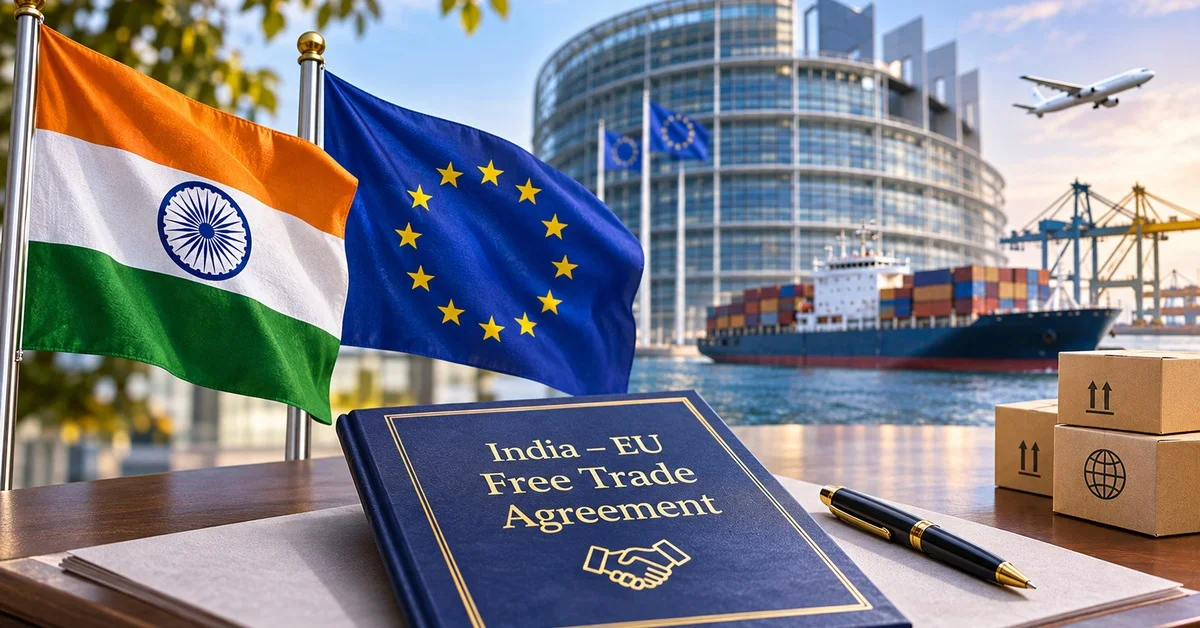
India and the European Union are expected to sign their long-awaited Free Trade Agreement (FTA) on December 16 during Prime Minister Narendra Modi's Europe visit. The agreement aims to boost Indian exports, improve market access, attract investment and strengthen trade ties between India and the 27-member European bloc.
India and the European Union are expected to formally sign their free trade agreement in December, during Prime Minister Narendra Modi's visit to Europe, according to officials. One official told ANI the signing is scheduled for 16 December. It would mark the end of a long negotiation and bring the two sides closer to a deal covering the 27-member bloc.
Timeline and what remains
Another official said the agreement is scheduled to be signed on 16 December. Some reports place the signing in Brussels, during Modi's visit there. The Prime Minister is reportedly set to make a four-nation tour of Europe and the United States.
Negotiations concluded on 27 January 2026, and Modi and European Commission President Ursula von der Leyen announced the outcome jointly. Talks had been relaunched in 2022 after a long break.
Commerce Secretary Rajesh Agrawal said India hopes to sign the deal in December. He also said the aim is to have it in force in the first quarter of 2027, adding, "We are trying for the first quarter itself," though that depends on many steps falling into place on time.
The European Commission sent its proposals to the Council of the EU in September, seeking authorisation to sign and conclude the deal. After signing, the pact needs consent from the European Parliament and a final Council decision, and India must complete its own ratification before it takes effect. tribuneindia
What the deal is expected to offer
According to the Commerce Ministry, more than 99 per cent of Indian exports by value would get preferential access to the EU market. Textiles, apparel, leather goods, footwear, marine products, gems and jewellery, handicrafts, engineering goods and automobiles are expected to gain the most. The ministry says nearly $33 billion worth of exports from labour-intensive industries would face no tariffs from the day the deal starts, which it expects to help small businesses, women-led enterprises, artisans and young entrepreneurs.
India has also secured better access for farm and processed food products, while keeping sensitive areas such as dairy, cereals and poultry protected.
The agreement goes beyond goods. It covers services, digital trade, customs procedures, trade facilitation and intellectual property. It also sets a framework for skilled Indian professionals to work in European markets, including intra-corporate transferees, contractual service suppliers and independent professionals.
Trade backdrop
Goods trade between India and the EU reached EUR 118 billion in 2025, according to the European Commission. Officials on both sides expect the pact to raise trade, encourage investment and strengthen supply chains.
Agrawal also said that talks on an interim trade agreement with the United States are nearing their conclusion.
Tags
- India-EU Free Trade Agreement
- India-EU FTA
- India EU trade deal
- India EU FTA signing date
- PM Modi Europe visit
- India European Union trade agreement
- India EU trade relations
- India EU trade negotiations
- India EU free trade deal 2026
- India EU trade pact December 16
- India exports to European Union
- India EU economic partnership
- India EU tariff reduction
- India EU bilateral trade
- India EU FTA implementation 2027
- Ursula von der Leyen
- Rajesh Agrawal