India to Name AMCA Fighter Development Partner Within a Month, Says Defence Secretary
Quick summary
Defence Secretary Rajesh Kumar Singh says India will name the winner of the AMCA fifth-generation fighter contest within about a month, with bids from Tata, an L&T-led team and a Bharat Forge-led team.
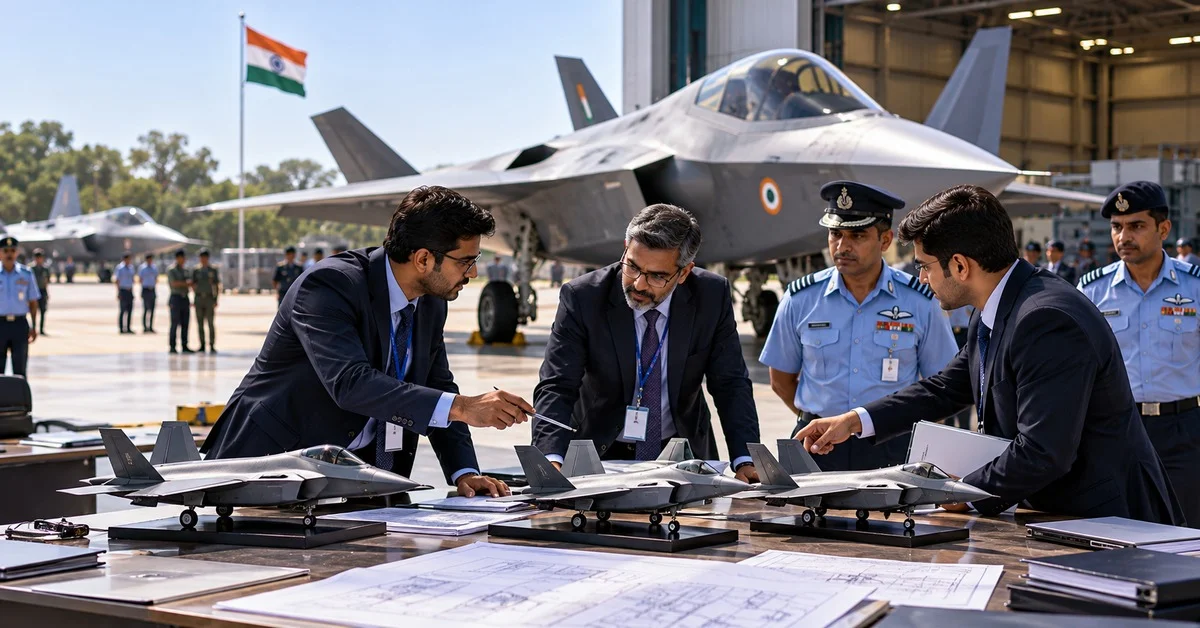
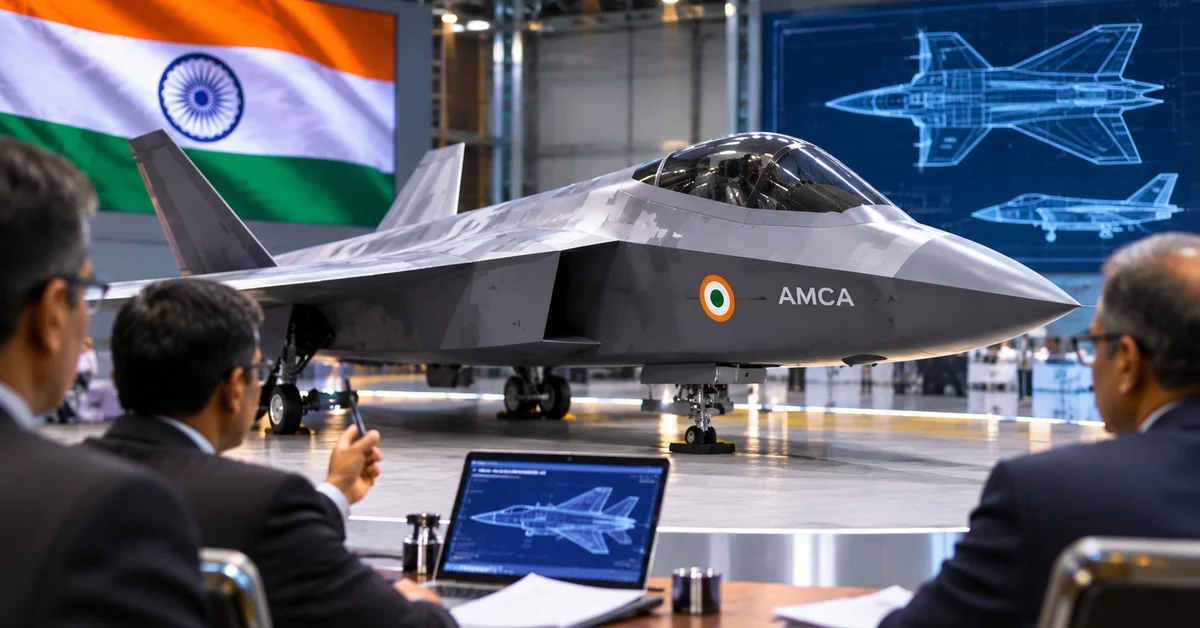
India has given its clearest timetable yet for choosing who will develop its fifth-generation stealth fighter. Speaking on Monday, 16 November 2026, at the ANI National Security Summit 3.0 in New Delhi, Defence Secretary Rajesh Kumar Singh said the winner of the Advanced Medium Combat Aircraft (AMCA) contest should be announced in about a month. The winner will become the Development-cum-Production Partner for the programme.
Three Bids Received
Singh confirmed that all three shortlisted bidders have submitted their offers. He said the next step is to announce the winner, which he hopes will speed up building the AMCA prototypes for induction.
Who Is Bidding
- Tata Advanced Systems Limited, bidding alone.
- An L&T-led consortium with Bharat Electronics Limited and Dynamatic Technologies.
- A Bharat Forge-led consortium with BEML and Data Patterns.
Two of the three teams pair private firms with public sector companies, and Tata is the only independent bidder. This is the first time private-led teams are competing to lead the development and manufacture of an Indian fighter prototype.
How the Evaluation Reached This Stage
Bids were due on 27 August but the deadline was extended so companies could complete formalities. They were submitted by 30 October 2026 and opened on 1 November, when a high-level review committee set up by the Defence Ministry began verification and detailed evaluation.
What the Winner Will Build
The programme is worth ₹15,000 crore and is managed by the Aeronautical Development Agency (ADA), a DRDO laboratory. The winning partner will build five prototypes and one structural test specimen to ADA’s designs. ADA will oversee manufacturing and keep design authority.
The five prototypes are expected to fly about 1,800 test sorties over seven years. These will test flight controls, stealth, sensors, radar, weapons integration and propulsion.
Aircraft and Timeline
The AMCA is a twin-engine, single-seat stealth fighter in the 25-tonne class. Planned features include internal weapons bays, supercruise, AI-driven avionics and advanced sensor fusion.
- First prototype: Targeted for 2028, with a first flight in September 2028 under recent guidance. Earlier schedules pointed to a 2028–29 rollout and a first flight in 2029.
- Five prototypes: Expected by about 2031.
- First production batch: Reported for around 2034 or 2035.
- Engines: Early aircraft are likely to use twin F414 engines, with 15 needed for the five flying prototypes. This depends on a proposed joint production deal between Hindustan Aeronautics Limited and GE.
Two Engine Options Under Review
For a future indigenous engine, Singh said a public sector proposal led by the Gas Turbine Research Establishment with France’s Safran is under consideration. A private sector proposal has now also entered the race, and the government is examining both. A major workshop is planned in Bangalore next month, bringing together DRDO laboratories, private industry and the Air Force. Singh said he would prefer a whole-of-industry approach, with organisations working together instead of duplicating effort.
AMCA Remains the Only Fifth-Generation Programme
Singh said AMCA is India’s only fifth-generation fighter programme for now. He said he has no clarity on any other programme and the government hasn’t taken a view on one.
Earlier, a former Air Chief had said India might need to look at other aircraft if AMCA slips. Russia has also offered its Su-57, but India has made no decision.
Why the Timing Matters
The Indian Air Force operates about 29 fighter squadrons, well short of its authorised strength of 42 to 42.5. China has already inducted fifth-generation fighters, the Chengdu J-20 and Shenyang J-35, and is pursuing sixth-generation designs. Reports suggest Pakistan could receive its first J-35s and is planning to buy 40.
Singh said India must meanwhile manage with the equipment and programmes it already has. He pointed to large Tejas Mk-1 contracts, now showing some visibility in engine deliveries, and hoped inductions would begin this year. Air Chief Marshal Ashutosh Dixit said at the same summit that a squadron of the Tejas Mk-1A would join the Air Force within the current financial year. He added that the Tejas Mk-2 should roll out next year while AMCA work also progresses.
Competitive Procurement and Industry View
Singh said the government is trying to buy platforms through competition rather than nomination and to give private manufacturers a fairly level playing field. In the AMCA assessment, a bidder’s existing order book was considered, and a very heavy order book could count against it if it left too little capacity for new work.
L&T Defence head Arun T. Ramchandani, who was on the same panel, said private industry no longer feels disadvantaged compared with any other sector.
Tags
- AMCA development partner
- AMCA
- fifth-generation fighter
- Tata Advanced Systems
- L&T
- Bharat Forge
- Defence Secretary
- ADA