US Army Activates 4th Multi-Domain Task Force to Strengthen Indo-Pacific Operations
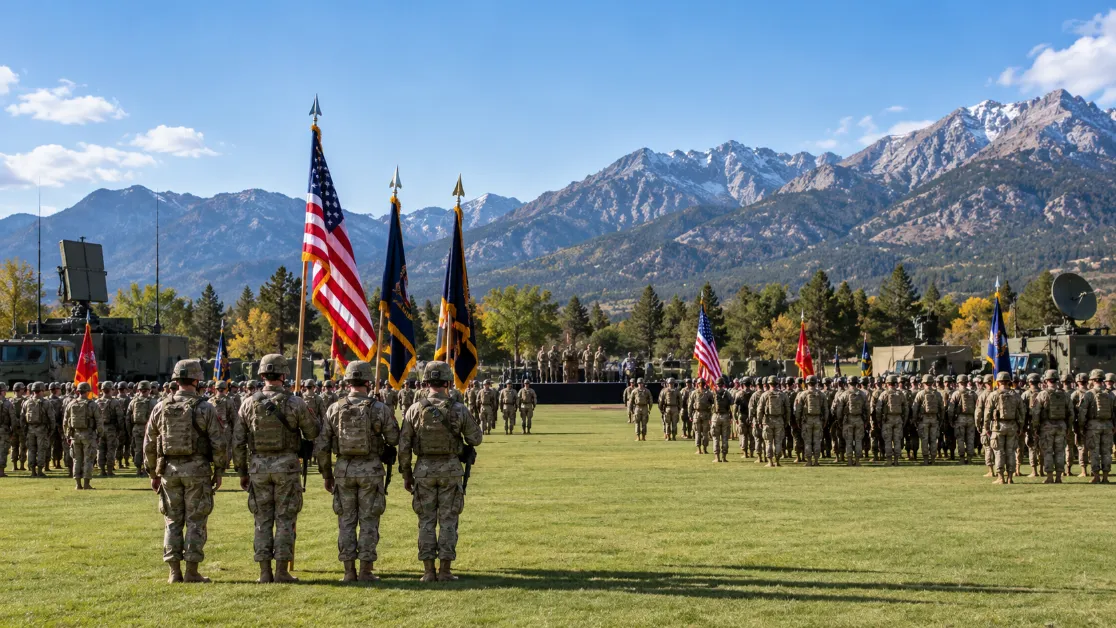
The US Army has activated its 4th Multi-Domain Task Force at Fort Carson, Colorado. The new formation will coordinate long-range precision fires and other military capabilities to support operations in the Indo-Pacific.
The US Army has activated its 4th Multi-Domain Task Force (4th MDTF), a new military formation designed to coordinate long-range precision fires and capabilities across multiple operational domains. The unit was officially activated during a ceremony at Fort Carson, Colorado, on October 8, 2026.
The formation is part of the US Army’s broader effort to strengthen its ability to deter potential adversaries and operate in complex military environments, particularly in the Indo-Pacific region. It is designed to disrupt enemy capabilities while supporting coordinated operations involving land, air, maritime, space and cyber forces.
What Is the 4th Multi-Domain Task Force?
The 4th Multi-Domain Task Force is a specialised US Army formation built to combine different military capabilities into a coordinated operational structure. Instead of relying only on conventional ground forces, it brings together capabilities that can help identify, track and disrupt threats across multiple domains.
The unit includes four battalions and is planned to have approximately 2,100 soldiers. Colonel Hugh W. A. Jones assumed command during the activation ceremony at Fort Carson.
The task force will focus on synchronising long-range precision fires and other military effects to disrupt adversary systems and create operational advantages for other US and allied forces.
Why Is the US Army Focusing on Multi-Domain Warfare?
Modern military operations increasingly depend on the ability to coordinate information, sensors, weapons and forces across different domains. An adversary may use air defence systems, electronic warfare, cyber capabilities and long-range weapons to restrict the movement of opposing forces.
These interconnected systems can make it difficult for conventional military units to enter or operate within contested areas.
Multi-domain warfare aims to address this challenge by combining capabilities from different operational environments. Information gathered through surveillance and intelligence can help identify threats, while electronic warfare, cyber operations and precision weapons can contribute to disrupting those threats.
For the US Army, this approach is intended to improve operational flexibility and give military commanders more options when responding to potential threats in the Indo-Pacific.
How Will the 4th MDTF Support Indo-Pacific Operations?
The new task force is intended to support operations in the Indo-Pacific by coordinating long-range precision fires and other capabilities against sophisticated adversary networks.
Its responsibilities include helping identify and understand enemy systems, coordinating effects across multiple operational levels and supporting joint-force manoeuvres.
The unit is based at Fort Carson, Colorado, but reports to the 7th Infantry Division at Joint Base Lewis-McChord, Washington.
The 7th Infantry Division has been reorganised into the 7th Infantry Division (Multi-Domain Command-Pacific), which serves as an operational headquarters for integrating capabilities such as air defence, electronic warfare, cyber, space, intelligence and unmanned systems in support of Pacific operations.
This command structure is intended to improve coordination between specialised task forces and the wider joint force.
US Army Plans Five Multi-Domain Task Forces by 2028
The activation of the 4th MDTF is part of a wider US Army initiative to establish five multi-domain task forces by 2028.
The Army has already established several formations as part of this effort:
-
1st Multi-Domain Task Force: Established at Joint Base Lewis-McChord, Washington.
-
2nd Multi-Domain Task Force: Activated in Germany in 2021.
-
3rd Multi-Domain Task Force: Established in Hawaii in 2022.
-
4th Multi-Domain Task Force: Activated at Fort Carson, Colorado, in October 2026.
-
5th Multi-Domain Task Force: Planned for Fort Bragg, North Carolina.
The units are intended to provide combatant commanders with additional options for coordinating military capabilities against advanced threats. Their development also reflects the Army's wider modernisation efforts to operate against technologically advanced adversaries.
Who Will Command the 4th Multi-Domain Task Force?
Colonel Hugh W. A. Jones has assumed command of the 4th Multi-Domain Task Force.
Before taking this position, Jones commanded the 2nd Stryker Brigade Combat Team of the 4th Infantry Division at Fort Carson.
Major General Bernard Harrington, commander of the 7th Infantry Division (Multi-Domain Command-Pacific), also attended the activation ceremony. The new formation is intended to contribute to the division's wider mission of integrating military capabilities across multiple domains in the Pacific.
What Does This Development Mean for Regional Security?
The activation of the 4th MDTF highlights the importance the United States places on integrated military operations and long-range capabilities in the Indo-Pacific.
The region is strategically significant because of its maritime routes, military competition and the security interests of the United States and its regional partners. In such an environment, the ability to coordinate surveillance, intelligence, electronic warfare, air defence and precision strikes can influence how military forces plan and conduct operations.
The new task force is intended to help the US Army respond to these challenges by improving coordination between specialised units and the wider joint force.
However, its activation does not by itself indicate an immediate change in the regional military balance. Its operational impact will depend on how the formation is equipped, trained and integrated with other forces.
Frequently Asked Questions (FAQs)
1. What is the 4th Multi-Domain Task Force?
The 4th Multi-Domain Task Force is a specialised US Army formation designed to coordinate long-range precision fires and other military capabilities across multiple operational domains.
2. When was the 4th Multi-Domain Task Force activated?
The unit was officially activated on October 8, 2026, during a ceremony at Fort Carson, Colorado.
3. How many soldiers will the 4th MDTF have?
The formation includes four battalions and is planned to have approximately 2,100 soldiers.
4. Who commands the 4th Multi-Domain Task Force?
Colonel Hugh W. A. Jones assumed command during the unit's activation ceremony.
5. How many Multi-Domain Task Forces does the US Army plan to establish?
The US Army plans to establish five Multi-Domain Task Forces by 2028, with the fifth planned for Fort Bragg, North Carolina.
6. Why are Multi-Domain Task Forces important?
They are designed to coordinate capabilities across domains such as land, air, sea, space and cyberspace, giving military commanders more options to identify and disrupt threats.
Conclusion
The activation of the 4th Multi-Domain Task Force represents another step in the US Army's effort to modernise its forces for complex, technology-driven military operations. By coordinating long-range precision fires and capabilities across multiple domains, the unit is intended to strengthen the Army's ability to respond to potential threats in the Indo-Pacific.
As the United States continues developing its planned network of five multi-domain task forces, their effectiveness will depend on integration, training and coordination with the wider joint force.
Stay updated on international defence developments, military modernisation and strategic affairs with Defence Study.