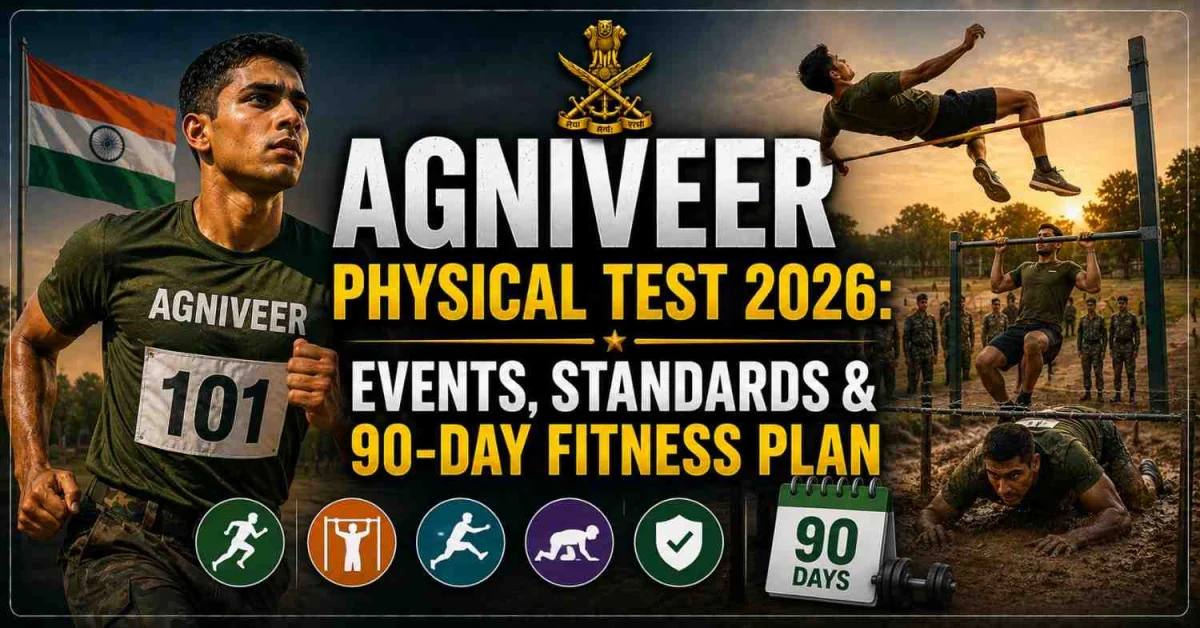
Agniveer Physical Test 2026: Events, Standards & 90-Day Fitness Plan
For thousands of young aspirants, clearing the written examination is only one part of the Agniveer recruitment process. The real challenge begins when candidates step onto the physical test ground, where stamina, strength, speed, and determination are tested under strict military standards.
Every year, many candidates fail not because they lack knowledge but because they underestimate the Physical Fitness Test (PFT). Some start preparing only a few weeks before the rally, while others focus only on running and ignore strength, flexibility, or recovery. As a result, otherwise deserving candidates miss the opportunity to join the Indian Armed Forces.
The Agniveer Physical Test 2026 is designed to evaluate whether a candidate is physically capable of handling the rigorous demands of military training and service. Depending on the service and recruitment category, candidates are assessed through events such as the 1.6 km run, pull-ups, balance tests, ditch jump, and physical measurements. The exact standards are released through official recruitment notifications.
The good news is that physical fitness is not built overnight—but it can certainly be developed with consistency. Whether you are just beginning your preparation or already have a basic fitness routine, a structured 90-day plan can significantly improve your performance and confidence.
This guide explains the Agniveer Physical Test 2026 in detail, including the events, qualifying standards, common mistakes, and a week-by-week fitness approach to help you prepare effectively.
Why the Agniveer Physical Test Matters
The Indian Armed Forces demand much more than academic excellence. Soldiers are expected to operate in challenging terrains, extreme weather conditions, and high-pressure operational environments. Because of this, physical fitness is a core requirement rather than an additional qualification.
The Physical Fitness Test helps recruitment authorities evaluate:
-
Cardiovascular endurance
-
Upper body strength
-
Agility and coordination
-
Balance
-
Overall physical readiness
Candidates who prepare well for the physical stage often find military training much easier after selection.
Agniveer Selection Process: Where Does the Physical Test Fit?
Before focusing on the events, it's important to understand where the Physical Fitness Test fits within the overall recruitment process.
The selection process generally includes:
-
Online Common Entrance Examination (CEE)
-
Physical Fitness Test (PFT)
-
Physical Measurement Test (PMT)
-
Medical Examination
-
Final Merit List
Only candidates who qualify each stage are allowed to proceed to the next phase.
Agniveer Physical Fitness Test (PFT) Events
The Physical Fitness Test consists of multiple events that collectively assess a candidate's endurance, strength, agility, and coordination.
Although standards may vary slightly depending on the recruitment category or service, the Indian Army Agniveer PFT generally includes the following events.
1.6 km Running Test
The 1.6 km run is the most important event in the Physical Fitness Test.
It evaluates:
-
Speed
-
Stamina
-
Cardiovascular endurance
-
Mental toughness
Performance in the running event also determines the marks awarded.
Candidates taking more than 5 minutes and 45 seconds generally do not qualify this event.
Running is often the deciding factor in the physical test. Therefore, it should receive maximum attention during preparation.
Pull-Ups (Beam)
Once candidates clear the running event, they proceed to the pull-up test.
Pull-ups measure:
-
Upper body strength
-
Grip strength
-
Muscular endurance
Marks are awarded based on the number of successful pull-ups.
Candidates must achieve the minimum required pull-ups to remain in the selection process.
Many aspirants initially struggle with pull-ups, but consistent practice over several weeks usually produces significant improvement.
9 Feet Ditch Jump
The ditch jump evaluates agility, confidence, and explosive leg power.
Unlike running and pull-ups, this is generally a qualifying event.
Candidates simply need to clear the ditch successfully.
There are no additional marks awarded, but failure results in elimination.
Zig-Zag Balance Test
This event checks a candidate's balance and body coordination.
Again, it is qualifying in nature.
Although many candidates consider it easy, lack of practice or nervousness can sometimes lead to mistakes.
Good coordination and body control help candidates clear this stage comfortably.
Physical Measurement Test (PMT)
After qualifying the PFT, candidates undergo physical measurements.
These generally include:
-
Height
-
Chest (where applicable)
-
Weight
The exact standards vary depending on the recruitment region, category, and community.
For example, minimum height requirements differ across various geographical regions of India to account for regional diversity.
Candidates should always refer to the official recruitment notification applicable to their state or Army Recruiting Office (ARO).
Common Physical Standards
While physical standards differ region-wise, the following are commonly evaluated:
Height
Minimum height requirements vary according to the candidate's region and category.
Chest
Chest measurements and expansion are applicable where specified in the notification.
Weight
Weight should be proportionate to height and age.
Being significantly overweight or underweight may lead to medical concerns later in the recruitment process.
Common Mistakes Candidates Make During the Physical Test
Many candidates possess the required fitness but fail because of avoidable mistakes.
Some common errors include:
Starting Running Practice Too Late
Running stamina cannot be built in one or two weeks.
Ignoring Pull-Ups
Candidates often focus only on running while neglecting upper body strength.
Poor Diet
Excess junk food, inadequate protein, and dehydration affect performance.
Lack of Recovery
Overtraining without proper sleep increases the risk of injuries.
Not Practicing Test Conditions
Running on a treadmill is very different from running outdoors under rally conditions.
Preparing in realistic conditions improves confidence significantly.
90-Day Agniveer Fitness Plan
The most effective preparation strategy is gradual progression.
Instead of training randomly, divide your preparation into three phases.
Phase 1 (Days 1–30): Build the Foundation
The first month should focus on developing basic stamina and strength.
Running
-
2–3 km easy running
-
5 days per week
Strength Training
-
Push-ups
-
Assisted pull-ups
-
Squats
-
Planks
Flexibility
Stretch after every workout to reduce injury risk.
The objective during this phase is consistency rather than speed.
Phase 2 (Days 31–60): Improve Performance
Once your body adapts to regular exercise, increase training intensity.
Focus on:
-
Timed 1.6 km runs
-
Pull-up progression
-
Sprint intervals
-
Core strengthening
Begin measuring your performance weekly.
Tracking progress helps maintain motivation.
Phase 3 (Days 61–90): Test Preparation
The final month should closely resemble the actual physical test.
Practice:
-
Full PFT simulation
-
Timed running
-
Maximum pull-ups
-
Balance exercises
-
Recovery strategies
Reduce excessive training during the final week before the test to allow proper recovery.
Weekly Fitness Routine
A balanced weekly schedule may look like this:
This routine balances endurance, strength, and recovery effectively.
Diet Tips for Agniveer Aspirants
Training alone is not enough.
Nutrition plays an equally important role.
Candidates should focus on:
Protein
Supports muscle recovery.
Examples include:
-
Eggs
-
Milk
-
Paneer
-
Chicken
-
Pulses
Complex Carbohydrates
Provide energy for running sessions.
Examples:
-
Rice
-
Oats
-
Whole wheat
-
Fruits
Hydration
Drink adequate water throughout the day.
Dehydration reduces endurance and recovery.
Sleep
Aim for 7–8 hours of quality sleep daily.
Muscle growth and recovery happen during rest.
How to Improve Your Running Time
Many candidates struggle to complete the 1.6 km run within the required timing.
A few practical tips include:
-
Maintain a steady pace rather than sprinting early.
-
Practice interval running twice a week.
-
Strengthen your legs through squats and lunges.
-
Improve breathing rhythm while running.
-
Wear proper running shoes during practice.
Small improvements made consistently often produce significant gains over three months.
Preparing Mentally for the Physical Test
Physical preparation is only one part of success.
Mental preparation is equally important.
During the actual rally:
-
Stay calm.
-
Avoid comparing yourself with other candidates.
-
Follow instructions carefully.
-
Believe in your preparation.
Confidence built through regular practice often makes the difference between success and failure.
Final Verdict
The Agniveer Physical Test 2026 is much more than a fitness assessment—it is an evaluation of your readiness for military life. Events such as the 1.6 km run, pull-ups, ditch jump, and zig-zag balance test are designed to assess stamina, strength, agility, and determination. Candidates who prepare consistently over several months rather than a few weeks generally perform much better during recruitment rallies.
A structured 90-day fitness plan, combined with proper nutrition, recovery, and regular performance tracking, can help even beginners achieve the required standards. Instead of focusing only on passing the test, aim to develop the physical discipline expected of a future soldier.
Remember, the physical test is not just another stage of recruitment—it is the first real demonstration of your commitment to joining the Indian Armed Forces.
FAQs
What are the events in the Agniveer Physical Test 2026?
The Physical Fitness Test generally includes the 1.6 km run, pull-ups, 9 feet ditch jump, and zig-zag balance test, followed by physical measurements.
How many pull-ups are required for Agniveer?
Candidates generally need a minimum of six pull-ups to qualify, while higher repetitions earn better marks.
What is the qualifying time for the 1.6 km run?
Candidates aiming for the highest marks should complete the run within 5 minutes 30 seconds, while up to 5 minutes 45 seconds is generally acceptable for qualification.
Is the ditch jump a qualifying event?
Yes. The 9 feet ditch jump is qualifying in nature and does not carry separate marks.
How early should I start preparing for the Agniveer Physical Test?
Starting at least 90 days before the recruitment rally is recommended, as it provides sufficient time to improve endurance, strength, and overall fitness safely.