SSB Psychology Test Mistakes: 15 Errors to Avoid
Avoid common SSB psychology test mistakes in TAT, WAT, SRT & SD. Learn 15 major errors that lead to rejection and how to improve your chances.
SSB Psychology Test Mistakes to Avoid: 15 Things That Get You Rejected
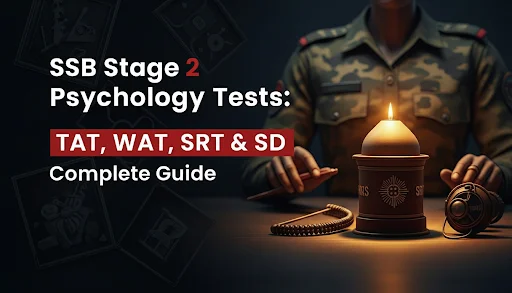
The SSB psychology tests are one of the most misunderstood parts of the entire selection process. Many candidates believe that these tests are about writing “perfect” answers or impressing the psychologist with extraordinary stories. In reality, the psychology tests are designed to evaluate your natural personality, thinking pattern, and behavior.
Even well-prepared candidates get rejected in this stage, not because they lack Officer Like Qualities, but because they make common mistakes that create a negative or inconsistent impression. The tests like TAT, WAT, SRT, and Self Description are interconnected, and even small errors can affect your overall assessment.
Understanding these mistakes is the first step toward improving your performance. In this guide, we will explore the most common psychology test mistakes and how you can avoid them.
Why Candidates Get Rejected in Psychology Tests
Before discussing the mistakes, it is important to understand how the psychologist evaluates you. They are not looking for ideal answers but for consistency, clarity, and natural behavior.
When your responses across different tests do not match or appear artificial, it raises doubts about your personality. Similarly, negative thinking, poor decision-making, or unrealistic responses can reduce your chances of selection.
The goal is not to act like an officer but to show that you have the potential to become one.
15 Common Psychology Test Mistakes to Avoid
Below are the most critical mistakes that candidates make during SSB psychology tests.
1. Writing Unrealistic Stories in TAT
One of the most common mistakes is creating overly dramatic or heroic stories in the Thematic Apperception Test. Candidates often try to show extraordinary bravery or unrealistic situations, which does not reflect practical thinking.
A good story should be simple, logical, and based on real-life situations. Unrealistic stories create a disconnect between your imagination and actual personality.
2. Showing Negative Thinking in WAT
In the Word Association Test, many candidates give negative or fearful responses to certain words. For example, words like “failure” or “fear” often trigger negative reactions.
The psychologist observes your mindset through these responses. A balanced and positive approach reflects maturity and emotional stability.
3. Giving Memorized or Artificial Answers
Some candidates prepare pre-written responses for WAT or SRT and try to use them during the test. This approach often leads to unnatural and inconsistent answers.
Psychology tests are designed to capture your spontaneous thinking. Memorized answers can easily be identified and may harm your chances.
4. Lack of Consistency Across Tests
Consistency is one of the most important factors in psychology tests. If your TAT stories show leadership but your SRT responses show hesitation, it creates confusion.
All your responses should reflect a similar personality and thinking pattern. Inconsistency is one of the biggest reasons for rejection.
5. Writing Incomplete Stories in TAT
Time management is crucial in TAT. Many candidates fail to complete their stories due to overthinking or writing too much detail.
An incomplete story creates a negative impression, as it shows lack of planning and clarity. It is always better to write a simple but complete story.
6. Overthinking in SRT
In the Situation Reaction Test, candidates often spend too much time thinking about the “perfect” answer. This results in fewer attempts and incomplete responses.
SRT is designed to test your natural reaction. Overthinking defeats the purpose and affects your performance.
7. Ignoring Practicality in Responses
Some candidates write ideal or unrealistic solutions in SRT, such as taking extreme actions that are not feasible in real life.
Your responses should be practical and achievable. The psychologist looks for realistic decision-making ability.
8. Writing Very Long Responses in WAT
WAT requires quick responses within 15 seconds. Writing long sentences not only wastes time but also indicates lack of clarity.
Short, meaningful, and direct responses are more effective.
9. Focusing Only on Positive Words
Candidates often try to make every response overly positive, even when the word is negative. This creates artificial responses.
Instead of forcing positivity, aim for balanced and realistic thinking.
10. Hiding Weaknesses in Self Description
In the Self Description test, many candidates try to present themselves as perfect by hiding their weaknesses.
This approach reduces credibility. A good self-description includes both strengths and areas of improvement.
11. Lack of Self-Awareness in SD
Some candidates write generic statements in SD without understanding their own personality. This makes their responses vague and unconvincing.
Self-awareness is a key quality. Your answers should reflect genuine understanding of yourself.
12. Poor Time Management
Time pressure is a common challenge in psychology tests. Candidates who fail to manage time often leave questions unanswered.
Practicing under timed conditions can help improve speed and efficiency.
13. Writing Irrelevant Responses
Sometimes candidates write responses that are not directly related to the word or situation. This shows lack of clarity and focus.
Your answers should be relevant and to the point.
14. Trying to Impress Instead of Being Natural
Many candidates try too hard to impress the psychologist by using complex language or extraordinary ideas.
This often backfires, as the psychologist is trained to identify genuine behavior. Simplicity and honesty are more effective.
15. Not Practicing Enough Before SSB
Lack of practice is one of the biggest reasons for poor performance. Candidates who do not practice TAT, WAT, and SRT beforehand struggle to manage time and structure their responses.
Regular practice builds confidence and improves performance.
How to Avoid These Mistakes
Avoiding these mistakes requires a clear understanding of the test and a disciplined preparation strategy.
Start by practicing each test individually. Focus on improving speed, clarity, and consistency. Analyze your responses to identify areas of improvement.
It is also important to develop a positive mindset. Your thoughts and behavior should naturally reflect confidence, responsibility, and problem-solving ability.
Preparation Strategy for Psychology Tests
A structured preparation plan can help you perform better in psychology tests.
Consistency in preparation is the key to success.
Conclusion
The SSB psychology tests are not about right or wrong answers but about understanding your personality. Most candidates get rejected not because they lack ability, but because they make avoidable mistakes.
By staying natural, maintaining consistency, and practicing regularly, you can significantly improve your chances of clearing the psychology round.
Remember, the goal is not to impress but to express your true self in a clear and positive manner.
FAQs on SSB Psychology Test Mistakes
What is the biggest mistake in SSB psychology tests?
Lack of consistency across TAT, WAT, SRT, and SD is the biggest mistake.
Can negative thinking lead to rejection?
Yes, repeated negative responses can create a poor impression.
How to improve performance in psychology tests?
Practice regularly, stay natural, and focus on clarity and consistency.
Is coaching necessary for psychology tests?
It is not mandatory, but guidance can help avoid common mistakes.
How important is self-description in SSB?
It is very important as it reflects your self-awareness and personality.