SSB Preparation at Home: 30-Day Plan Without Coaching
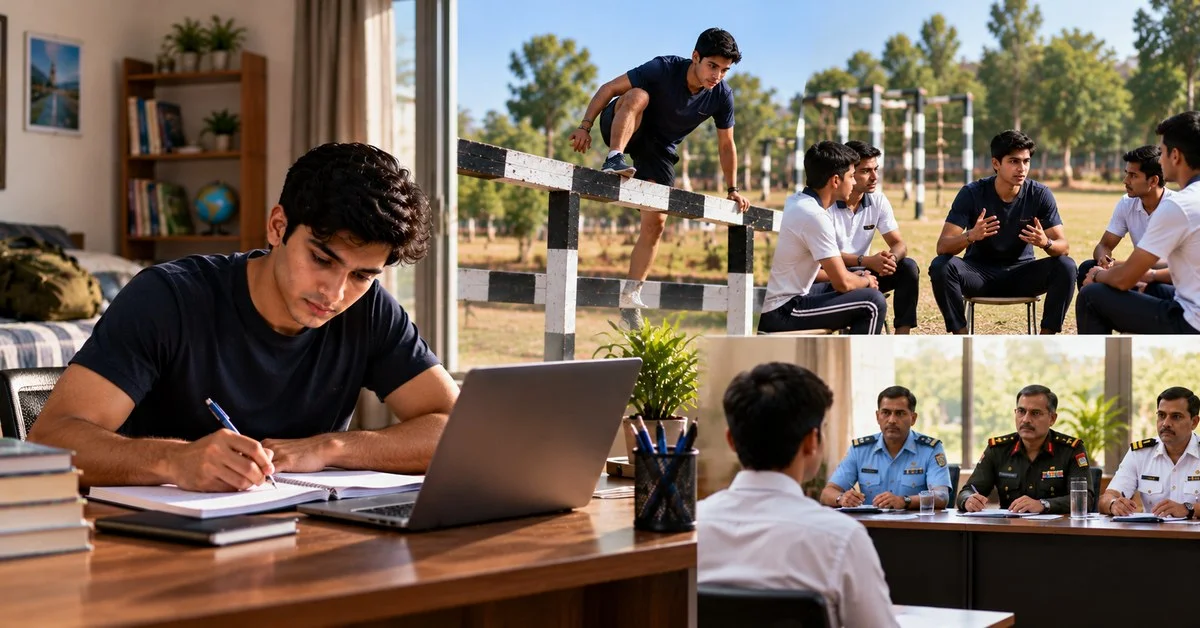
SSB preparation at home is possible with the right plan. This 30-day guide covers the 15 Officer Like Qualities, the 5-day SSB process, OIR and PPDT practice, psychology tests, GTO tasks, the personal interview, a daily routine and common mistakes.
Clearing the written exam is a big achievement, but the Services Selection Board (SSB) interview is where most candidates are finally selected or sent back. Many aspirants believe good SSB interview preparation needs expensive coaching. The truth is that the SSB does not test memorised answers. It tests your natural personality, thinking and behaviour, and much of that can be built through honest, regular practice.
SSB preparation at home is possible if you follow a clear plan. Spend Week 1 understanding the SSB process and the 15 Officer Like Qualities (OLQs), Week 2 on screening tests (OIR and PPDT), Week 3 on psychology tests (TAT, WAT, SRT and Self Description), and Week 4 on GTO tasks, the personal interview and full revision. Practise daily, stay fit, read the news, and be honest in every answer. The SSB rewards a genuine personality, not rehearsed lines.
What the SSB Interview Actually Tests
The SSB interview is a five-day selection process used for officer entries such as NDA, CDS, AFCAT, TES, NCC Special Entry and others. It does not check how much you know. It checks whether you have the potential to become a good officer.
The assessors look for 15 Officer Like Qualities (OLQs), grouped into four areas:
Three assessors judge you separately: the Psychologist, the Group Testing Officer (GTO) and the Interviewing Officer (IO). Your final result depends on how consistently these qualities show across all three.
This is why SSB preparation at home works well. You are not learning a subject. You are building habits and self-awareness, and both can be developed in your own room.
The 5-Day SSB Process at a Glance
Candidates who do not clear screening on Day 1 return home the same day, so screening deserves serious attention.
Can You Really Do SSB Preparation at Home?
Yes. Many candidates are recommended every year after preparing on their own. What you need is not a classroom but:
-
Clear understanding of each test and what it looks for
-
Regular practice with a timer
-
Honest self-review of your answers
-
A small practice group of two or three friends for group tasks
-
Good daily habits, such as fitness, reading and talking to people
The one area where self-study has limits is the group work. You can still practise group discussion with friends or family, and many candidates do this successfully.
Week 1 (Days 1 to 7): Build Your Foundation
The first week is about understanding yourself and the process before you start practising tests.
Day 1 to 2: Understand the SSB. Read about each stage and the 15 OLQs. Write down, in simple words, what each quality means to you.
Day 3 to 4: Know yourself. Write honest answers to these questions:
-
What are my strengths and weaknesses?
-
What do my parents, teachers and friends think of me?
-
What have I achieved in studies, sports and other activities?
-
Why do I want to join the Armed Forces?
This becomes the base for your Self Description test and the personal interview.
Day 5 to 6: Fill your PIQ form for practice. The Personal Information Questionnaire (PIQ) is a form you fill at the SSB. The Interviewing Officer asks many questions from it. Fill a practice copy and think about every detail you write.
Day 7: Start daily habits. Begin a fitness routine, read a newspaper daily and start speaking in English for at least 15 minutes a day.
Week 2 (Days 8 to 14): Screening Practice
Screening is the first filter, so this week focuses on the OIR test and PPDT.
OIR Test Practice
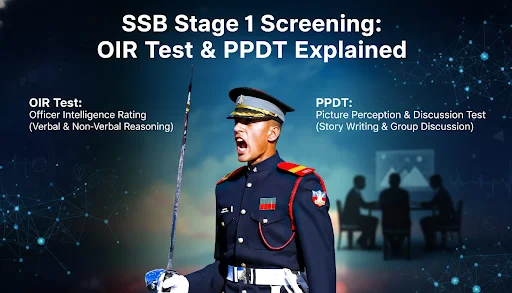
The Officer Intelligence Rating test has verbal and non-verbal reasoning questions, such as series, coding-decoding, analogies, odd one out and figure patterns. The questions are easy, but time is short.
-
Solve 40 to 50 OIR questions daily with a timer
-
Note the types of questions you get wrong and practise those more
-
Aim for speed and accuracy together
OIR test practice for even 30 minutes a day can improve your speed a lot within a week.
PPDT Practice
In the Picture Perception and Description Test, a hazy picture is shown for about 30 seconds. You then get about 4 minutes to write a story. After that, the group narrates their stories and discusses them to agree on a common story.
For PPDT practice at home:
-
Collect hazy or unclear pictures from the internet or old newspapers
-
Look at each picture for 30 seconds, then write a story in 4 minutes
-
Mark the number of characters, their age, gender and mood
-
Write a positive story with a clear hero, a problem, an action and a good result
-
Narrate your story aloud in about one minute
-
Practise group discussion on the same picture with friends
Week 3 (Days 15 to 21): Psychology Tests
These tests show your thoughts and reactions when you have very little time to think. Natural, positive and practical answers work best.
How to Practise These Tests at Home
-
TAT: Practise 2 to 3 pictures daily. Make the hero active and practical, and end the story with a realistic, positive result.
-
WAT: Practise 60 words daily with a 15-second timer. Write short, positive, observation-based sentences. Avoid preaching lines like “One should always…”.
-
SRT: Practise 20 to 30 situations daily. Write quick, sensible actions, not just feelings.
-
Self Description: Use your Week 1 notes and write honestly. Do not copy ready-made answers.
The biggest rule for the psychology tests is to be genuine. Assessors are trained to spot memorised or “ideal” answers, and these can hurt you more than they help.
Week 4 (Days 22 to 30): GTO Tasks, Interview and Revision
GTO Tasks
The Group Testing Officer watches how you work in a team, both indoors and outdoors.
Fitness matters a lot for GTO tasks. Running, push-ups, pull-ups and rope climbing (if possible) will help you take part fully and with energy.
SSB Personal Interview
The interview is a conversation, not an exam. The Interviewing Officer may ask about:
-
Your family, education, hobbies and achievements
-
Your daily routine and friends
-
Why you want to join the Armed Forces
-
Current affairs and defence news
-
Questions from your PIQ form
For the SSB personal interview, practise answering questions aloud in front of a mirror or a family member. Speak clearly, keep your answers honest and simple, and if you don’t know something, say so politely.
Days 28 to 30: Revision and Mock Practice
-
Do one full round of OIR, PPDT, TAT, WAT and SRT under real timings
-
Take a mock interview with a friend or family member
-
Revise current affairs from the last six months
-
Rest well before your SSB date
Daily Routine for SSB Preparation at Home
You can adjust this routine around college or work. Even 3 to 4 focused hours a day are enough for SSB preparation at home.
Common Mistakes to Avoid
-
Memorising answers: Ready-made TAT stories and WAT sentences sound fake and are easy to spot.
-
Ignoring fitness: Weak stamina shows clearly during outdoor GTO tasks.
-
Not knowing your PIQ: Many interview questions come straight from your own form.
-
Being too quiet or too loud: In group tasks, take part actively but respect others.
-
Skipping current affairs: Group discussions and interviews often include recent events.
-
Faking a personality: Consistency across all tests matters more than trying to look perfect.
FAQs
Can I do SSB preparation at home without coaching?
Yes. SSB preparation at home is possible if you understand each test, practise regularly with a timer and review your answers honestly. Many candidates are recommended every year without any coaching.
How many days are enough for SSB preparation?
A focused 30-day plan is enough for most candidates to understand the process and practise every test. If you have more time, start earlier and build habits like fitness and reading over a longer period.
What are the 15 Officer Like Qualities in SSB?
They are effective intelligence, reasoning ability, organising ability, power of expression, social adaptability, cooperation, sense of responsibility, initiative, self-confidence, speed of decision, ability to influence the group, liveliness, determination, courage and stamina.
How can I practise group discussion at home?
Form a small group of two to four friends and discuss one current topic every day for about 15 to 20 minutes. Focus on speaking clearly, giving sensible points and listening to others.
Is fitness important for the SSB interview?
Yes. There is no separate physical test for most entries, but good fitness helps you perform well in the outdoor tasks, which need running, jumping and climbing.
Should I memorise answers for the psychology tests?
No. The psychology tests are designed to show your natural thinking. Memorised answers often look unnatural and do not match your other tests, which can work against you.