IAF Boosts Precision Strike Power with 40 BrahMos-Equipped Su-30MKI Fighters
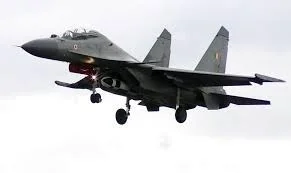
BrahMos-armed Sukhois strengthen India's long-range precision strike capability; next-generation BrahMos-NG expected by 2028–29
New Delhi: Around 40 Sukhoi Su-30MKI fighter aircraft of the Indian Air Force (IAF) have now been integrated with the BrahMos supersonic cruise missile, significantly enhancing India's long-range precision strike capabilities, according to a senior official of BrahMos Aerospace.
Speaking to Russian state-owned news agency Sputnik during the Fleet 2026 International Maritime Defence Show, BrahMos Aerospace Co-Director Alexander Maksichev said the integration programme is progressing steadily.
"The rearmament of Su-30MKI aircraft with BrahMos missiles is continuing. At present, 40 Su-30MKI fighters are already armed with these missiles," Maksichev said.
The Indian Air Force currently operates a fleet of around 270 Su-30MKI multirole fighters, which form the backbone of its combat aviation fleet. The integration of the BrahMos missile with these aircraft provides the IAF with a formidable long-range stand-off strike capability against both land and maritime targets.
Maksichev also stated that the performance of BrahMos-equipped Su-30MKI fighters during Operation Sindoor demonstrated the effectiveness of the weapon system, describing the operation as validation of the platform's combat capabilities.
The air-launched BrahMos is a specially modified version of the jointly developed Indo-Russian supersonic cruise missile. Weighing approximately 2.5 tonnes, it is lighter than the 3-tonne land-based variant and has been extensively adapted for carriage by the Su-30MKI following significant structural modifications and flight testing.
Armed with the extended-range BrahMos missile—capable of striking targets at distances approaching 450 kilometres—the Su-30MKI gains the ability to conduct precision stand-off attacks while remaining outside many hostile air-defence engagement zones. Combined with the aircraft's unrefuelled combat range of nearly 3,000 kilometres, the weapon system offers the IAF an exceptional deep-strike capability across both continental and maritime theatres.
Beyond the current missile, India and Russia are continuing collaboration on future generations of high-speed strike weapons. Aleksandr Leonov, Director General and Chief Designer at Russian missile manufacturer NPO Mashinostroyenia, said both countries are working on further upgrades to the BrahMos family while also exploring the development of hypersonic weapon systems.
In parallel, BrahMos Aerospace and the Defence Research and Development Organisation (DRDO) are developing the BrahMos Next Generation (BrahMos-NG) missile. According to Maksichev, the next-generation air-launched missile is expected to enter service between 2028 and 2029.
"The next-generation missile will be smaller, lighter and significantly more capable, featuring advanced avionics and AI-enabled guidance systems," he said.
The BrahMos joint venture between India and Russia was established in 1998 and has since evolved into one of the world's most successful supersonic cruise missile programmes, equipping all three branches of the Indian Armed Forces with advanced precision-strike capabilities.