CRPF Battalions: CoBRA, RAF and Mahila Units and Life in Posting
Quick summary
CRPF specialized battalions compared side by side: CoBRA jungle commandos, the Rapid Action Force and Mahila battalions. Selection, training, posting life, allowances and what aspirants should know before targeting one.
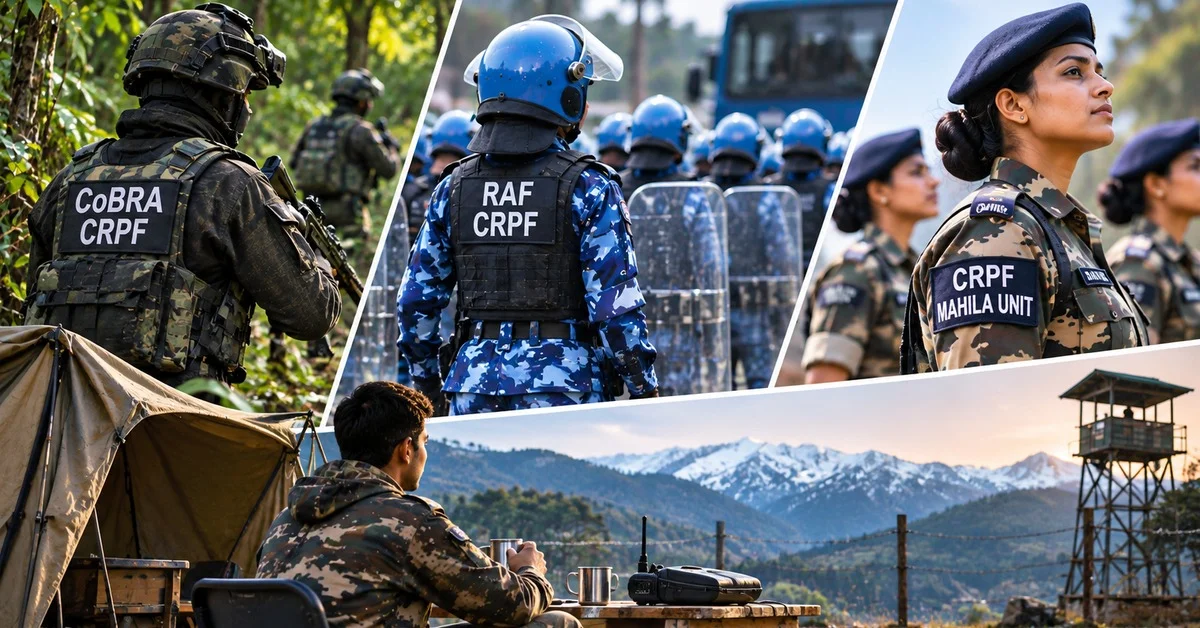
CRPF specialized battalions are units built for jobs regular battalions can’t cover alone. CoBRA is the jungle warfare force raised to fight Naxal groups, mainly in Chhattisgarh and other Left Wing Extremism states. With armed Naxalism declared ended on 31 March 2026, its battalions are being redeployed, including two ordered to Manipur and a new one raised for Jammu and Kashmir. The Rapid Action Force is the CRPF’s riot-control wing. Mahila battalions deploy women personnel for security, frisking and, increasingly, frontline duties. Posting life differs sharply across all three.
A jawan home on leave says he’s just back from Bastar. His cousin, also in the CRPF, spends his days with a riot-control company near Delhi. Same force. Completely different lives. Most defence aspirants only see the uniform, then learn that the posting shapes everything from sleep to family time.
The sections below cover CoBRA, RAF and Mahila units one by one: who gets in, how they train, where they serve and what a working day feels like. Then all three sit in a single table comparing terrain, isolation, rotation and allowances. Still choosing between forces? Read this CRPF vs BSF vs CISF career comparison first.
How CRPF Is Structured: and Where Specialized Battalions Fit
The CRPF has two broad kinds of units: general duty battalions and CRPF specialized battalions built for one narrow job. The force completed 87 years since its formation in 1939. Most jawans start in regular battalions and rotate through internal security duties in different states.
- Regular battalions: law and order and counter-insurgency deployments.
- CoBRA: jungle warfare, raised for anti-Naxal operations.
- RAF: riot control and rapid surge response.
- Mahila battalions: women personnel across security roles.
Why should you care? Your unit decides your terrain, your risk level and how often you see family. The CRPF special units page lists the full set.
CoBRA: The Jungle Commandos Who Fought Naxalism
CoBRA is the CRPF’s jungle warfare force. Its full name is the Commando Battalion for Resolute Action, and it’s described as a premier special operations force. Ten battalions were raised between 2008 and 2011 and deployed across Left Wing Extremism and insurgency-affected states, mainly Chhattisgarh and Jharkhand. Its battalions answer to a dedicated CoBRA Sector rather than the general duty chain of command.
The mandate is narrow and demanding. CoBRA units were built to find, track and engage armed Naxal cadres in Left Wing Extremism zones, usually deep forest where regular battalions can’t stay for long. The Centre declared Left Wing Extremism ended on its 31 March 2026 deadline, and CoBRA is now being redeployed: two battalions were ordered to Manipur in May 2026, and a new battalion has been raised for Jammu and Kashmir. Battalion counts and deployment areas get revised over time, so check the official CoBRA Sector page instead of trusting old figures quoted online.
Selection: Who Gets Into CoBRA and How
CoBRA picks its members from people already serving in the CRPF. You don’t apply to it from outside. A defence aspirant first joins the force through a regular entry, serves in a general duty unit, and then volunteers when the chance comes up.
Screening looks at two things: physical endurance and mental steadiness under isolation. The physical side matters. But the mental side often decides who stays. Army Special Forces selection draws from soldiers trained for conventional war. CoBRA wants police personnel who can handle long counter-insurgency work inside India, among civilians, under strict rules of engagement. The exact physical standards aren’t published in a form we can confirm, so ask your unit or check official CRPF circulars.
Training Life: What CoBRA Commandos Learn
CoBRA training is built around the forest. Recruits practise moving silently through thick cover, reading the ground and holding formation over long distances on foot.
- IED detection: spotting buried explosives along trails, the most common threat in Naxal areas.
- Night operations: moving, watching and setting ambushes after dark.
- Intelligence-based patrolling: acting on specific leads rather than sweeping areas at random.
- Survival skills: working for days with limited rations and no resupply.
Training takes place in terrain much like the operational zones, so the jungle isn’t a shock on the first real patrol.
Operational Life: Posting in Chhattisgarh’s Former Naxal Hotbed
Posting life for a CoBRA commando has revolved around forward camps in places like Bastar and Pamed. A typical cycle mixes camp security and rest with long foot patrols into the forest that can last days. With armed Naxalism declared ended in 2026, battalions are being redeployed, so terrain and threats now depend on the new posting.
Out there, phone signal often vanishes. Families may hear nothing until the team gets back to camp. Every step on a trail carries IED risk, and fatigue builds quietly across back-to-back operations.
Here’s our honest view: if you need daily contact with home or a predictable routine, CoBRA is the wrong unit for you. Rotation periods change with operational needs, so confirm current tenure rules with official CRPF sources before you volunteer.
RAF: Rapid Action Force and the Art of Surge Deployment
The Rapid Action Force is the CRPF’s specialist unit for public order, built to reach riots and communal clashes fast and bring them under control. It completed 34 years of service on 7 October 2026, which traces its raising back to 1992 according to Defence Study’s RAF Raising Day report. The force received the President’s Colour on 7 October 2003, after 11 years of service.
The RAF has grown over time. In 2017, the government approved five additional battalions. Battalion strength and the full list of duties get revised, so check the current figures on crpf.gov.in rather than older counts quoted online.
How RAF Gets Deployed: Standing Posts vs. Emergency Surge
RAF works in two modes: standing deployments at fixed bases, and short-notice surges into trouble spots. Standing companies stay near cities with a history of unrest so they can move within hours.
Surge orders follow a breakdown that local police can’t contain. In October 2026, the Union Ministry of Home Affairs ordered around 250 personnel to violence-hit Arunachal Pradesh after clashes over a hydropower project. That state already had two to three CRPF battalions on permanent deployment. The RAF companies arrived as reinforcement, not replacement.
Posting Conditions for RAF Personnel
RAF jawans mostly live in urban or semi-urban camps, which means better roads, phone signal and hospital access than CoBRA’s forest bases. Training for crowd situations is centralised. The RAF Academy of Public Order opened in Meerut, Uttar Pradesh, on 9 November 2013.
Kit is built for crowds, not combat:
- Helmets, body protectors, shields and lathis
- Tear gas launchers and shells
- Water cannon vehicles
- Communication sets for coordinating cordons
Peacetime means drills, area familiarisation and fixed duty hours. Once a deployment starts, shifts stretch long and rest comes in short breaks inside buses or makeshift camps.
Challenges Specific to RAF Jawans
RAF jawans work in full public view, with cameras recording every move. A single baton swing can trend nationally before the shift even ends.
That visibility brings legal exposure. Any use of force during riot duty may later be examined by inquiries or courts, so jawans must follow orders and the law to the letter, even when tempers on the street are high. It’s a strain that people outside the force rarely see.
The emotional load is different from CoBRA’s. You face fellow citizens, sometimes angry neighbours of the families you protect. Our view: RAF suits disciplined, patient people far more than those chasing action.
Mahila Battalions: 40 Years of Women in CRPF and What’s Changing
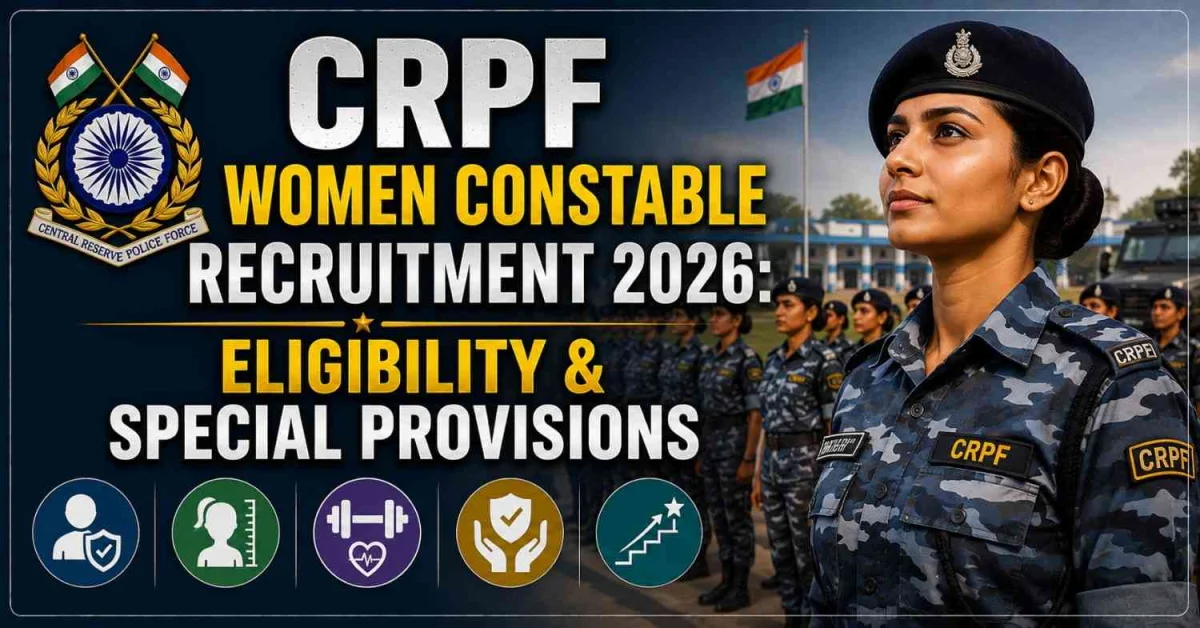
Mahila battalions are the CRPF’s all-women units, and they’ve been part of the force since 1986. In September 2026, the CRPF marked 40 years of women serving in combat roles and said it remains committed to operational readiness, progressive reforms and institutional support for women personnel.
The push is backed by recruitment targets. The Centre set a target of 5,171 women for the Central Armed Police Forces in 2025-26, a 60% increase on the previous plan. In 2016, the government also mandated 33% gender-based reservation at the constable level in the CRPF. The number of Mahila battalions changes as new units are raised, so check the current count on the official CRPF Mahila Battalions page.
Where Mahila Battalions Are Posted
Mahila battalion personnel are posted wherever the CRPF needs women on duty. That includes conflict areas, not just city assignments. Common roles include:
- Jammu and Kashmir, where women personnel handle checkpoints and crowd situations
- The Northeast and Left Wing Extremism zones, alongside other CRPF units
- VIP security and protection details
- Frisking at airports, polling booths and sensitive installations
Kashmir postings carry real danger. On 16 January 2001 in Srinagar, Constable Bindu Kumre of 88 (Mahila) Battalion was killed when six LeT militants attacked the Srinagar airport she was guarding, and she was later awarded a gallantry medal.
Daily Life on a Mahila Battalion Posting
Daily life follows a duty roster much like any other CRPF unit. That means guard shifts, checkpoint duty, drills and physical training, and the pace rises sharply during elections or unrest.
Accommodation is kept separate for women personnel, and welfare support covers things like medical care and family-related leave. Facilities vary a lot by location. A camp near a city usually has better basics than a forward post in a remote district.
Family separation is the hardest part for many. Frontier postings feel much like regular battalion life in terms of risk and isolation. The difference is that women often juggle extra family expectations back home. Anyone weighing life in CRPF posting should plan for long stretches away.
The Frontline Shift: What Greater Combat Roles Mean in Practice
The Mahila mandate is moving beyond frisking and escort duty toward operational roles. The CRPF’s 2026 anniversary statement set out greater frontline roles as a stated aim.
In practice, this changes three things on the ground:
- Training: more weapons handling, tactical drills and field exercises
- Promotion: operational experience can strengthen a service record
- Risk: more time in conflict areas means more exposure to attacks
- Expectations: women are judged on the same operational standards as male colleagues
Our view: if you’re a woman aspirant who wants real field work, this is a good time to join. Just confirm current role rules with official CRPF notices, since policies are still changing.
CoBRA vs. RAF vs. Mahila: Posting Life Compared Side by Side
The three CRPF specialized battalions differ most in terrain, isolation and pace. Allowance rules change, so confirm eligibility on crpf.gov.in.
| Factor | CoBRA | RAF | Mahila |
|---|---|---|---|
| Terrain | Dense forest; former LWE zones, now also the Northeast and J&K | Cities, towns | Mixed: urban to conflict areas |
| Isolation | Very high, signal blackouts | Low | Moderate, location dependent |
| Operational tempo | Multi-day patrols | Quiet spells, sudden surges | Steady rosters, spikes at elections |
| Hardship allowance | Depends on deployment; verify | Depends on deployment; verify | Depends on posting; verify |
| Rotation | Set by operational need | Base plus surge moves | Moves with unit tasking |
| Unit culture | Tight, shaped by CoBRA commando training | Drilled, restraint first | Adaptive, increasingly field focused |
Allowances, Pay Supplements and Benefits Across Specialized Units
All CRPF battalions follow the same basic pay structure. The real difference comes from allowances tied to where and how you serve. Here’s how that usually plays out:
- CoBRA: Left Wing Extremism postings have typically attracted risk and hardship supplements; check what applies after the 2026 declaration.
- RAF: City bases rarely add much. Pay can change during deployments to disturbed areas.
- Mahila battalions: Allowances follow the posting, so a Kashmir tenure differs from a metro assignment.
- All units: Ration, uniform and medical benefits apply across the force.
Rates get revised often. Don’t trust forwarded salary charts. Confirm current figures on crpf.gov.in before you plan around them.
What Aspirants Should Know Before Targeting a Specialized Battalion
You can’t choose a specialized battalion on your application form. Every defence aspirant enters the CRPF through a regular recruitment route, and the force then decides the posting. CoBRA takes only volunteers who are already serving. RAF and Mahila postings follow unit allotment.
Plan for years, not months. No fixed timeline from constable to CoBRA volunteer is published, so check the minimum service rules in official CRPF circulars.
Each unit looks for different strengths:
- CoBRA: endurance on long foot patrols and comfort with isolation.
- RAF: restraint and discipline when a crowd provokes you.
- Mahila battalions: adaptability across very different postings.
- All units: steady fitness and a clean service record.
What Life in a Specialized CRPF Battalion Is Actually Hard For: Honest Assessment
The hardest part is time away from home, not the danger. Specialized postings keep you far from family for long stretches, and leave follows operations, not your calendar. Tenure norms shift with operational need, so confirm them in official CRPF orders.
Stress builds differently in each unit. CoBRA wears you down through isolation. RAF does it through public scrutiny, and Mahila postings through constant movement. A specialized tenure can also feel narrow next to the varied exposure of a regular battalion.
But the trade has real rewards: hardship allowances in tough areas, skills few police personnel ever build, a stronger service record and the pride of serving where the force needs you most.
FAQs
Can a fresh CRPF recruit join CoBRA directly?
No. You join through regular entry first, serve, then volunteer.
What is the difference between RAF and regular CRPF riot duty?
RAF trains only for public order. Regular battalions handle riots as one of many internal security duties.
Are Mahila battalion personnel posted in conflict zones?
Yes, including Jammu and Kashmir and LWE areas.
How long is a typical CoBRA posting in Chhattisgarh?
It depends on operational need. Check official CRPF orders.
Which CRPF specialized unit has the highest risk factor?
Historically CoBRA, given IED threats and long forest patrols. Current risk depends on where its battalions are deployed.
Do RAF jawans get extra pay for riot deployments?
It depends on where they’re deployed. Confirm current rates on crpf.gov.in.
Tags
- CRPF specialized battalions
- CRPF battalions
- Left Wing Extremism zones
- life in CRPF posting
- CoBRA commando training
- Commando Battalion for Resolute Action
- IED detection