SSC GD Physical Standards: Height, Chest, Running and Medical Requirements
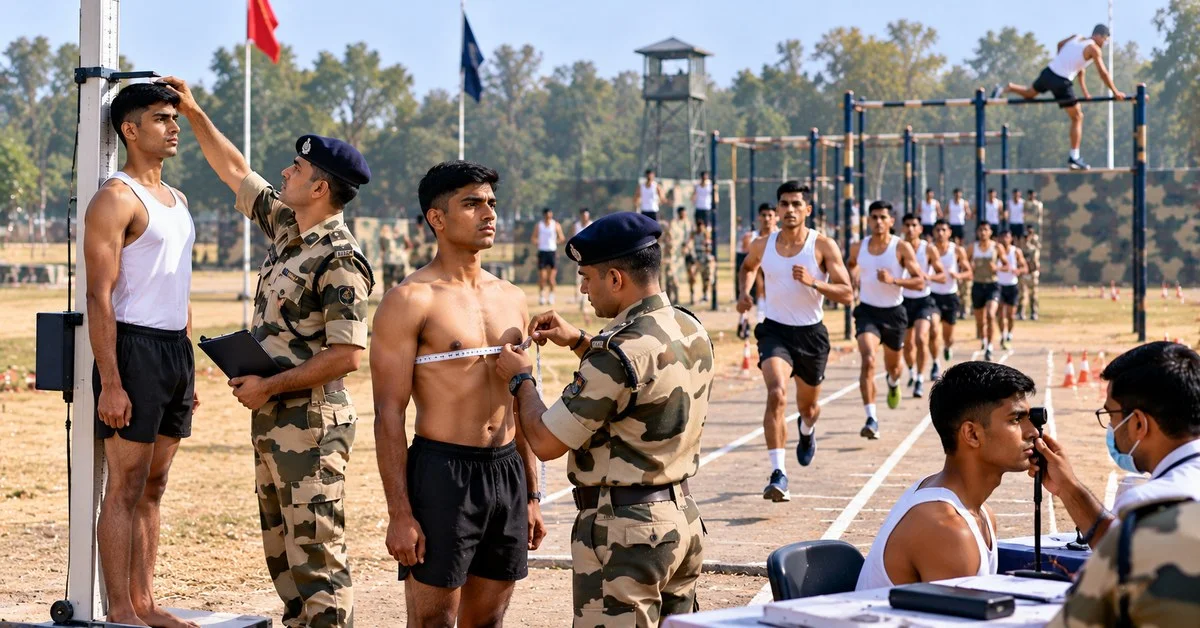
Check the SSC GD physical standards before you apply: category-wise height and chest limits, hill and North-East relaxations, PET running distance and time for men and women, eyesight rules and the medical conditions that lead to rejection.
Many candidates who clear the SSC GD written exam lose their chance on the ground, in the physical and medical rounds. Knowing the exact SSC GD physical standards before you apply is the simplest way to avoid a wasted attempt. This guide puts every key figure in one place, from height and chest to the ssc gd pet running distance and time and the eyesight rules, so you can check your eligibility in one sitting.
The standards below are taken from the latest official SSC notification and match those used in SSC GD Constable recruitment 2025. The selection has several stages, and the Physical Efficiency Test (PET), Physical Standard Test (PST) and medical examination are all qualifying. Failing any one of them puts you out of the race, whatever your written score.
SSC GD Physical Standard Test (PST): Height and Weight Requirements
The PST is where your height, and for men your chest, is measured against the standard for your category. It is a PST qualifying round, which means no marks are given. You either meet the standard or you do not move ahead. This makes it one of the most important parts of ssc gd constable eligibility.
As per the official notification, the ssc gd height and weight requirements for general-area candidates are:
-
General, OBC and SC males: Minimum height 170 cm
-
ST males: Minimum height 162.5 cm
-
General, OBC and SC females: Minimum height 157 cm
-
ST females: Minimum height 150 cm
Weight must be in proportion to your height and age as per medical standards. There is no single fixed weight figure, but candidates who are clearly underweight or overweight for their height are flagged during the medical examination.
PET and PST are conducted by the Central Armed Police Forces (CAPFs) at their own centres. Carry all the original documents mentioned in your admit card, including any certificate you need for a height or chest relaxation, as checks happen on the spot.
SSC GD Chest Measurement Standards (Male Candidates)
Chest measurement applies only to male candidates. Female candidates are not measured for chest at all. The test has two readings, the unexpanded chest and the expanded chest, and the difference between them must be at least 5 cm.
The minimum unexpanded chest by category is:
-
General, OBC and SC males: 80 cm (expanded at least 85 cm)
-
ST males: 76 cm (expanded at least 81 cm)
-
Garhwalis, Kumaonis, Dogras, Marathas, and candidates from Assam, Himachal Pradesh, J&K and Ladakh: 78 cm
-
Candidates from Arunachal Pradesh, Manipur, Meghalaya, Mizoram, Nagaland, Sikkim, Tripura and the Gorkha Territorial Administration (GTA) area: 77 cm
The unexpanded chest is measured while you breathe normally. You must then expand your chest fully and show at least 5 cm of expansion. Missing either the minimum or the expansion leads to rejection at the PST itself. The 5 cm expansion rule is the same for every category, so a relaxation on height or chest does not change it.
If you are close to the limit, regular breathing and expansion exercises in the months before your PST can help. The measurement is taken by hand, so a full, steady breath during the test matters.
Category-wise Relaxation in Physical Standards
Height and chest relaxations depend on two things: your category and the region or community you belong to. Many aspirants miscalculate their eligibility because they assume all hill and North-East candidates get the same relaxation. They do not.
The Garhwali Gorkha Assamese height norms are a good example. Garhwalis and candidates from Assam fall in one bracket, while Gorkhas from the GTA area of Darjeeling fall in another. Here is the full category-wise height relaxation as per the latest notification:
To claim any of these relaxations, you must carry a valid certificate in the format given in the notification. Without it, the general standard applies to you.
SSC GD Physical Efficiency Test (PET): Running Standards
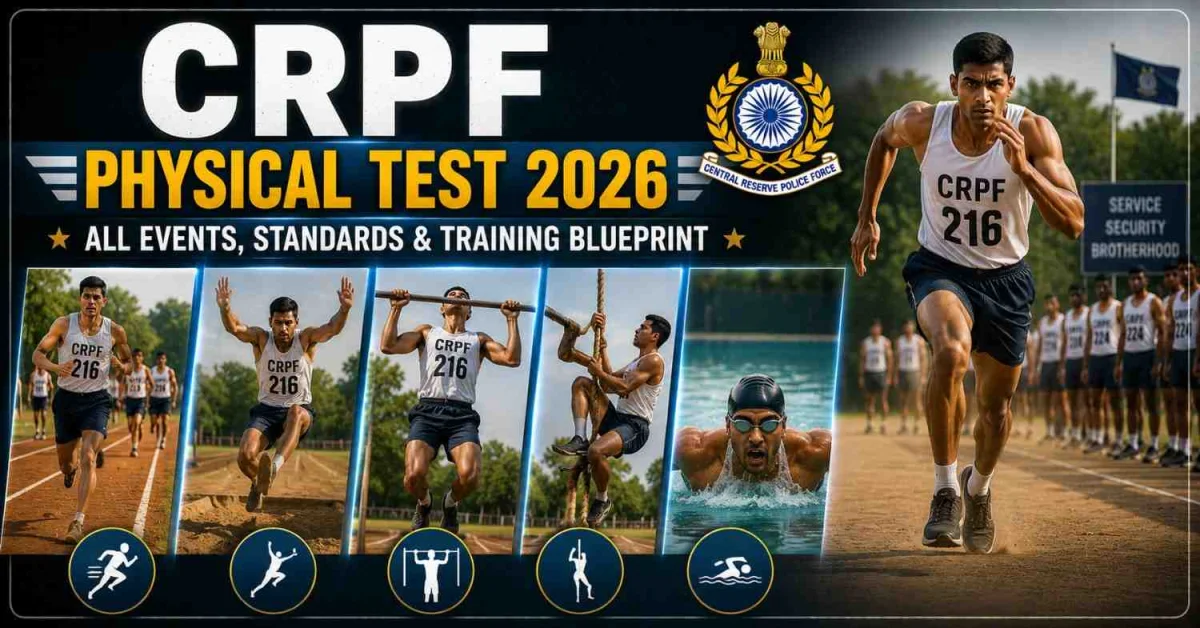
The SSC GD PET is a race, and the distance and time are different for men and women, and for candidates from the Ladakh region. It is purely qualifying. There are no marks for finishing faster, and unlike some other recruitments, SSC GD has no long jump or high jump.
The PET qualifying thresholds are:
-
Male (other than Ladakh): 5 km in 24 minutes
-
Female (other than Ladakh): 1.6 km in 8 minutes 30 seconds
-
Male (Ladakh region): 1.6 km in 7 minutes
-
Female (Ladakh region): 800 metres in 5 minutes
Candidates who do not finish within the time limit are out of the selection process. For male candidates, the 5 km race needs real stamina, not just speed. Build up your distance steadily over several weeks, and practise running the full 5 km against the clock well before your PET date.
SSC GD Medical Examination Standards: Vision, Hearing and General Fitness
Candidates who clear PET and PST and the document check go through a Detailed Medical Examination. The ssc gd medical test eyesight requirements cover both distant and near vision:
-
Distant vision: 6/6 in the better eye and 6/9 in the worse eye
-
Near vision: N6 in the better eye and N9 in the worse eye
-
Colour vision: Candidates must be able to identify standard colour plates
Colour blindness disqualification applies to all candidates, male and female. If you cannot correctly read the colour plates, you will be declared unfit even if the rest of your vision is perfect.
Hearing must be normal in both ears. ENT problems such as a perforated eardrum, chronic ear discharge or a deviated nasal septum that blocks breathing can lead to rejection. Your teeth and gums should also be healthy, as CAPF medical guidelines check a minimum number of dental points.
General fitness standards require that you have no physical deformity, no history of mental illness, no addiction to alcohol or drugs, and no condition that limits your physical ability.
Medical Conditions That Disqualify SSC GD Candidates
Knowing what can disqualify you is as important as knowing what qualifies you. Run an honest self-check against this list before your medical:
Musculoskeletal and postural conditions:
-
Knock knee: Knees that bend inwards abnormally
-
Flat feet: A missing or very low arch in the foot
-
Varicose veins: Swollen, twisted veins, usually in the legs
Knock knee, flat feet and varicose veins are among the most common reasons for medical rejection in CAPF recruitment, and SSC GD is no exception.
Vision and sensory conditions:
-
Colour blindness disqualification: Inability to read standard colour plates
-
ENT defects: Perforated eardrum, chronic ear discharge or a blocked nasal passage
-
Eye conditions: Squint or abnormal eye movements
Weight and other conditions:
-
Weight: Being clearly underweight or overweight for your height and age
-
Mental health: A recorded history of mental illness
-
Heart: Heart-related abnormalities found during the examination
Tattoos: Tattoos on the face, neck or other areas visible in uniform are not allowed. Tattoos on permitted areas such as the inner forearm, and tattoos linked to tribal customs, may be allowed if they are not offensive. Check the exact tattoo rules in your notification before your medical.
If you are declared unfit, the notification explains how to apply for a Review Medical Examination. Get any small fixable issue, such as earwax or a dental problem, checked by a doctor well before your medical date.
Meeting the SSC GD physical standards is mostly about early preparation. Measure your height and chest honestly, start running months before the PET, and get a basic eye and health check done in advance, so the written score you worked for is not lost on the ground.
FAQs
What is the minimum height for SSC GD for OBC, SC and ST male candidates?
OBC and SC male candidates need a minimum height of 170 cm, and ST male candidates need 162.5 cm. Under the Garhwali Gorkha Assamese height norms, Garhwalis, Kumaonis, Dogras, Marathas and candidates from Assam, Himachal Pradesh, Jammu and Kashmir and Ladakh need 165 cm, while candidates from the Gorkha Territorial Administration area of Darjeeling need 157 cm.
What are the eyesight requirements for SSC GD medical examination?
The SSC GD medical test eyesight requirements specify 6/6 in the better eye and 6/9 in the worse eye for distant vision. Near vision must be N6 in the better eye and N9 in the worse eye. Colour blindness disqualification applies to all candidates.
What medical conditions disqualify you from SSC GD Constable recruitment?
The disqualifying conditions include knock knee, flat feet, varicose veins, ENT defects such as perforated eardrums and chronic ear discharge, colour blindness, significant overweight or underweight relative to height, history of mental illness, cardiovascular abnormalities, and tattoos on visible areas outside permitted zones. Treat this list as a pre-check before your examination date.
What is the running distance and time standard for female candidates in SSC GD PET?
Female candidates must complete a 1.6 km race within 8 minutes 30 seconds. Female candidates from the Ladakh region must complete 800 metres within 5 minutes. There is no long jump or high jump in the SSC GD PET.
Is chest measurement required for female SSC GD candidates?
No. The SSC GD chest measurement requirement applies only to male candidates. Female candidates are not measured for chest during the PST qualifying round. Their eligibility at this stage depends on height and weight within the prescribed category norms.