CRPF Medical Test 2026: What is Checked & Common Rejection Reasons
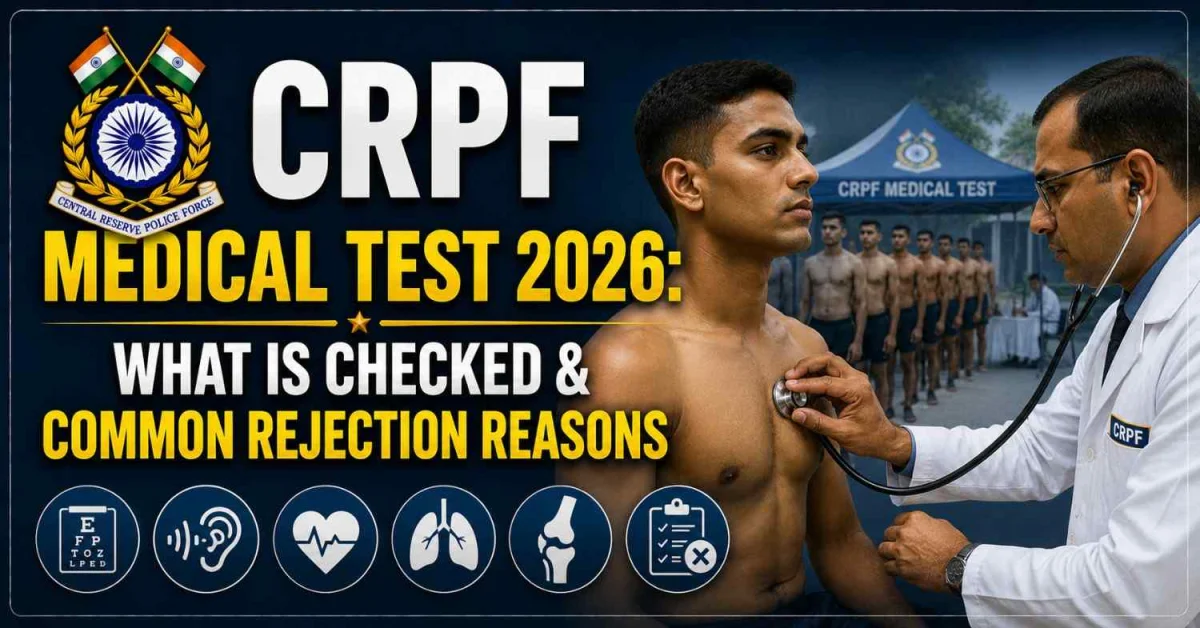
Clearing the written examination and physical tests is a major achievement for any CRPF aspirant, but the recruitment process is not over yet. The Detailed Medical Examination (DME) is one of the most crucial stages of CRPF recruitment, and every year, many candidates who perform well in the earlier stages are declared medically unfit.
This often comes as a surprise because candidates assume that being physically fit automatically means they will clear the medical examination. However, the CRPF medical test goes beyond measuring strength or endurance. It evaluates whether a candidate is medically capable of handling the demanding duties of a Central Armed Police Force (CAPF) personnel, including long deployments, difficult terrains, high-stress operations, and extreme weather conditions.
The medical examination is conducted by authorized medical boards following the medical standards prescribed for CAPFs. Candidates are assessed for vision, hearing, dental health, physical deformities, general fitness, and several other medical parameters. Even a minor condition that could interfere with operational duties may lead to temporary or permanent rejection, depending on its severity.
The good news is that many medical rejections can be avoided if candidates understand the standards beforehand and address treatable health issues well before the recruitment process begins.
In this guide, we'll explain what is checked during the CRPF Medical Test 2026, the most common reasons candidates are rejected, and how you can prepare to improve your chances of being declared medically fit.
Why is the Medical Test Important?
The CRPF is India's largest Central Armed Police Force, with personnel deployed in counter-insurgency operations, law-and-order duties, election security, disaster response, and anti-Naxal operations. These responsibilities require excellent physical and medical fitness.
The medical examination ensures that candidates can safely perform operational duties without health conditions that may affect their own safety or that of their team.
The examination is not intended to eliminate candidates unnecessarily. Instead, it ensures that every selected recruit meets the medical standards required for long-term service.
Where Does the Medical Test Come in the Selection Process?
The medical examination is conducted after candidates successfully clear the earlier recruitment stages.
The general selection process includes:
-
Computer-Based Test (CBT)
-
Physical Standard Test (PST)
-
Physical Efficiency Test (PET)
-
Document Verification
-
Detailed Medical Examination (DME)
-
Review Medical Examination (RME), if applicable
-
Final Merit List
Only candidates who qualify the previous stages are called for the Detailed Medical Examination.
What is Checked During the CRPF Medical Test?
The medical examination is comprehensive and covers almost every major aspect of a candidate's health.
Rather than checking only one or two parameters, the medical board evaluates the candidate's overall physical and mental fitness.
General Physical Health
Doctors begin with a general health assessment.
They check whether the candidate appears physically healthy and free from any disease or condition that may interfere with military duties.
The examination includes:
-
General body condition
-
Posture
-
Body build
-
Overall physical development
-
Signs of chronic illness
Candidates should maintain a healthy lifestyle well before the examination rather than attempting sudden weight loss or gain.
Height and Weight Assessment
Although height is verified during the Physical Standard Test (PST), weight is again assessed during the medical examination.
Doctors ensure that:
-
Weight is proportionate to height.
-
Body Mass Index (BMI) falls within acceptable limits.
-
The candidate is neither underweight nor excessively overweight.
Extreme obesity or poor nutritional status may affect medical fitness.
Eye Examination
Vision is one of the most important parts of the medical examination.
The medical board checks:
-
Distant vision
-
Near vision
-
Colour vision
-
Eye alignment
-
Overall eye health
According to CAPF medical standards, candidates are generally expected to have 6/6 and 6/9 distant vision in both eyes without correction, meaning spectacles or contact lenses are not permitted for meeting the minimum standard. Near vision standards are also prescribed.
Candidates may also be examined for:
-
Squint
-
Colour blindness
-
Cataract
-
Other eye disorders
Good eyesight is essential because CRPF personnel frequently operate in challenging field conditions.
Hearing Test
The ability to hear commands clearly is critical during operational deployments.
Doctors assess whether candidates have:
-
Normal hearing ability
-
No chronic ear infections
-
No hearing impairment
-
No serious ear deformities
Untreated hearing problems can affect operational effectiveness and may result in medical rejection.
Ear, Nose and Throat (ENT) Examination
Specialists examine the candidate's:
-
Ears
-
Nose
-
Throat
-
Sinuses
The purpose is to identify chronic infections, structural abnormalities, or conditions that may interfere with breathing or hearing.
Candidates suffering from persistent ENT disorders should seek treatment before the recruitment process.
Dental Examination
Dental health is another important component of the medical examination.
Doctors generally check:
-
Missing teeth
-
Gum disease
-
Severe dental infections
-
Bite alignment
-
Overall oral hygiene
Minor dental issues may be manageable, but serious untreated dental problems can affect medical fitness.
Chest, Heart and Lungs
Doctors evaluate the cardiovascular and respiratory systems to ensure candidates are medically capable of performing physically demanding duties.
The examination may include assessment of:
-
Heart sounds
-
Blood pressure
-
Lung function
-
Respiratory health
Candidates with serious heart or lung diseases may be declared medically unfit depending on the nature and severity of the condition.
Musculoskeletal Examination
The medical board carefully checks bones, joints, muscles, and body posture.
Doctors look for conditions that may limit movement or reduce operational efficiency.
Commonly examined conditions include:
-
Flat feet
-
Knock knees
-
Varicose veins
-
Joint deformities
-
Restricted movement
These conditions are among the most common reasons for medical rejection because they may affect running, marching, or prolonged field duties.
Mental and Overall Health
Candidates are also expected to be in good mental and general health.
The medical board evaluates whether any medical condition or disability is likely to interfere with efficient performance of duty.
Overall physical and psychological fitness plays an important role in the final decision.
Common Reasons for Medical Rejection
Many candidates lose their opportunity because of conditions that could have been identified earlier.
Understanding these common reasons can help aspirants prepare better.
Poor Eyesight
Vision-related issues are among the leading causes of rejection.
Common problems include:
-
Vision below prescribed standards
-
Colour blindness
-
Squint
-
Other significant eye disorders
Flat Feet
Candidates with flat feet often face difficulty during prolonged physical activities.
Because CRPF personnel are required to perform physically demanding tasks, significant flat feet may lead to rejection.
Knock Knees
Knock knees affect running efficiency and physical endurance.
This condition is specifically checked during medical examination and may result in disqualification.
Varicose Veins
Visible varicose veins may indicate circulation problems and can interfere with prolonged standing or running.
Candidates diagnosed with significant varicose veins may be declared medically unfit.
Hearing Problems
Partial hearing loss or chronic ear disorders may affect operational performance and can become grounds for rejection if they do not meet the prescribed standards.
Serious Dental Problems
Poor dental hygiene alone may not necessarily lead to rejection, but severe dental infections, multiple missing teeth, or significant oral diseases may require treatment before selection.
Obesity or Underweight
Candidates whose weight is not proportionate to their height and age may be considered medically unfit until they meet the required standards.
Chronic Medical Conditions
Medical conditions that significantly affect normal functioning may result in rejection.
Examples include:
-
Serious heart disease
-
Severe respiratory disorders
-
Uncontrolled chronic illnesses
-
Physical disabilities affecting duty performance
The medical board evaluates every case individually according to CAPF medical guidelines.
Can You Appeal Against Medical Rejection?
Yes.
Candidates declared medically unfit during the Detailed Medical Examination are generally given an opportunity to apply for a Review Medical Examination (RME) within the prescribed time, subject to the recruitment rules.
The review examination is conducted by another authorized medical board.
Candidates should carefully read the instructions provided in the recruitment notification regarding the review process.
How to Prepare for the Medical Test
The best preparation starts several months before recruitment.
Instead of worrying after clearing the written examination, candidates should monitor their health from the beginning of their preparation.
Some practical steps include:
Get a Complete Health Check-up
A routine medical examination can help identify treatable issues early.
Maintain Healthy Weight
Follow a balanced diet and regular exercise routine to keep your weight proportionate.
Take Care of Your Eyes
Avoid ignoring vision problems. If you suspect any issue, consult an eye specialist well before recruitment.
Improve Dental Hygiene
Visit a dentist if you have cavities, gum disease, or untreated dental problems.
Exercise Regularly
Regular running, stretching, and strength training improve both physical and overall health.
Sleep and Nutrition
Adequate sleep and a nutritious diet support better immunity and recovery.
Common Myths About the CRPF Medical Test
Many misconceptions create unnecessary anxiety among candidates.
"Only eyesight is checked."
No. The examination covers multiple body systems, including hearing, dental health, bones, joints, heart, lungs, and overall fitness.
"Minor health issues always lead to rejection."
Not necessarily. Many minor conditions do not affect medical fitness, while serious conditions that interfere with operational duties are of greater concern.
"The medical test can be cleared without preparation."
Although no academic preparation is required, maintaining good health beforehand significantly improves your chances of success.
Final Verdict
The CRPF Medical Test 2026 is the final and one of the most important stages of the recruitment process. It ensures that selected candidates are medically fit to perform the physically demanding duties expected of CRPF personnel. The examination includes a detailed assessment of eyesight, hearing, dental health, weight, musculoskeletal fitness, cardiovascular health, respiratory function, and overall physical condition.
Many common reasons for rejection—such as untreated dental problems, obesity, poor fitness, or undiagnosed medical conditions—can often be addressed if identified early. By maintaining a healthy lifestyle, undergoing regular medical check-ups, and understanding the prescribed standards in advance, candidates can greatly improve their chances of being declared medically fit.
The medical examination should not be viewed as an obstacle but as an essential step in ensuring that future CRPF personnel are capable of serving effectively in challenging operational environments.
FAQs
What is checked during the CRPF Medical Test?
The medical examination generally includes eyesight, hearing, ENT, dental health, height, weight, heart, lungs, musculoskeletal system, and overall physical fitness.
Can poor eyesight lead to rejection?
Yes. Candidates must meet the prescribed vision standards. Significant vision defects that do not satisfy the medical criteria may result in rejection.
Are flat feet and knock knees checked?
Yes. Flat feet, knock knees, and similar musculoskeletal conditions are specifically examined during the medical test and may lead to disqualification if they affect operational fitness.
Can I appeal if I fail the medical examination?
Yes. Eligible candidates may be allowed to undergo a Review Medical Examination (RME) according to the recruitment rules and timelines mentioned in the official notification.
How can I prepare for the CRPF Medical Test?
Maintain a healthy weight, exercise regularly, address eye or dental problems early, undergo a general health check-up, and follow a balanced diet and proper sleep routine before the recruitment process.