CRPF Assistant Commandant: How UPSC CAPF AC Selection and Force Allocation Work

Quick summary
A stage-by-stage guide to the UPSC CAPF AC 2027 selection pipeline: written papers, negative marking, PET/PST, medical, the 150-mark interview, and how force allocation to CRPF, BSF or CISF works.
Most aspirants preparing for the UPSC CAPF AC exam understand that a written test, a physical round, and an interview are involved. What they cannot map clearly is how those stages connect, what eliminates you at each gate, and how a consolidated merit rank eventually determines whether you join CRPF, BSF, CISF, ITBP, or SSB. That gap is where preparation breaks down. That’s especially true when it comes to CAPF AC negative marking Paper I.
This guide walks you through the entire selection pipeline in sequence, explains the force allocation mechanics that coaching sites rarely cover, and flags the mistakes that cost candidates at each stage. Read it end to end before you plan your preparation calendar. The same principle applies to CISF industrial security posting.
What Is the UPSC CAPF AC Exam and Who Can Apply
The UPSC CAPF AC exam refers to a centralised recruitment examination conducted by the Union Public Service Commission to select Assistant Commandants across India’s Central Armed Police Forces. This is not a CRPF-direct or force-specific recruitment. One exam, one merit list, and then a separate allocation process determines whether a candidate joins CRPF, BSF, CISF, ITBP, or SSB, which is exactly where most aspirants lose clarity on the CRPF Assistant Commandant selection process. It’s a detail worth keeping in mind for BSF border guarding role.
For 2027, UPSC will announce the total vacancies across all forces in the notification due on 17 February 2027; the 2026 cycle had 349 vacancies. The CAPF AC preference form, submitted later in the process, feeds directly into that force assignment alongside merit rank and force-wise vacancies.
Basic eligibility requires:
A bachelor’s degree from a recognised university
Age between 20 and 25 years as on the cut-off date, with relaxation for OBC (up to 3 years) and SC/ST (up to 5 years)
Indian citizenship, with physical and medical fitness as assessed across later stages
Understanding the distinction between CRPF vs BSF vs CISF starts here: all three are recruited through the same pipeline, with pay scales identical at Level 10.
Always confirm the current notification at PrepGrind’s UPSC CAPF AC page or the official UPSC website for cycle-specific dates and vacancy splits.
UPSC CAPF AC Exam Pattern and Marking Scheme (Paper I & Paper II)
The written examination carries 450 marks across two papers, and understanding the structure before you begin preparing is not optional. Paper I covers General Ability and Intelligence, is objective in format with 125 MCQs, and is worth 250 marks completed in 2 hours. Paper II covers General Studies, Essay and Comprehension, is descriptive, and carries 200 marks over 3 hours.
The most consequential detail in Paper I is CAPF AC negative marking: 0.66 marks are deducted for each wrong answer, since each question carries 2 marks and the penalty is one-third of that. Paper II carries no negative marking at all.
How much can a few careless guesses in Paper I actually shift your rank, given that CAPF AC force allocation and eventual Assistant Commandant joining to a force like CISF for an industrial security posting both depend on where you land in the final 600-mark merit list?
Always confirm the current marking scheme against the official notification at PrepGrind’s UPSC CAPF AC page before your exam cycle begins.
Stage-by-Stage Selection Pipeline: Written to Interview
The UPSC CAPF AC selection process runs through four connected stages, and understanding each one as part of a single pipeline prevents the kind of preparation gaps that knock out otherwise capable aspirants.
Stage 1: Written Examination. The written exam is the first filter and carries 450 marks across two papers. Paper I covers General Ability and Intelligence in objective MCQ format, worth 250 marks, completed in 2 hours. Paper II covers General Studies, Essay and Comprehension in descriptive format, worth 200 marks, completed in 3 hours. Critically, only Paper I carries negative marking: 0.66 marks are deducted for each wrong answer, which is one-third of the 2-mark value per question. Paper II has no negative marking.
Stage 2: PET and PST. Candidates shortlisted from the written exam attend the Physical Efficiency Test and Physical Standard Test. These are qualifying stages, not merit-counting; clearing them is mandatory to advance, but the marks do not add to your CAPF merit list rank. The PET includes a 100 metre race, 800 metre race, long jump and shot put, with separate benchmarks for men and women. For the PST, male candidates must meet a minimum height of 165 cm and weight of 50 kg; female candidates require 157 cm height and 46 kg weight.
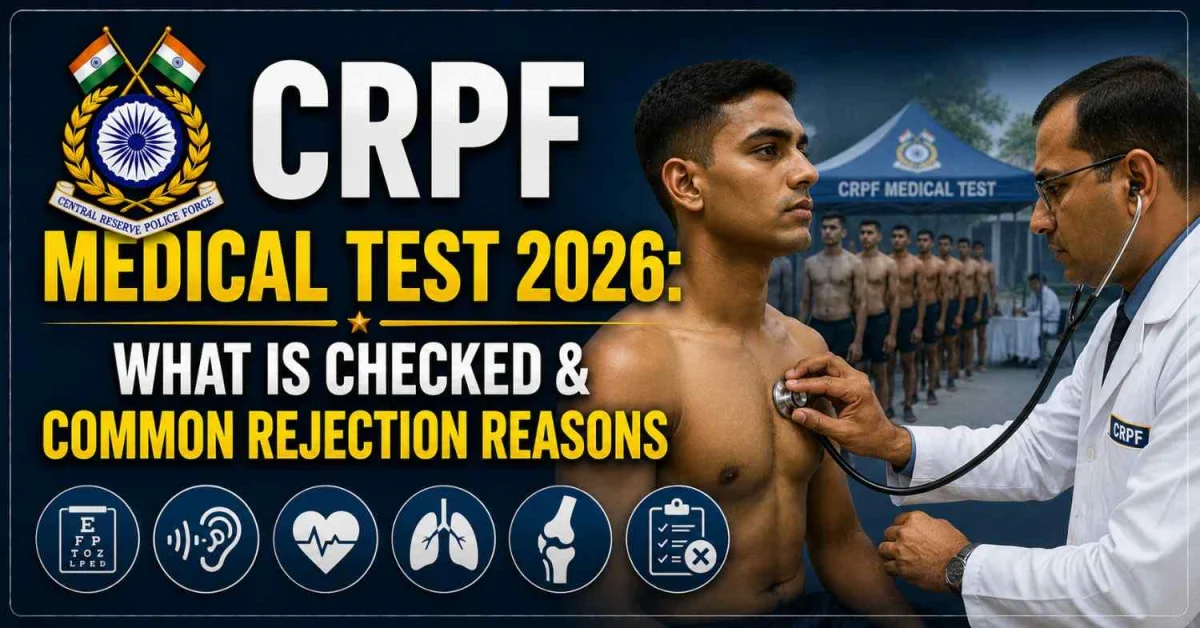
Stage 3: Medical Examination. A medical examination follows the PET and PST. This is a qualifying gateway; undisclosed medical conditions discovered at this stage lead to disqualification regardless of written performance.
Stage 4: Interview and Personality Test. Candidates who pass the medical examination appear before a UPSC board for the personality test, worth 150 marks. This stage assesses leadership qualities, communication skills, decision-making ability and suitability for the role. Unlike forces such as the BSF where the border guarding role demands specific operational temperament, assessors here evaluate broader officer potential across all five CAPF forces.
Always confirm the current UPSC CAPF AC exam pattern 2027 details, including paper-wise marks and physical benchmarks, directly from the official UPSC notification before you finalise your preparation plan.
How Force Allocation Works After the CAPF AC Merit List
Once the written examination closes, the UPSC CAPF AC pipeline moves through four sequential stages before a candidate receives a force posting. Understanding which stages build your score and which only qualify you is critical.
The written examination carries 450 marks total, split between the 250-mark objective Paper I and the 200-mark CAPF AC descriptive paper essay component in Paper II. Both papers count directly toward your final merit.
After written results are declared, candidates face the CAPF AC PET PST physical standards stage. This is qualifying only; it does not add marks to your aggregate. Refer to the UPSC CAPF notification 2027 to confirm current physical benchmarks, as standards can change each cycle.
The Interview or Personality Test then adds 150 marks, bringing the total aggregate to 600. Force allocation in the CRPF Assistant Commandant selection process follows directly from this consolidated merit rank matched against force-wise vacancies announced in the 2027 notification.
CRPF vs BSF vs CISF: Which Force and Why It Matters
The five forces covered under CAPF AC force allocation (CRPF, BSF, CISF, ITBP, and SSB) carry the same pay scale of ₹56,100 to ₹1,77,500 per month, so salary alone does not distinguish them. What differs substantially is operational role and posting reality.
BSF focuses on border guarding along international frontiers. CISF handles industrial security at airports, nuclear installations, and public sector undertakings. CRPF is deployed predominantly for internal security duties, counter-insurgency operations, and election security across states.
In CRPF vs BSF vs CISF preference discussions, candidates interested in paramilitary officer recruitment India tend to rank BSF and CISF higher due to posting predictability. CRPF postings are operationally demanding and geographically varied, which explains the forum sentiment around it being “least preferred”, though this reflects lifestyle preference, not career value.
Aspirants should download the UPSC CAPF syllabus PDF from the official notification to confirm force-wise vacancy splits for the total vacancies announced in this cycle before finalising their preference order.
6 Mistakes CAPF AC Aspirants Make Across the Selection Pipeline
Most aspirants study hard for the written stage but make avoidable errors that eliminate them well before the merit list. These six mistakes appear repeatedly across every stage of the pipeline.
Ignoring CAPF AC negative marking Paper I. Paper I carries 125 MCQs worth 2 marks each, with 0.66 marks deducted per wrong answer. Careless guessing on even 10 questions costs more than 6 marks, a margin that separates forces in a competitive merit list.
Skipping Paper II descriptive practice. Candidates fixated on the UPSC CAPF AC exam pattern 2027 objective component often neglect the 200-mark descriptive paper, which has no negative marking but demands structured writing under time pressure.
Neglecting PET fitness during GS preparation. The physical tests are qualifying gates. Failing them ends your candidacy regardless of your written score.
Undisclosed medical history at the medical stage. CAPF AC medical disqualification for undisclosed conditions is common and non-appealable in most cases. Transparency during the medical examination protects your candidacy.
Not understanding force-wise vacancy allocation before filling the preference form. Vacancies are notified force-wise in the official notification. Submitting preferences without reviewing those numbers is a preventable error.
Underestimating the 150-mark interview. The personality test carries 150 marks and directly affects your consolidated score and force assigned.
FAQs
Can you explain the complete UPSC CAPF AC selection process step by step?
The pipeline runs in four stages: written exam (450 marks across Paper I and Paper II), CAPF AC PET PST physical standards screening, medical examination, and personality test CAPF interview (150 marks). Final merit is calculated out of 600 marks total.
How does force allocation work after the merit list?
UPSC matches your consolidated rank against force-wise vacancies and your submitted preference order. Candidates ranked lower often receive CRPF internal security operations postings because higher-ranked candidates have already claimed BSF and CISF seats.
What is the negative marking rule in Paper I?
Each wrong answer costs 0.66 marks, which is one-third of the 2-mark value per question.
What medical conditions commonly disqualify candidates?
Undisclosed conditions discovered at the medical stage result in immediate disqualification. Declare every relevant history honestly.
Tags
- UPSC CAPF AC
- CRPF Assistant Commandant selection process
- CAPF AC force allocation
- UPSC CAPF AC exam pattern 2027
- CAPF AC PET PST physical standards
- CRPF vs BSF vs CISF
- CAPF AC negative marking Paper I
- Central Armed Police Forces
- Assistant Commandant joining
- CAPF merit list rank
- UPSC CAPF notification 2027
- paramilitary officer recruitment India
- CAPF AC preference form