SSC GD 2027: How to Choose Between CRPF, BSF and CISF Preferences
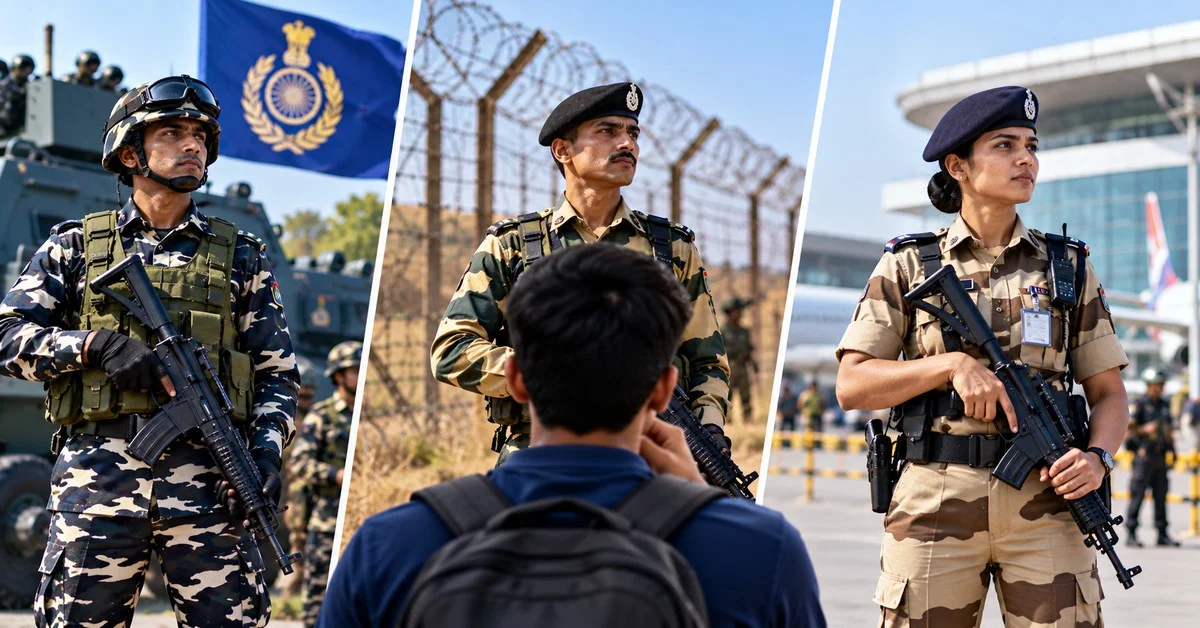
Confused about SSC GD force preference? Learn how force allotment really works, how CRPF, BSF and CISF differ in postings, work-life balance and promotion, and how to rank your preferences smartly for the SSC GD 2027 cycle.
Every year, lakhs of SSC GD candidates fill in their online application in a hurry and treat the ssc gd force preference section as a formality. It is not. The order in which you rank the forces decides where you are likely to spend the next decade of your career, how often you move, what kind of duty you do and how your promotions may move.
This guide explains how force allotment actually works, what CRPF, BSF and CISF demand from their constables, and how to rank your preferences using real vacancy data rather than gut feeling. SSC GD also recruits for SSB, ITBP, Assam Rifles and other forces, but this guide focuses on the three forces most candidates compare. By the end, you will have a clear, step-by-step way to fill your preference list with confidence.
When You Give Your Force Preference
Many candidates think they will choose their force after clearing the written exam and physical tests. In SSC GD, that is not how it works. You give your force preference in the online application form itself, before you even sit the exam. In the SSC GD 2026 cycle, candidates had to rank seven forces while applying.
This means you should study the force-wise vacancy table in the notification before you fill in the form, not after your result. Once the form is submitted, your preference order is what SSC uses at the allotment stage, so check the notification for whether any correction window allows changes.
How SSC GD Force Allotment Actually Works
Most candidates assume that putting a force at the top of their list guarantees they will get it. That is not true. The ssc gd force allotment process is a merit-based system. Your rank in the final merit list decides which forces still have seats left for you when your turn comes.
There is another factor many candidates miss: vacancies in the Central Armed Police Forces are divided by state or union territory, by category and by gender. This means you compete mainly for the seats allotted to your own state and category, not for one national pool.
The SSC GD 2027 selection process is expected to follow the same broad framework used in recent cycles:
-
Final merit list: SSC prepares the merit list after the Computer Based Examination (CBE), Physical Efficiency Test (PET), Physical Standard Test (PST), medical examination and document verification.
-
Vacancies: Force-wise vacancies, given by the Ministry of Home Affairs, are published in the official notification and further split by state, category and gender.
-
Allotment: Candidates are allotted forces in merit order against these vacancies. Each candidate gets the highest force on their list that still has a seat for their state, category and gender.
If the seats in your first-choice force are already filled by higher-ranked candidates from your state and category, you move to your next preference.
Vacancy Numbers Change Every Cycle
One of the biggest mistakes candidates make is assuming that one force always has the most seats. The force-wise split changes from cycle to cycle.
In the SSC GD 2026 notification, out of 25,487 total posts, CISF had the largest share with 14,595 posts, while CRPF had 5,490. In other cycles, the split has looked very different. That is why your first step should always be to read the MHA vacancy notification for the current cycle, including the state-wise table, before deciding your order.
A force with more seats for your state and category gives you a better chance at your merit rank. A force with very few seats fills up quickly, even if it is not your first choice.
CRPF vs BSF vs CISF: Roles, Postings and Duty Conditions Compared
Once you understand allotment, the next question is which force actually suits you. When comparing crpf vs bsf vs cisf ssc gd, the nature of duty is the single biggest difference.
CRPF (Central Reserve Police Force) is the largest of the Central Armed Police Forces by strength. It handles internal security, riot control, election duty and counter-insurgency operations. A large part of its work involves CRPF deployment LWE zones (Left Wing Extremism-affected areas) in states such as Chhattisgarh and Jharkhand, as well as duties in Jammu and Kashmir and the North-East. Postings move frequently, and constables can spend long periods in demanding operational areas.
BSF (Border Security Force) guards India’s borders with Pakistan and Bangladesh. Duty is built around border surveillance, patrolling and responding to threats along the border. Postings are often remote, and BSF border posting rotations mean constables move between border locations and other postings on a regular cycle. Family accommodation is limited at forward border posts.
CISF (Central Industrial Security Force) protects airports, metro systems, seaports, power plants, nuclear installations and public sector industrial units. CISF airport industrial security duty is more structured, with postings tied to fixed facilities. This predictability is one of the main reasons many candidates prefer it. A cisf posting ssc gd constable role usually means working in or near a town or city, which can make family life easier to plan.
All three forces work under the Ministry of Home Affairs, but their daily realities are very different. Before ranking them, ask yourself what kind of work you want to do every day.
Which Force Is Best for Career Growth and Promotion?
For many candidates, the ssc gd best force to choose comes down to one practical question: where will my career move faster? There is no simple answer, but understanding the promotion ladder helps.
All three forces follow the same broad path: Constable, then Head Constable, then Assistant Sub-Inspector (ASI) and higher ranks. Promotions are generally based on seniority, service record and the departmental courses and exams each force conducts. The exact constable to head constable promotion timeline depends on the force, the number of posts available and your own record, so it can vary widely.
A few practical points to keep in mind:
-
CISF: Fixed-location postings and more regular working hours can make it easier to prepare for departmental exams alongside duty.
-
CRPF: As the largest force, it has a big promotion pool, but also a large number of personnel competing for each higher post. Service in tough operational areas can bring recognition and awards, but comes with real risk.
-
BSF: Promotions follow seniority and merit, and field service records carry weight in assessments.
Paramilitary force promotion rules are set by each force under MHA policy and can change. For accurate timelines, refer to the latest rules of the force you are interested in rather than general claims online.
Work-Life Balance, Family Posting and Leave
For many aspirants, the ssc gd force preference decision finally comes down to one question: what will daily life look like after joining?
CISF generally offers the most stable service conditions of the three. Postings are tied to fixed installations, and constables often stay at one place for longer periods. Most postings are in urban or semi-urban areas, which gives families easier access to schools, hospitals and transport.
BSF is at the other end. Constables rotate through forward border posts, including remote and high-altitude areas. Field and peace postings follow a cycle, but field postings can be far from family quarters, and taking leave during busy operational periods is not always easy.
CRPF falls in between, but with the most uncertainty. A constable may be posted in an LWE-affected district one year and in a peace location the next, depending on operational needs. This unpredictability is an important factor for candidates with family responsibilities.
All three forces follow government leave rules, including earned leave, casual leave and medical leave. The real difference is how easily leave can be taken, which depends on the operational pressure of each posting.
How to Rank Your Force Preferences Strategically in 2027
Most candidates fill in their preference list based on what friends say or what they see in videos. A smarter method breaks the decision into three steps.
Step 1: Check the vacancies for your state and category. Read the force-wise and state-wise vacancy tables in the notification. Note which forces have more seats for your state, category and gender, and which have very few.
Step 2: Estimate your merit bracket. Look at previous cycles’ state-wise and category-wise cut-offs to judge where your score is likely to land. Be honest with yourself. If you expect to be close to the cut-off, forces with more seats for your state give you a better chance.
Step 3: Match your priorities and build a safe list. Decide what matters most to you: stable postings, field exposure, border duty or promotion prospects. Then:
-
Put your genuine first choice at the top, even if competition is high. If seats remain when your rank comes up, you will get it.
-
Place a realistic option second, based on your merit bracket and the vacancies for your state.
-
Keep the force with the most seats for your state lower down as a safety net, and only include forces you would genuinely be willing to join.
Candidates who put their real first choice second, out of fear of not getting it, often end up in a force they never wanted even when their first choice still had seats left.
FAQs
Which force should I put first in SSC GD, CRPF, BSF, or CISF?
There is no single correct answer, but a clear decision framework exists. First, estimate your likely merit bracket based on your score and the SSC GD category cutoff trends from previous years. Second, check the force-wise and state-wise vacancies in the MHA vacancy notification to see which forces have more seats for your state and category. Third, rank your genuine first choice at position one, a realistic option next, and keep the force with the most seats for your state lower down as a safety net. Candidates serious about finding the ssc gd best force to choose should treat this as a three-step process, not a gut call.
Does merit rank affect which force I get in SSC GD?
Yes, directly. The allotment process moves top-down through the merit list. Higher-ranked candidates fill vacancies in their first-preference force first. If those seats are exhausted by the time your rank comes up, the system moves to your next listed preference. Your preference order only matters if vacancies remain when your rank is reached.
Can a low-merit SSC GD candidate still get CISF?
It depends on the cycle. In the SSC GD 2026 notification, CISF had the largest share of vacancies, 14,595 out of 25,487, so the chances of getting CISF were better than in cycles where it had fewer seats. Because allotment also depends on state-wise and category-wise vacancies, always check the latest seat counts before deciding where to place CISF.
Which paramilitary force has better promotion prospects for SSC GD constables?
CISF has a well-regarded departmental examination route that allows constables to progress to Head Constable and ASI with relatively structured timelines. Paramilitary force promotion timelines across all three forces are governed by MHA policy, but CISF’s fixed-location postings make exam preparation more consistent for serving personnel.
What is the difference between BSF and CISF posting for SSC GD?
BSF postings rotate frequently along international borders, often in remote and operationally active areas. CISF postings are tied to fixed installations such as airports, metro networks, and industrial units, which means more predictable schedules and greater proximity to urban areas.