How to Choose Between NDA, CDS and AFCAT After Class 12 and Graduation
Quick summary
Not sure whether NDA, CDS or AFCAT fits you? Compare who conducts each exam, eligibility and age limits, and how selection differs. Then find your route in four short answers by stage and goal.
Pick by your education stage. NDA is the route after Class 12 for ages 16.5 to 19.5. CDS and AFCAT need a graduate. Choose CDS for Army, Navy or Air Force entry, and AFCAT if you want only the Air Force. Confirm details on upsc.gov.in and afcat.cdac.in.
You've just finished Class 12, or your final year is almost over, and three exam names keep landing in your WhatsApp groups. Everyone has a different opinion. Few explain which one fits you.
This guide settles the NDA vs CDS vs AFCAT question in plain terms. You'll see who runs each exam, who can apply, how selection differs, and four short answers matched to your situation.
NDA, CDS and AFCAT at a Glance
All three exams lead to a commission as an officer, but they differ in who runs them and when you can enter. The National Defence Academy exam and the Combined Defence Services exam are held by UPSC, while AFCAT is conducted by the Indian Air Force.
Here's the quick comparison before the detail:
- NDA: the entry point right after Class 12. You train at the National Defence Academy first and move to a service academy afterwards.
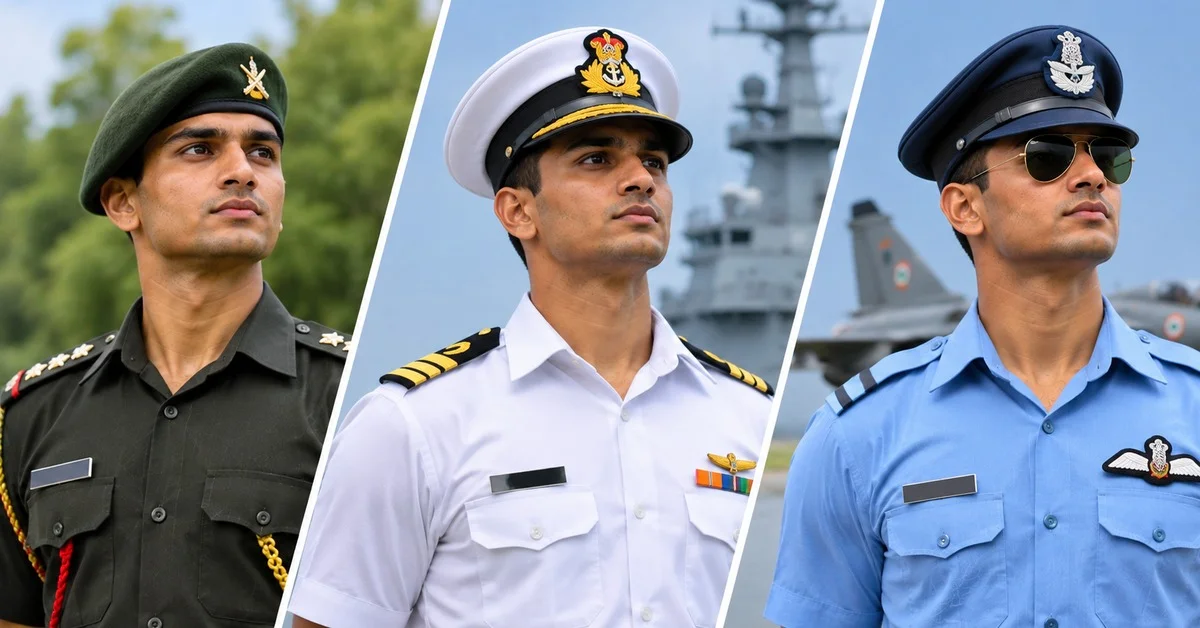
- CDS: for graduates. It feeds the Indian Military Academy, Indian Naval Academy, Air Force Academy and Officers' Training Academy.
- AFCAT: for graduates who want the Air Force only. It covers the Flying branch and the Ground Duty branches.
- Official portals: upsc.gov.in for NDA and CDS, and afcat.cdac.in for AFCAT.
So the first filter is simple. If you're still in school or just out of it, NDA is the one open to you. If you hold a degree, your choice is between CDS and AFCAT, and that depends on which force you want.
That's why the NDA vs CDS vs AFCAT debate rarely has one winner. The answer changes with your stage, your age and the uniform you want to wear. If you're stuck on which defence exam after 12th makes sense, the stage-wise answers further down will help.
One habit will save you trouble. Every notification sets its own dates and limits, so read the current one on the official portal before you plan your year. For a wider view of the three routes, this CollegeDekho comparison is a useful second read. The NDA CDS AFCAT selection process also differs in the stages after the written test, which a later section covers.
Eligibility and Age Limits Compared
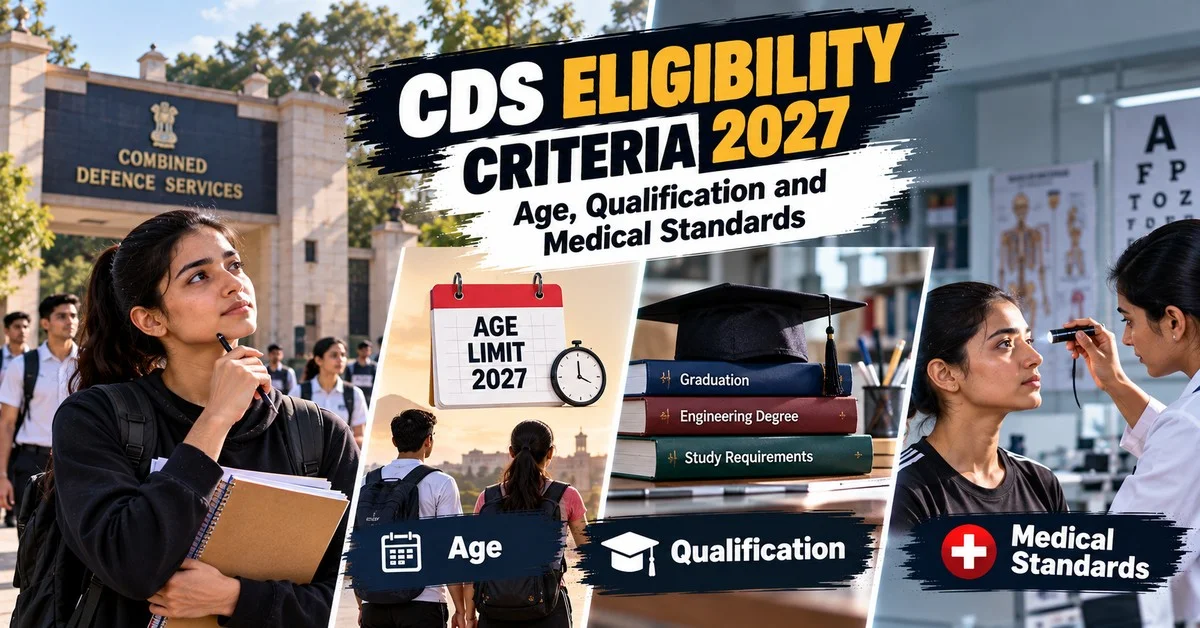
Your education stage and your age decide which of these exams is open to you. NDA asks only for a Class 12 pass or a candidate awaiting the final result. CDS and AFCAT both ask for a degree, so they sit in the group of defence exams after graduation.
CDS age windows depend on the academy you target:
- Indian Military Academy: 19-24 years.
- Air Force Academy: 20-24 years.
- Officers' Training Academy: 19-25 years.
- Indian Naval Academy: its window and degree rule are listed in each notification, and sources differ, so check it before you plan.
AFCAT splits by branch. The Flying branch takes graduates aged 20 to 24, while the Ground Duty branches (technical and non-technical) take 20 to 26.
The degree rules differ too. Flying needs 10+2 with 50% in Maths and Physics, plus graduation in any discipline. Non-technical Ground Duty needs a graduate with a minimum of 60% marks.
Here's where the NDA or CDS after graduation question gets practical. Once you cross the NDA age ceiling, NDA is closed to you for good, but a degree keeps CDS and AFCAT open. Age is measured on a fixed date set in each exam's notice, not on the day you apply, so one month can decide an attempt.
Every figure above comes from secondary sources. Treat them as a planning guide, and read the current UPSC notification or the AFCAT notice on the official portal before you pay a fee or book a coaching slot elsewhere. If a limit differs there, the notification wins.
How the Selection Process Differs
Every route pairs a written test with a personality and officer-potential stage, then a medical check. What changes is the paper, the marks and who runs the second stage.
For NDA, the written exam has two papers: Mathematics for 300 marks and the General Ability Test for 600, which makes 900 marks in total. The SSB Interview then carries another 900 marks, so the full scale is 1800. Wrong answers lose one third of the marks. For the stage-by-stage flow, read this NDA selection explainer.
CDS papers are shorter and split by subject. English and General Knowledge are 100 marks each over 2 hours, and Mathematics is also 100 marks but doesn't apply to the Officers' Training Academy. Qualifiers go to the SSB Interview, as with NDA.
AFCAT stands apart. It's a single paper of 100 multiple-choice questions for 300 marks, covering General Awareness, Verbal Ability, Numerical Ability, Reasoning and Military Aptitude. Ground Duty Technical candidates sit an extra Engineering Knowledge Test of 45 minutes, with 50 questions for 150 marks. Selection then moves to the Air Force Selection Board, called AFSB, rather than an Army-style SSB centre.
That's the real split in the NDA vs CDS vs AFCAT comparison. NDA and CDS send you to the SSB Interview, while AFCAT sends you to AFSB. Each stage tests the same core qualities, but the board, the schedule and the force behind it differ.
A fair note on CDS or AFCAT: the written papers look similar in style, yet CDS includes Mathematics for most academies and AFCAT adds Military Aptitude. Whichever you choose, the medical decides the final merit list, so keep your fitness and eyesight in good shape from day one. Confirm the live pattern in the notification before you start your plan.
Which Exam Should You Choose?
Choose the exam that matches your education stage first, then your age, then the force you want. Those three filters remove most of the confusion in the NDA vs CDS vs AFCAT debate.
Training also differs by route. The NDA path runs three years at Khadakwasla and a further year at the service academy, so you spend four years as a cadet before commissioning. Graduate entries are shorter in the classroom but start later in life. Neither is better in itself, and the right fit depends on where you stand today. Find your situation below.
If You Are in Class 12 Now
Take NDA. It's the only one of the three open to a Class 12 pass or a candidate awaiting the final result, and its window is short. The cut-off is tied to birth dates, not to how ready you feel. For NDA 1 in 2027, candidates born between 2 July 2008 and 1 July 2011 were expected to be eligible.
That means a single missed notification can cost you a full year of your window. Men also need a minimum height of 157 cm, with relaxations for certain regions, so check your physical standards early. The Army wing accepts any stream. The Navy and Air Force wings expect Physics and Mathematics at Class 12.
Keep a graduate backup in mind, because CDS and AFCAT stay open after a degree. But if NDA is your dream, put your first real attempt in Class 12 and treat the degree as plan B.
If You Are a Final-Year Graduate or Graduate
Start with CDS if you want the widest choice. One exam leads to the Indian Military Academy for the Army, the Indian Naval Academy for the Navy, the Air Force Academy for the Air Force, and the Officers' Training Academy for Short Service entry. You pick your preferences, and the merit list decides the rest.
Check your degree against the academy you want. The Naval Academy route asks for an engineering degree, and the Air Force Academy asks for Physics and Maths at 10+2. Those two rules have knocked out more graduates than the exam itself.
You can sit CDS while you wait for results, so there's no reason to lose a cycle. Prepare English, General Knowledge and Mathematics together, and brush up your SSB Interview basics early. Your SSB Interview prep never expires, so it helps whichever route you take.
If You Want Only the Air Force
Go for AFCAT. It's the Air Force's own entry, and it keeps you away from the Army and Navy seats CDS adds. Two branch families sit under it: Flying, and Ground Duty (technical and non-technical).
The Flying branch is the harder gate. It has the narrower age band, and physical and vision standards are stricter than for ground roles.
One more rule trips people up. Candidates below 25 years must be unmarried. If a branch has a Physics-and-Maths condition and you studied Biology, confirm the rule on afcat.cdac.in before you spend a year preparing.
If You Missed the NDA Age Window
You haven't lost the uniform, only the first door. Plan CDS or AFCAT for the end of your degree, and use the gap years to build your base.
A practical timeline: use the early years to strengthen English and Maths, add current affairs in the middle years, and take your first real attempt in your final year. That way you arrive at the NDA CDS AFCAT age limit stage with practice behind you, not a blank notebook.
If you're torn between the two graduate routes, ask one question: do you want the Air Force only, or are you open to the Army and Navy as well? Open means CDS, and Air Force only means AFCAT. Stay flexible, because nothing stops you from sitting both in different cycles when the age windows allow.
FAQs
What is the age limit for NDA, CDS and AFCAT?
NDA has the shortest window, and CDS and AFCAT run through the early twenties with small differences by academy or branch. The exact figures are in the comparison above. Each notification sets its own cut-off date, so confirm it there.
Can I apply for all three exams?
You can apply for every exam you meet the NDA CDS AFCAT eligibility rules for. A Class 12 candidate is eligible only for NDA. A graduate within the age limits can aim at both CDS and AFCAT, as long as the exam dates and notification rules allow it.
Should I choose NDA or CDS after graduation?
It depends on your age. If you're still inside the NDA age band and haven't finished your degree, NDA remains open. Once you're past that band, CDS is the main route to the Army, Navy and Air Force.
Is CDS or AFCAT better after graduation?
Neither is better in general. Pick CDS if you're open to any of the three forces, and AFCAT if you want the Air Force only. If you dream of flying, check the Flying Branch standards before you commit a year to it.
How does the selection process differ across the three exams?
NDA and CDS both end in the SSB Interview after the written test, while AFCAT leads to the Air Force Selection Board, called AFSB. Marks and paper style vary, so read the selection section above and the live notification.
Tags
- NDA vs CDS vs AFCAT
- which defence exam after 12th
- NDA or CDS after graduation
- CDS or AFCAT
- NDA CDS AFCAT age limit
- NDA CDS AFCAT eligibility
- NDA CDS AFCAT selection process
- defence exams after graduation