Lt Gen Pushpendra Singh Performs Shastra Pujan With Troops in Jammu Sector on Dussehra
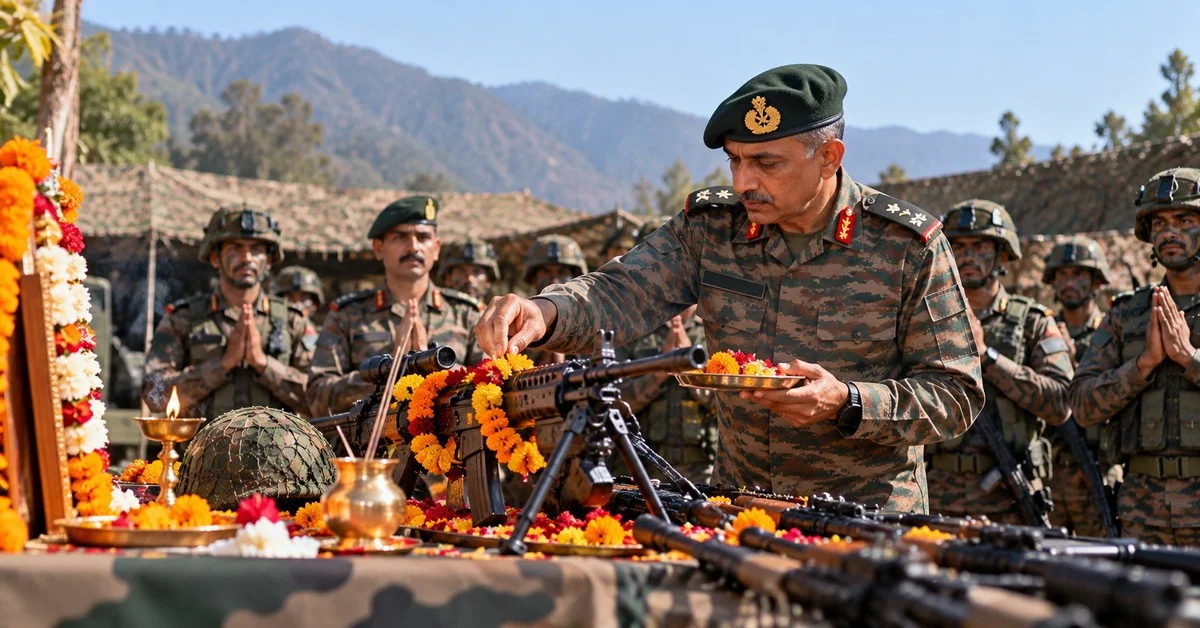
On Dussehra, Western Command chief Lt Gen Pushpendra Singh joined troops in forward areas of the Jammu Sector for the traditional Shastra Pujan, reviewed their operational readiness and praised their high morale in tough conditions.
Lt Gen Pushpendra Singh, AVSM, SM**, General Officer Commanding-in-Chief (GOC-in-C) of the Indian Army’s Western Command, marked Dussehra with soldiers posted in the forward areas along the Jammu border. During the visit, he took part in the traditional Shastra Pujan, or worship of weapons, along with the troops.
What happened during the visit
The Army Commander spent the festival with soldiers deployed along the frontier. His visit covered:
-
Weapon worship: He joined troops in the traditional weapon worship ceremony held across the armed forces on Dussehra.
-
Review of readiness: He checked the operational preparedness of the formations and troops guarding the strategically important sector.
-
Meeting the troops: He interacted with soldiers serving in forward posts and spoke to them about their duties.
Message to the soldiers
The Army Commander praised the troops for their high level of combat readiness and strong morale, even while working in tough conditions. He appreciated their professionalism and dedication, and urged them to keep up the highest standards of readiness at all times.
No other details, such as the units visited or the number of troops present, were shared.
What is the weapon worship ceremony?
This ceremony is an old tradition in which weapons are worshipped on Dussehra, also known as Vijayadashami. The festival celebrates the victory of good over evil, marking Lord Rama’s win over Ravana. Another popular story linked to the day is that of the Pandavas, who are said to have taken back their weapons from a Shami tree on this day after their exile. Because of these stories, the day has long been seen as the right time to honour weapons and tools of work.
In the armed forces, units across the country hold the ceremony every year. Soldiers clean and arrange their weapons, from rifles to larger equipment, and offer prayers before them. The ritual is a way of showing respect for the weapons that protect soldiers and the nation.
The ceremony reflects the Army’s warrior ethos and the special bond between a soldier, his weapon and his duty to defend the country. For troops posted far from home during festivals, such events also bring units together and lift their spirits.
Why this sector matters
The Jammu region is one of the most sensitive areas along India’s western border. Troops posted here keep a close watch on the border and the Line of Control, and remain on alert against infiltration attempts and other threats.
Senior commanders often visit forward areas during festivals to spend time with soldiers who cannot be with their families. Many soldiers spend major festivals such as Diwali, Dussehra and Holi at their posts, far from home. A visit from a senior officer on such days is a reminder that their service is valued. Such visits also give commanders a first-hand look at ground conditions and the readiness of their troops.
About the command
The command he heads is one of the Indian Army’s main operational commands. It is headquartered at Chandimandir, near Chandigarh, and is responsible for guarding an important part of the country’s western frontier, with several corps and formations under it.
For aspirants
Traditions like this are an important part of life in the Indian Army. They build unit spirit and remind soldiers of the values they serve. For aspirants preparing for the SSB interview, knowing about such customs and about the role of the Army’s commands shows genuine interest in the life you hope to join. It can also help in group discussions and personal interviews, where questions on Army traditions and current events often come up. It also helps to know the Army’s basic structure: the country is divided into several commands, each headed by a GOC-in-C of the rank of Lieutenant General, who reports to the Chief of the Army Staff.