Indian Army Arms and Services: Infantry, Armoured Corps, Artillery and More Explained
Quick summary
Infantry, Armoured Corps, Artillery, Engineers or ASC? This guide explains every Indian Army arm and service, what each branch does on the ground, and how branch allocation works after NDA and IMA.
Most defence aspirants know they want to join the Indian Army. Far fewer understand what happens after the written exam, the SSB and the training academy: how the Army decides whether you will lead an infantry platoon, command a tank troop or direct artillery fire. That decision runs through the system of Indian Army arms and services, and a poorly thought-out preference can leave you in a branch that does not suit your strengths.
This guide explains each major Arm and Service, what every branch actually does on the ground, and how Indian Army branch allocation at NDA and IMA works, so you can fill your preference form with a clear head.
Arms and Services in Indian Army: The Key Difference
Understanding the structure of Indian Army arms and services is the first step before choosing a branch. If you are searching for the arms and services in Indian Army difference, the short answer is this:
Arms are the branches that fight or directly support the fight. They are further divided into Combat Arms (which close with and destroy the enemy) and Combat Support Arms (which give those fighting units firepower, mobility, protection and communications).
Services are the branches that sustain the Army through logistics, supply, equipment maintenance, medical care and administration.
Here is how the Indian Army groups its branches:
Combat Arms
Infantry
Mechanised Infantry
Armoured Corps
Combat Support Arms
Regiment of Artillery
Army Air Defence
Army Aviation Corps
Corps of Engineers
Corps of Signals
Intelligence Corps
Services
Army Service Corps (ASC)
Army Ordnance Corps (AOC)
Corps of Electronics and Mechanical Engineers (EME)
Army Medical Corps, Army Dental Corps and Military Nursing Service
Army Education Corps, Judge Advocate General’s Department, Corps of Military Police, Remount and Veterinary Corps and others
Every commissioned officer belongs to one of these branches after allocation. With about 1.2 million active personnel, the Indian Army is one of the largest land forces in the world, and every one of those soldiers serves within this framework.
Combat Arm vs Support Arm: Why the Distinction Matters
The combat arm vs support arm question is not about importance. Modern wars are won through combined arms operations, where infantry, tanks, artillery, engineers, air defence and signals work as one team. A tank assault fails without engineers to clear minefields, artillery to suppress enemy positions and signals to keep everyone connected.
The difference lies in daily role. Combat arms officers train to lead troops in direct battle. Support arms officers bring specialist firepower, technical skills or communications to that fight. Services officers make sure the entire force stays fed, fuelled, armed, repaired and medically fit.
The Combat Arms of the Indian Army
Infantry: The Queen of Battle
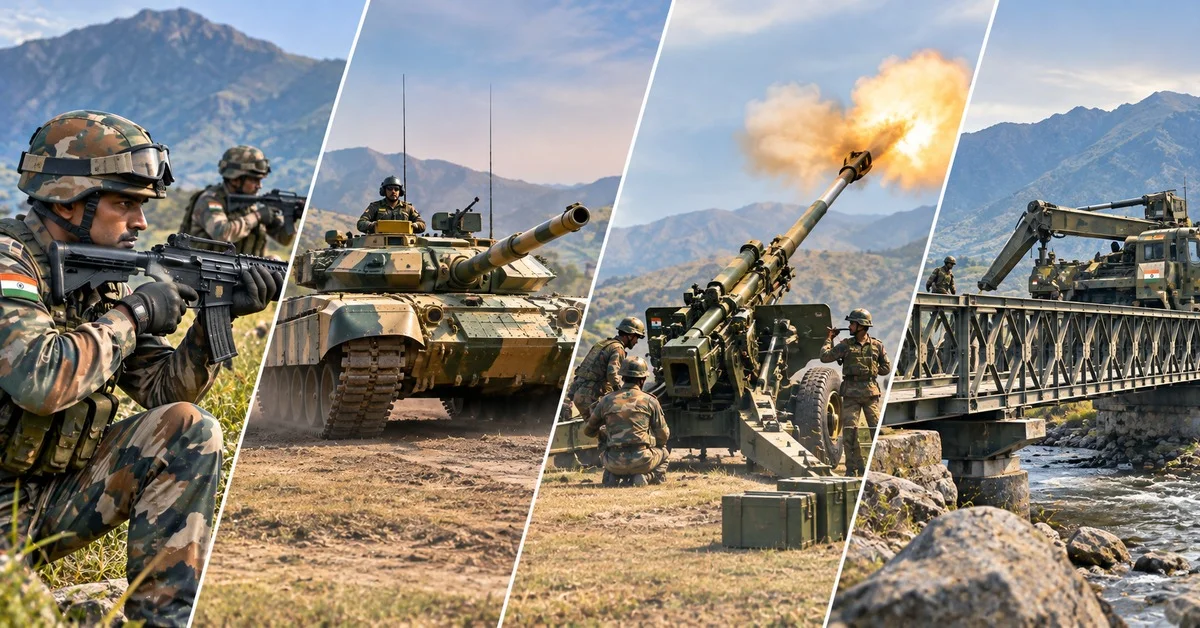
Infantry is the largest arm of the Indian Army and carries its oldest responsibility: closing with the enemy, taking ground and holding it. Often called the Queen of Battle, Infantry units fight in every kind of terrain, from the Siachen Glacier and Ladakh’s high plateaus to the jungles of the Northeast and the deserts of Rajasthan. They also carry the main load in counter-insurgency and counter-terrorism operations.
The regimental system of the Indian Army is strongest in the Infantry. Regiments such as the Sikh, Gorkha, Rajputana Rifles, Madras and Kumaon each have their own traditions, recruiting areas, war cries and battle honours built over generations. An infantry officer usually spends a large part of their career with one battalion, which creates a close bond with the men they command.
Officers can join Infantry through Permanent Commission (via NDA, IMA and other regular entries) or Short Service Commission (via OTA Chennai). Infantry also includes elite units such as the Parachute Regiment and its Special Forces battalions.
Mechanised Infantry: Fighting on the Move
Mechanised infantry is a separate combat arm, organised as the Mechanised Infantry Regiment and the Brigade of the Guards. These soldiers move and fight from infantry combat vehicles such as the BMP-2 “Sarath,” allowing them to keep pace with tanks across plains and deserts. In armoured formations, mechanised infantry protects tanks from enemy infantry and anti-tank teams while tanks provide heavy firepower in return. The Mechanised Infantry Regimental Centre is located in Ahilyanagar (formerly Ahmednagar), Maharashtra.
Armoured Corps: Strike Force on Tracks
The Armoured Corps is the Indian Army’s main strike arm. Its role is to break through enemy defences, deliver shock action and push deep into enemy territory at speed. It is the modern successor to the cavalry, and many armoured regiments still carry historic cavalry names such as Poona Horse, Hodson’s Horse and Deccan Horse.
The T-90 Bhishma tank forms the backbone of the Corps, supported by the T-72 Ajeya and the indigenous Arjun main battle tank. All Armoured Corps training takes place at the Armoured Corps Centre & School in Ahilyanagar (formerly Ahmednagar), Maharashtra, which also houses the School of Armoured Warfare and the Cavalry Tank Museum.
Armoured officers serve mostly in the plains and desert sectors, with an increasing presence in eastern Ladakh, where tanks now operate at high altitude.
The Combat Support Arms
Regiment of Artillery: The God of War
Artillery is often called the God of War because it shapes the battlefield before infantry or tanks make contact. The Regiment of Artillery is the second-largest arm of the Army. It operates towed guns, self-propelled guns such as the K9 Vajra, the Pinaka multi-barrel rocket system, missiles, mortars and surveillance drones.
Artillery officers learn ballistics, fire control, target acquisition and coordination with infantry and armour. In combined arms operations, artillery suppresses and destroys enemy positions so that friendly troops can advance with fewer casualties. Artillery is also the first combat-related arm opened to women officers, which makes it a significant option for women cadets.
Army Air Defence
Army Air Defence protects ground forces from enemy aircraft, helicopters, drones and missiles. It operates a layered mix of systems, from shoulder-fired MANPADS and short-range guns to medium-range missile systems such as Akash and MRSAM. With drones now a major threat on modern battlefields, counter-drone work has become a growing part of this arm’s role.
Army Aviation Corps
The Army Aviation Corps, raised in 1986, flies helicopters for reconnaissance, troop transport, logistics in high-altitude areas and casualty evacuation (CASEVAC). It also has a firepower role through attack helicopters such as the ALH Rudra, the Light Combat Helicopter Prachand and the Apache AH-64E. Officers usually join Army Aviation after first serving in another arm and then clearing the selection and flying training for aviation.
Corps of Engineers and Corps of Signals
The Corps of Engineers and Corps of Signals are both Arms, not Services, a point many guides get wrong.
Corps of Engineers: Engineers build bridges across rivers, clear minefields, construct defences and create the tracks, roads and helipads that let the Army move. In battle, combat engineers move alongside infantry and tanks to remove obstacles in real time. The Corps also includes the Military Engineer Services and supports the Border Roads Organisation.
Corps of Signals: Signals is the Army’s communications backbone. Signals officers run everything from tactical radio nets at battalion level to secure satellite and data networks linking commands. They also handle electronic warfare and cyber-related tasks.
Together, the Corps of Engineers and Signals in the Indian Army attract many technically minded officers, including most entrants from the Technical Graduate Course and 10+2 Technical Entry Scheme.
The Services of the Indian Army
Services keep the Arms fighting. They are organised around specialist functions rather than the infantry-style regimental system, though each corps has strong traditions of its own. Officers in Services hold the same ranks and opportunities for higher command as those in the Arms.
Army Service Corps (ASC): Handles logistics, supply and transport. ASC delivers rations, fuel and stores to every unit, including posts that can only be reached by mule or helicopter. Without the ASC, forward units would run short of food and fuel within days.
Army Ordnance Corps (AOC): Manages ammunition, weapons, clothing, vehicles and spare parts across the Army.
Corps of EME: Repairs and maintains the Army’s equipment, from rifles and radios to tanks, guns and helicopters.
Army Medical Corps: Provides medical care in peace and war, from field hospitals to command hospitals.
Other Services: The Army Education Corps, JAG Department, Corps of Military Police and Remount and Veterinary Corps each cover specialist needs.
How Indian Army Branch Allocation Works at NDA and IMA
NDA cadets do not get their arm or service at NDA itself. After three years at NDA, they move to IMA Dehradun, where branch allocation takes place during the final term alongside direct-entry gentleman cadets. Four main factors decide where you go:
Order of merit: Your overall performance at the academy.
Preference: The arms and services you list in order of choice.
Medical category: Some branches, such as Aviation, have stricter medical standards.
Vacancies: The number of seats each arm or service has for your course.
Technical entries such as TGC and TES are mostly allocated to Engineers, Signals and EME, in line with their engineering background. Vacancy numbers and rules change from course to course, so always check the current process on joinindianarmy.nic.in and upsc.gov.in.
Arms and Services Open to Women Officers
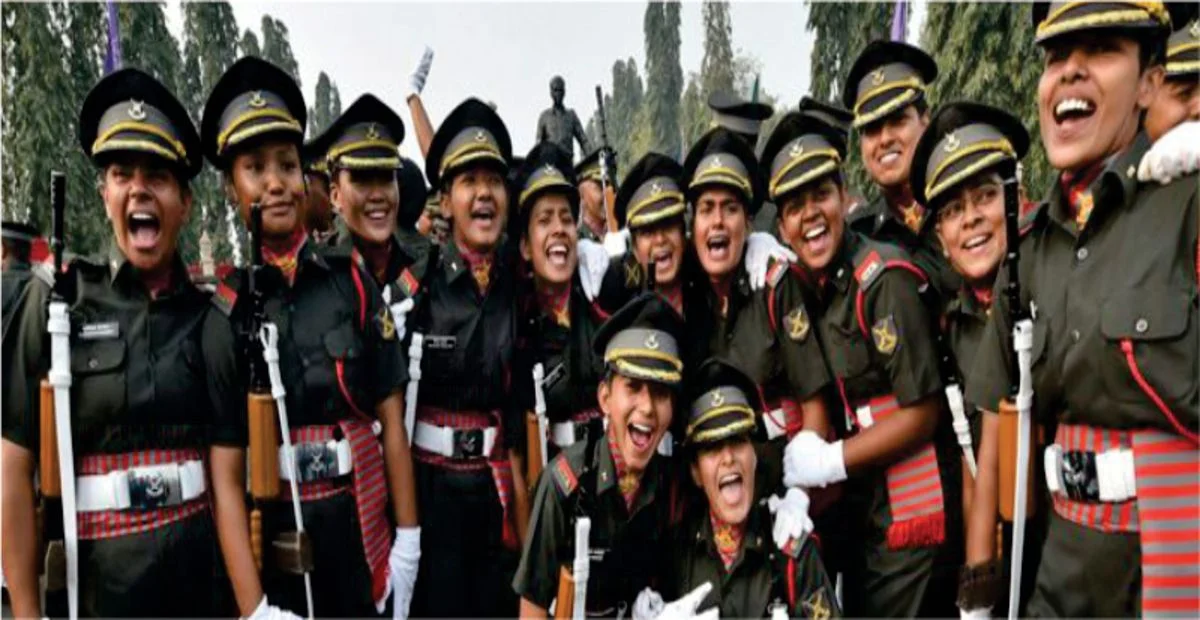
Women officers can now join all arms and services except the Infantry and Armoured Corps (including Mechanised Infantry). Artillery has been open to women officers since 2023, and women also serve as pilots in the Army Aviation Corps. Women NDA and OTA cadets should factor this into their preferences.
Which Arm to Choose After NDA?
There is no single right answer to which arm to choose after NDA. Ask yourself these questions:
Do you want to lead soldiers in direct combat? Infantry, Mechanised Infantry or Armoured Corps suit you.
Do you enjoy technical problem-solving with a combat role? Look at Artillery, Air Defence, Engineers or Signals.
Do you want to fly? Aim for Army Aviation, keeping in mind the medical standards and the path through another arm first.
Are you drawn to logistics, management or technical maintenance? ASC, AOC or EME may fit best.
Also think about lifestyle. Infantry officers see more field and counter-insurgency postings, while support arms and services may offer more stable tenures. Talk to serving officers, attend SSB and academy briefings, and remember that your merit rank directly widens or narrows your options.
FAQs
What is the difference between Arms and Services in the Indian Army?
Arms are the branches that fight or directly support the fight, such as Infantry, Mechanised Infantry, Armoured Corps, Artillery, Army Air Defence, Army Aviation, Engineers and Signals. Services, such as the Army Service Corps, Army Ordnance Corps, EME and Army Medical Corps, provide logistics, maintenance, medical and administrative support.
Can I choose Infantry or Armoured Corps after NDA?
You can state your preference, but the final allocation at IMA depends on your order of merit, medical category, vacancies in each arm for your course, and your preferences. Check the latest rules on joinindianarmy.nic.in before your course year.
What does the Army Service Corps actually do?
The Army Service Corps handles logistics, supply and transport, making sure units receive rations, fuel and other supplies across all operational areas, including high-altitude posts.
Which arms and services are open to women officers in the Indian Army?
Women officers can now join all arms and services except the Infantry and the Armoured Corps. The Regiment of Artillery was opened to women officers in 2023, and women also serve as pilots in the Army Aviation Corps.
Are the Corps of Engineers and Corps of Signals Arms or Services?
Both are Arms. They are classed as combat support arms because they directly support fighting units with bridging, mine clearance, fortifications and battlefield communications.
Do Agniveer soldiers serve in Arms and Services?
Yes. Agniveers are recruited into categories such as General Duty, Technical, Clerk and Tradesman, and serve across arms and services based on the Army’s requirements.
Tags
- indian army arms and services
- arms and services in indian army difference
- infantry armoured corps artillery indian army
- which arm to choose after NDA
- indian army branch allocation NDA IMA
- corps of engineers signals indian army
- Queen of Battle
- mechanised infantry
- T-90 Bhishma tank
- combat arm vs support arm
- regimental system Indian Army
- combined arms operations
- Army Service Corps
- Army Aviation Corps
- Permanent Commission
- Short Service Commission