CRPF Assistant Commandant: How UPSC CAPF AC Selection and Force Allocation Work

Quick summary
A clear guide to becoming a CRPF Assistant Commandant through the UPSC CAPF AC exam, covering the written papers, physical and medical tests, interview, final merit and exactly how force allocation decides whether you join the CRPF.
Becoming a CRPF Assistant Commandant is one of the most direct routes into a Group A gazetted officer role in India’s internal security setup. What confuses most aspirants is that there is no separate CRPF exam. The Central Reserve Police Force recruits its Assistant Commandants through the common UPSC CAPF AC examination, the same exam that fills officer posts in the BSF, CISF, ITBP and SSB. Understanding how that single exam works, and how candidates are finally allotted to the CRPF rather than another force, is essential before you start preparing.
This guide explains the full selection journey and the force allocation logic, using the latest 2026 cycle as a reference.
What the CRPF Assistant Commandant Post Actually Is
An Assistant Commandant is the entry level gazetted officer rank in the Central Armed Police Forces. In the CRPF, this officer leads a company sized body of personnel, handles law and order duties, counter insurgency operations, election security, VIP protection and internal security tasks across the country. It is a Group A post, which means a structured promotion ladder, officer grade pay and command responsibility from day one.
Because the CRPF is the largest central armed police force in India, it usually carries a healthy share of vacancies in each year’s CAPF notification, making it a realistic target for serious aspirants.
One Exam, Five Forces
The Union Public Service Commission conducts the Central Armed Police Forces (Assistant Commandants) Examination once a year. A single written test, one common physical and medical process, and one interview stage feed into all five forces: BSF, CRPF, CISF, ITBP and SSB. You do not pick “CRPF” at the application stage as a separate exam. You apply for CAPF AC, clear the common stages, and then force allocation decides where you go.
For the 2026 cycle, UPSC released the notification on 20 February 2026, conducted the written examination on 19 July 2026, and scheduled the Physical Standards and Physical Efficiency Tests between 13 and 16 October 2026. The 2026 notification announced 349 Assistant Commandant vacancies in total, distributed across the forces as BSF 108, CRPF 106, CISF 70, SSB 53 and ITBP 12. These figures are cycle specific, so always confirm the current year’s vacancy table on upsc.gov.in before applying.
Stage One: The Written Examination
The written exam is the first filter and carries 450 marks across two papers.
Paper I, General Ability and Intelligence, is objective and worth 250 marks, completed in 2 hours. It covers general mental ability, general science, current national and international events, Indian polity and economy, history, and geography. This is the only paper with negative marking, where 0.33 marks are deducted for each wrong answer, so careless guessing directly costs you.
Paper II, General Studies, Essay and Comprehension, is descriptive and worth 200 marks, completed in 3 hours. It tests essay writing (which can be attempted in English or Hindi), comprehension, précis writing, and other communication skills, with the essay component written in the language of your choice and the English comprehension portion in English only.
An important rule to remember: Paper II answer scripts are evaluated only for candidates who clear the cut off set for Paper I. So your objective paper opens the door, but your descriptive paper carries serious weight in the final merit.
Stage Two: Physical Standards and Efficiency Tests
Candidates who clear the written stage are called for the Physical Standards Test (PST) and Physical Efficiency Test (PET). These are qualifying in nature, meaning they do not add marks to your merit, but failing them removes you from the process entirely.
The PST checks height, chest and weight against the prescribed standards, which vary for male and female candidates and include relaxations for certain categories and regions. The PET includes timed events such as a 100 metre race, an 800 metre race, a long jump and a shot put, with separate benchmarks for men and women. Because these are pass or fail, many well prepared written candidates lose their chance here purely due to neglected fitness, so physical training should run parallel to your study schedule.
Stage Three: Medical and Interview
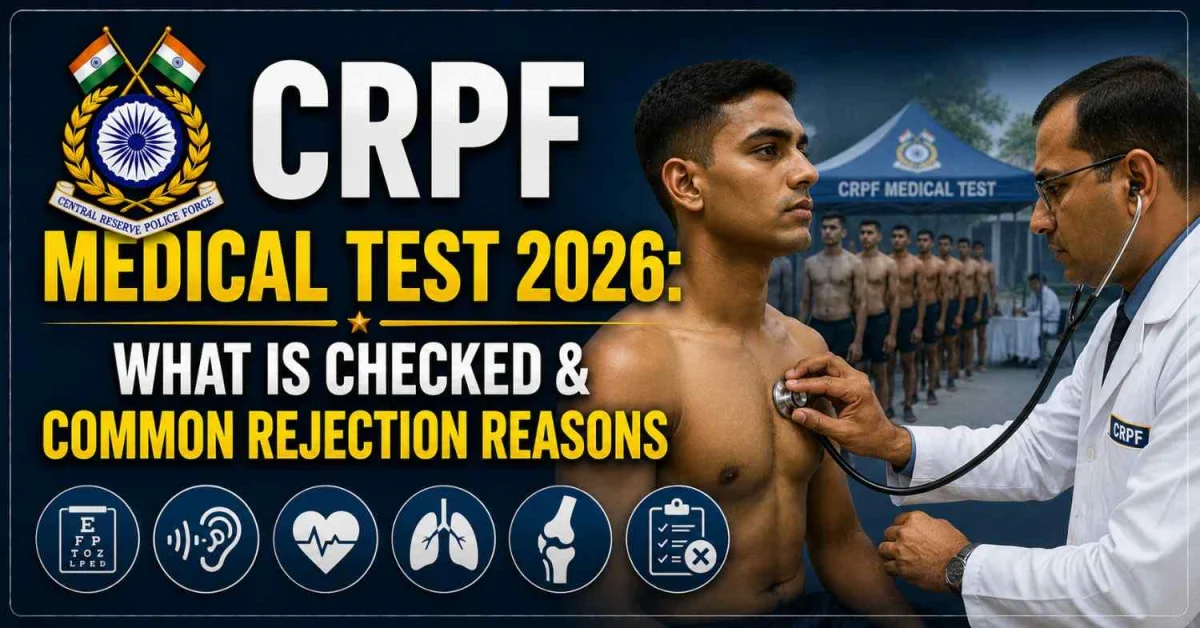
After the physical tests, qualified candidates undergo a detailed medical examination to confirm they meet the fitness standards required for commissioned service in an armed force, including vision, hearing and general health parameters.
The final merit deciding stage is the Interview or Personality Test, which carries 150 marks. A board assesses leadership potential, mental alertness, decision making under pressure, communication and suitability for a uniformed officer’s life. Your performance here, combined with your written marks, determines your final rank.
How Final Merit Is Calculated
Final merit is built from your Paper I and Paper II written marks plus your 150 mark interview score. The PST, PET and medical examination are qualifying only and do not contribute marks. In practice this means a candidate with a strong descriptive paper and a confident interview can climb significantly above someone who scored well only on the objective paper. Document verification is also completed before the final recommendation is made.
How CRPF Force Allocation Works
This is the part most aspirants misunderstand. You do not directly “join CRPF” by choosing it. Force allocation happens after the final results, and it depends on three factors working together: your rank in the final merit list, the preference order you submitted in your application, and the number of vacancies available in each force for your category.
At the application stage you list the forces in your order of preference, for example CRPF first, then BSF, then CISF, and so on. UPSC and the Ministry of Home Affairs then allot forces top down. Higher ranked candidates get their first preference more often, while those lower in the list are allotted whichever force still has vacancies in their category. So if the CRPF is your goal, two things matter most: ranking high enough in the merit list, and placing the CRPF high in your preference order. A strong rank with CRPF listed first gives you the best chance of being allotted to it.
Allocation is also governed by category reservation rules, so the cut off rank for the CRPF can differ across categories within the same year.
Quick Preparation Takeaway
Treat all three stages as one continuous effort. Build your general awareness and reasoning base for Paper I, practise essay and comprehension writing regularly for Paper II, keep your fitness at PET standard throughout the year, and prepare for the interview as seriously as the written exam, since 150 marks can decide your force. Verify every date, vacancy figure and standard on the official UPSC website before you rely on it.
FAQs
Is there a separate CRPF Assistant Commandant exam?
No. The CRPF recruits its Assistant Commandants through the common UPSC CAPF AC examination along with BSF, CISF, ITBP and SSB.
How many CRPF Assistant Commandant vacancies were there in 2026?
The 2026 notification listed 106 Assistant Commandant vacancies for the CRPF out of 349 total across all five forces. Confirm current figures on upsc.gov.in.
How is the CRPF chosen among the five forces?
Through force allocation after final results, based on your merit rank, your submitted force preference order, and category wise vacancies.
Does the physical test add to merit?
No. The PST and PET are qualifying only. Final merit comes from the written papers and the 150 mark interview.
Tags
- crpf assistant commandant
- UPSC CAPF AC selection
- CAPF AC force allocation
- CRPF AC vacancy
- UPSC CAPF AC exam pattern
- CAPF Assistant Commandant interview
- CAPF AC selection process 2026