Agniveer vs Regular Army: 12 Key Differences You Must Know
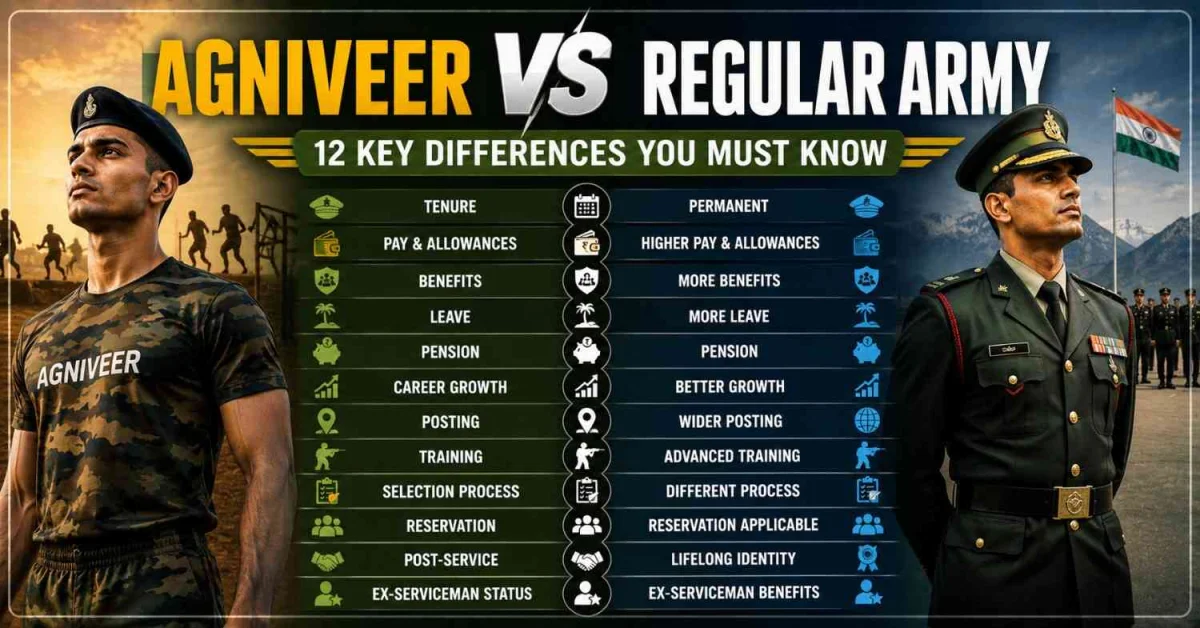
Ever since the Agnipath scheme was introduced, one question has become extremely common among defence aspirants: Should you join as an Agniveer or wait for Regular Army recruitment? Many students and parents remain confused because both entries offer the opportunity to serve the nation, wear the uniform, and experience military life, but the structure of service is completely different.
Some candidates believe that Agniveer recruitment is exactly the same as Regular Army recruitment, while others think there are no long-term opportunities under the Agnipath scheme. The reality lies somewhere in between. Both options have their own advantages, limitations, and career paths.
If you are planning to join the Indian Army, understanding the difference between Agniveer and Regular Army recruitment is extremely important before making a decision. This guide explains the 12 major differences between the two in a simple and detailed manner.
Understanding the Basic Difference
The biggest difference between Agniveer and Regular Army recruitment is the service structure.
Under the Agnipath scheme, candidates join the armed forces for a fixed period of four years as Agniveers. After this period, around 25% of candidates may get an opportunity for permanent enrollment based on performance and organizational requirements.
In contrast, Regular Army soldiers are recruited for long-term service directly and continue serving until retirement according to Army rules.
This single difference changes many aspects, such as salary, pension, career growth, and long-term security.
1. Service Duration
The first and most important difference is the duration of service.
Agniveers serve for four years, whereas Regular Army soldiers continue serving for much longer periods, depending on their role and retirement age.
For candidates looking for short-term military exposure and skill development, Agniveer can be a good opportunity. However, those seeking long-term job security may prefer Regular Army recruitment.
2. Permanent Job Security
One of the biggest concerns among aspirants is job stability.
Regular Army recruitment offers long-term employment from the beginning. Soldiers continue in service until retirement unless discharged for specific reasons.
In the Agnipath scheme, only around 25% of candidates may be selected for permanent service after four years. The remaining candidates exit with financial benefits and certificates.
This creates a major difference in career certainty.
3. Salary Structure
At first glance, the salary structure of Agniveers looks attractive because the monthly package increases every year.
Regular Army soldiers receive a salary according to pay level, allowances, promotions, and long-term service benefits.
While Agniveers receive a structured package, Regular Army personnel generally enjoy better long-term financial growth.
4. Pension Benefits
This is one of the biggest differences between the two systems.
Regular Army personnel receive pension and retirement benefits after completing service. Agniveers, however, do not receive a pension because their service period is limited.
Instead, they receive the Seva Nidhi package after four years.
5. Seva Nidhi Package
One unique feature of the Agnipath scheme is the Seva Nidhi package.
After completing four years of service, Agniveers receive around ₹11 lakh tax-free. This amount is created through monthly salary contributions and an equal government contribution.
This lump sum can help candidates:
-
Pursue higher education
-
Start a business
-
Prepare for competitive exams
-
Build financial stability
Regular Army recruitment does not include this exact type of package because soldiers continue long-term service.
6. Training Duration and Structure
Both Agniveers and Regular Army soldiers receive military training, but the structure differs slightly.
Agniveers receive shorter and more focused training because their service period is limited. The emphasis is on operational readiness and practical military skills.
Regular Army personnel undergo longer and more detailed training designed for long-term military careers.
7. Career Growth Opportunities
Career growth is naturally broader in Regular Army recruitment because soldiers serve for many years and receive promotions over time.
Regular Army soldiers can rise through ranks based on service and performance.
Agniveers, however, have limited promotion opportunities during their four-year tenure unless selected for permanent enrollment later.
8. Post-Service Opportunities
One advantage of the Agnipath scheme is the focus on post-service career opportunities.
After four years, Agniveers receive:
-
Skill certificates
-
Financial package
-
Preference in some government jobs
Many state governments and organizations have announced a preference for former Agniveers in recruitment.
Regular Army personnel generally retire after a much longer career and receive pension-based support.
9. Selection Process
The recruitment process for both entries is competitive, but there are some differences.
Agniveer recruitment generally includes:
-
Written exam
-
Physical test
-
Medical examination
Regular Army recruitment follows traditional Army recruitment procedures, depending on the entry type.
The overall standards remain strict in both cases.
10. Lifestyle and Discipline
In terms of military lifestyle, both Agniveers and Regular Army soldiers experience similar discipline, physical training, and work culture.
Both wear the uniform, undergo military drills, and serve the nation with pride.
The difference lies mainly in the duration and long-term career structure not in the discipline or respect associated with service.
11. Long-Term Financial Stability
Regular Army personnel generally enjoy stronger long-term financial security because of:
-
Pension
-
Promotions
-
Retirement benefits
-
Longer salary growth
Agniveers, on the other hand, receive short-term salary benefits and a lump sum package after four years.
Candidates should think carefully about their long-term career goals before choosing between the two.
12. Future Planning and Career Vision
The final difference is not technical; it is personal.
Candidates who want:
-
Long-term military career
-
Pension benefits
-
Stable government service
may prefer Regular Army recruitment.
Candidates who want:
-
Military experience
-
Short-term service
-
Skill development
-
Financial support for future plans
may find the Agniveer scheme suitable.
Your career vision should guide your decision.
Which Option is Better?
There is no single correct answer to this question because both entries serve different purposes.
Regular Army recruitment is ideal for candidates looking for a lifelong military career and long-term benefits.
Agniveer recruitment is suitable for candidates who want military exposure, discipline, and future opportunities after four years.
The best choice depends on your goals, priorities, and future plans.
Common Myths About Agniveers
Many misconceptions exist regarding the Agnipath scheme.
Some people believe Agniveers are not “real soldiers,” which is completely incorrect. Agniveers undergo military training and serve in the armed forces like other personnel during their tenure.
Another myth is that Agniveers have no future after four years. In reality, they receive financial support, skill certificates, and opportunities in various sectors.
Understanding facts instead of rumors is important before making career decisions.
Conclusion
The debate between Agniveer vs Regular Army is ultimately about career preference and long-term goals. Both paths offer the honor of serving the nation, but their structure and benefits are different.
Regular Army recruitment provides stability, a pension, and long-term career growth. Agniveer recruitment offers short-term military experience, financial benefits, and opportunities for future career development.
Before making a decision, candidates should carefully evaluate their priorities, career plans, and expectations from military service.
FAQs on Agniveer vs Regular Army
Is Agniveer permanent service?
No, Agniveers serve for four years, though some may get permanent enrollment later.
Do Agniveers get a pension?
No, Agniveers receive Seva Nidhi instead of a pension.
Which has better job security?
The Regular Army offers stronger long-term job security.
Can Agniveers join the police after service?
Yes, many organizations may give preference to former Agniveers.
Is Agniveer's salary higher than Regular Army?
Short-term packages are attractive, but the Regular Army offers better long-term financial growth.