SSC vs Permanent Commission in the Indian Army: Which Entry Gives What
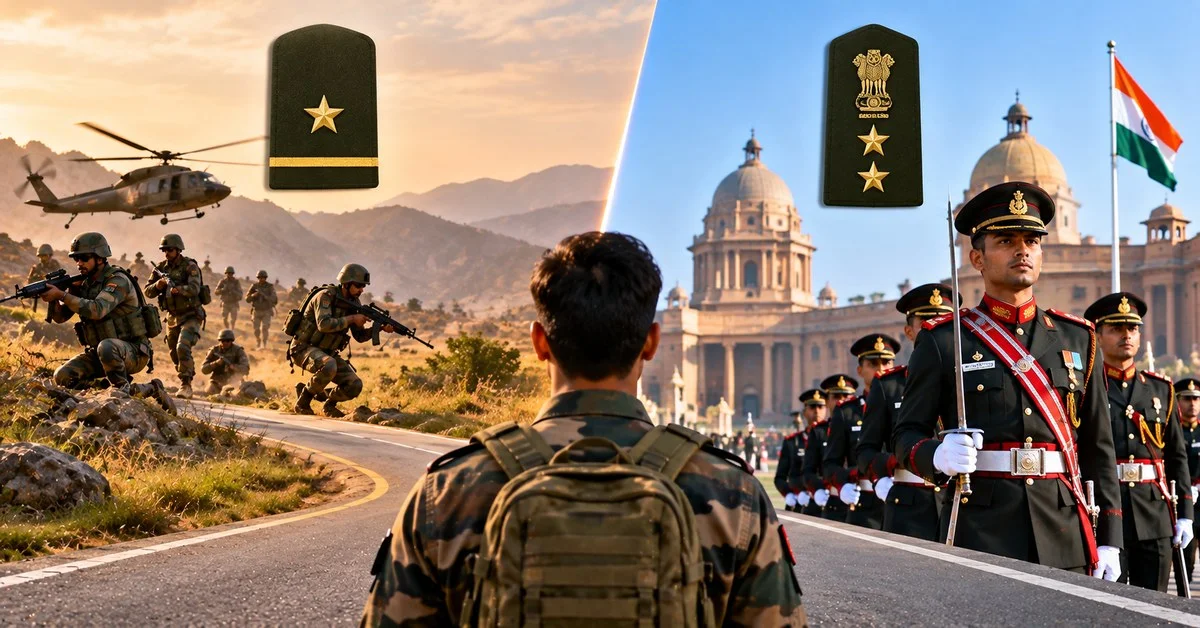
Understand the difference between Short Service Commission (SSC) and Permanent Commission (PC) in the Indian Army. Compare service duration, pension, ECHS benefits, officer entry routes, career progression and the SSC-to-PC conversion process to choose the right path for your Army career.
Most aspirants know the Army offers different officer entry schemes, but few understand what each commission actually delivers over a full career. The question of ssc vs permanent commission army goes well beyond service length. It shapes your pension, your rank ceiling, your exit timeline, and practically every major life decision that follows. This is a detail that matters far more than most candidates realize before they apply, particularly for those researching short service commission indian army.
This guide maps both commission types against each other with concrete detail, covers every entry route, and walks through the conversion process so you can make an informed choice well before you sit for any exam. That clarity becomes especially important when comparing ssc vs permanent commission army side by side.
What Is Short Service Commission (SSC) in the Indian Army?
Short Service Commission Indian Army refers to a fixed-tenure officer appointment. An SSC officer serves an initial period of 10 years, which can be extended up to 14 years subject to service requirements and individual performance.
SSC is designed for candidates who want a structured military career with a defined exit point. Entry routes that lead to SSC include CDS OTA commission, JAG entry army, TGC entry army, and the NCC Special Entry scheme. Each of these carries its own eligibility criteria, but all funnel into the same commission type, which is worth understanding when weighing permanent commission army benefits.
One critical fact that many candidates miss: an SSC officer does not receive a lifelong pension on exit unless Permanent Commission is subsequently granted. On completion of tenure without PC, the officer receives a gratuity, not a monthly pension. That single point drives most of the anxiety candidates feel around this entry type, and it should factor into any honest comparison of permanent commission army benefits.
What Is Permanent Commission (PC) in the Indian Army?
Permanent Commission means a career-long commission that continues until the officer reaches the prescribed retirement age for their rank. PC officers are entitled to full retirement benefits including an army officer pension, ECHS benefits for lifetime medical cover, and rank progression up to the highest officer grades. These distinctions matter considerably when thinking about ssc to permanent commission conversion army.
According to official Indian Army entry details, PC is the default commission type for the NDA entry route. Candidates who clear the NDA examination and complete training at IMA are directly commissioned under PC. Select TGC entries also carry a PC pathway, though TGC typically begins as SSC with a conversion option built in. That distinction shapes the entire planning process for anyone serious about army officer commission types.
The army officer promotion policy under PC allows progression from Lieutenant through General ranks, with time-based and merit-based boards determining advancement at each stage. This produces a materially different career trajectory compared to SSC, which is why the choice between which is better ssc or permanent commission is not a trivial one.
SSC vs PC: Service Length, Pay, and Benefits Compared
The practical differences between the two commission types are clearest when laid out side by side.
-
Tenure: SSC is capped at 10 to 14 years. PC continues until retirement age, which varies from Colonel to General ranks.
-
Military Service Pay: Both SSC and PC officers draw the same military service pay at equivalent ranks under the 7th Pay Commission structure. The difference sits in post-service entitlements, not in-service salary.
-
Pension: PC officers receive a full pension on retirement. SSC officers without PC receive a lump-sum gratuity on exit but no monthly pension.
-
ECHS Access: PC officers and their dependents receive lifetime ECHS benefits. SSC officers who exit without PC have limited access to these facilities.
-
Rank Ceiling: SSC officers typically exit at the rank of Major or Lieutenant Colonel. PC officers can aspire to higher commands.
-
Ex-Servicemen Privileges: Both categories receive ex-servicemen privileges, but the depth of entitlements is significantly greater for PC retirees.
Which Army Entry Routes Lead to SSC and Which Lead to PC?
Knowing how army officer commission types align with each entry scheme removes a major source of confusion for aspirants.
-
NDA: Leads directly to Permanent Commission.
-
CDS (OTA): Leads to Short Service Commission.
-
TGC entry army: Begins as SSC with a formal PC conversion option after the initial years.
-
JAG entry army: Leads to SSC; conversion to PC is possible subject to vacancy and board selection.
-
NCC Special Entry: Leads to SSC.
The NDA route remains the most direct path to PC. Candidates entering through CDS OTA or technical entries need to plan for the SSC-to-PC conversion process if long-term service is the goal. Our detailed breakdown of Army entry routes and career paths covers the wider comparison across all schemes.
Can an SSC Officer Convert to Permanent Commission? Eligibility and Process
The ssc to permanent commission conversion army process runs through a PC Conversion Board that evaluates SSC officers who apply for permanent retention. Officers must apply within the first 10 years of service to be considered.
The board assesses annual confidential reports, physical fitness, psychological evaluation, and vacancy availability in the officer's arm or service. Selection is competitive because PC vacancies are finite, and not every eligible applicant makes it through.
Officers who are not selected continue to serve out their remaining SSC tenure and exit with a gratuity. They are not dismissed; they complete their contracted period. That outcome, while disappointing, still carries ex-servicemen privileges and access to post-service career programs. Women officers permanent commission eligibility was confirmed by the Supreme Court of India in 2020, making the PC conversion process gender-neutral across most arms and services.
Career After Short Service Commission: What Are Your Options?
A strong career after short service commission is entirely realistic. The Resettlement Directorate runs structured programs including professional training, placement assistance, and industry interface sessions for officers exiting service.
Specific opportunities include:
-
CAPF vacancies for ex-officers: SSC officers are eligible for appointments in the CRPF, BSF, CISF, and other central paramilitary forces through dedicated ex-servicemen quotas.
-
PSU lateral entry: Several public sector undertakings recruit ex-Army officers directly into management and security roles.
-
Private sector: Leadership experience, logistics, project management, and corporate security are areas where Army background carries immediate credibility with employers.
SSC or PC: How to Decide Based on Your Goals
The answer to which is better ssc or permanent commission comes down entirely to your personal priorities and where you see yourself at 45.
-
Choose PC if long-term financial stability, army officer pension, ECHS benefits, and rank progression are your primary goals. The NDA entry route is the fastest path to that outcome.
-
Choose SSC if you want structured military experience, plan to transition to a civilian career in your 30s, or are not ready to commit to a 25-plus year career at this stage.
-
Choose SSC with a PC attempt if you want the option open but prefer flexibility. Enter through TGC or CDS OTA, perform strongly in service, and apply to the PC Conversion Board when the window arrives.
FAQs
What is the difference between SSC and PC in terms of service length and retirement benefits?
SSC is a 10 to 14-year fixed tenure with gratuity on exit. PC is a full career commission with pension, ECHS, and complete retirement benefits on reaching retirement age.
How difficult is the SSC to PC conversion process?
The PC Conversion Board is competitive. Selection depends on service record, physical standards, and vacancy availability in the officer's arm, and not all eligible applicants are selected.
Which is better for long-term career growth, SSC or PC?
PC offers greater rank progression and financial security across a full career. SSC suits those who value a defined exit point and have clear plans for civilian transition.
Is SSC worth it if PC conversion is not granted?
Yes. SSC officers exit with ex-servicemen privileges, resettlement support, and access to CAPF vacancies, all of which make the civilian transition manageable and often smooth.
Are women officers eligible for Permanent Commission?
Yes. Women officers permanent commission eligibility applies across most arms following the 2020 Supreme Court ruling, and the PC Conversion Board process is the same for all eligible officers regardless of gender.