NDA vs NA: Army, Navy and Air Force Wings Explained for 2027 Aspirants
Quick summary
NDA and NA are filled through one UPSC exam but lead to different academies. This guide explains NDA vs NA, the eligibility rules for each wing, how wing preference works, training at Khadakwasla and careers after NDA.
Lakhs of candidates apply for every NDA exam, yet many of them fill in the application form without fully understanding what they are choosing. The confusion between NDA and NA trips up aspirants at the form-filling stage, and misunderstanding how the wings work can cost you a service you genuinely wanted.
This guide clears up both problems. It explains what NDA and NA are, how the Army, Navy and Air Force wings differ in eligibility and training, how your wing is decided, and where each wing takes you after the academy.
What NDA and NA Actually Mean
The confusion is understandable. UPSC conducts a single exam called the National Defence Academy and Naval Academy Examination, and one notification lists vacancies for both. Many aspirants assume they are two separate exams. They are not. The NDA vs NA difference is a difference of destination, not of exam.
NDA: The National Defence Academy, Khadakwasla, near Pune. Cadets of the Army, Navy and Air Force wings train together here for three years before moving to their own service academies.
NA: The Naval Academy entry, officially the 10+2 Cadet Entry Scheme. Selected candidates go straight to the Indian Naval Academy, Ezhimala, in Kerala for a four-year B.Tech programme and are trained only for the Navy.
Both are filled through the same written exam, the same SSB process and the same merit list. The only difference is the academy you join and the training path that follows.
The Three Wings of NDA at a Glance
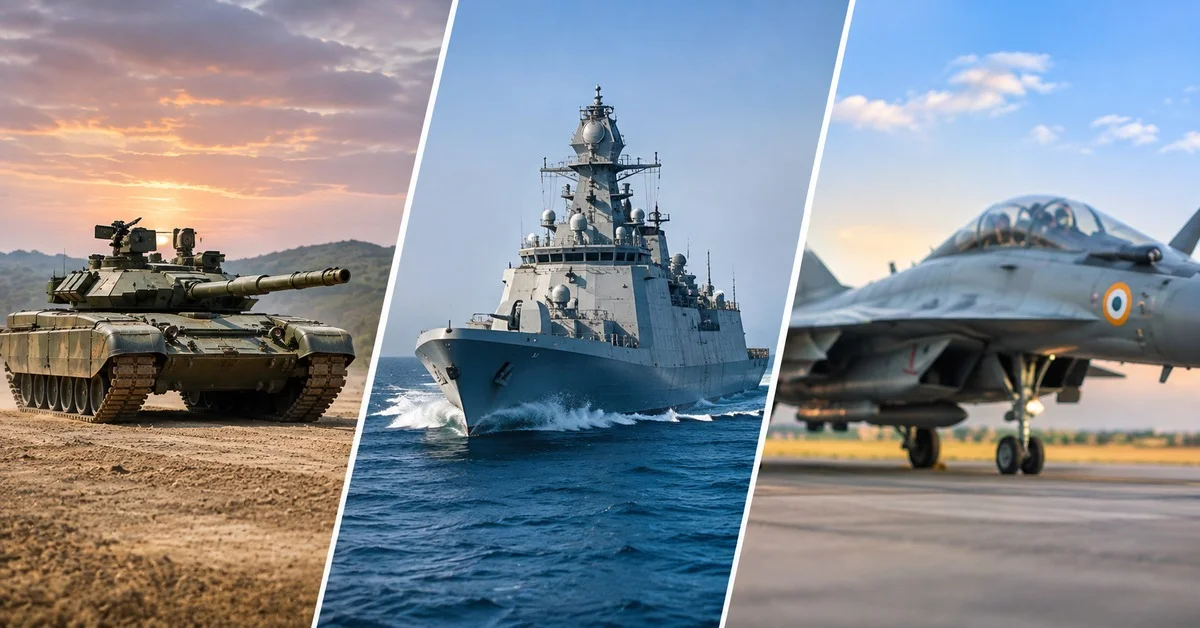
The National Defence Academy Khadakwasla trains cadets from all three services under one roof, but the wing you join shapes everything that follows. Each UPSC notification lists vacancies wing by wing. For NDA 2 2026, the vacancies were:
The Army wing has by far the most seats. The Air Force wing includes Ground Duty branches as well as the Flying branch, which many aspirants do not realise.
NDA Army Navy Air Force Eligibility: What Changes by Wing
All three wings share the same basic conditions. You must be an unmarried Indian citizen aged 16.5 to 19.5 years on the date the course begins, and you must have passed or be appearing in Class 12.
The key differences are in subjects and physical standards:
Army wing: Class 12 in any stream. The minimum height for male candidates is generally 157 cm.
Navy wing: Class 12 with Physics, Chemistry and Mathematics. The minimum height for male candidates is generally 157 cm, with strict eyesight standards.
Air Force wing: Class 12 with Physics, Chemistry and Mathematics. Flying branch candidates need a minimum height of 162.5 cm, must meet leg and thigh length limits, and must clear the Computerised Pilot Selection System (CPSS).
Naval Academy (10+2 Cadet Entry): Class 12 with Physics, Chemistry and Mathematics, with Navy medical standards.
So the subject rule is simple: the Army wing is open to every stream, while the Navy wing, Air Force wing and Naval Academy all need PCM. Height and medical standards vary slightly for women and for candidates from some hill regions, so always check the exact figures in the official notification.
How Wing Selection Works in the Application Form
There is one written exam for everyone, and no separate test decides your wing. Instead, you rank your choices in the application form, and that order has real effects:
It decides your SSB board: Army first-choice candidates go to an Army Selection Centre. Navy and Naval Academy first-choice candidates go to a Naval Selection Board. Air Force first-choice candidates go to an Air Force Selection Board.
It decides your options: You can be allotted only the wings you chose and are eligible for.
It is fixed: Treat your preference order as final once you submit the form.
Your final allocation depends on your combined marks in the written exam and the SSB, your medical fitness for that wing and your stated preferences. Seats are filled in order of merit, so getting your NDA wing selection preference right at the form stage is important.
Training Life Inside NDA
A common misconception is that the three wings train separately from the first day. They do not. All cadets train together at Khadakwasla for three years, live in the same squadrons and share the same drill, sports and outdoor training. NDA has 18 squadrons, and each one mixes cadets of all three services.
That shared foundation is deliberate. The bonds formed here help officers work smoothly across the services throughout their careers. The NDA vs NA difference shows clearly at this stage, since Naval Academy cadets follow a Navy-only programme at Ezhimala from the start.
Differences between the wings inside NDA appear mainly in two ways:
Academics: Navy and Air Force cadets study the science stream, while Army cadets can choose science, computer science or arts streams. Cadets earn a degree from Jawaharlal Nehru University on completing the course.
Service training: In the later terms, cadets receive training specific to their own service before they leave for their service academies.
Career After NDA Training: Where Each Wing Takes You
The three years at Khadakwasla end with a clear split:
Army: Cadets move to the Indian Military Academy (IMA), Dehradun, for one year and are commissioned as Lieutenants with a Permanent Commission.
Navy: Cadets move to the Indian Naval Academy, Ezhimala, for further training, followed by sea training, and are commissioned as Sub Lieutenants.
Air Force: Cadets move to the Air Force Academy (AFA), Dundigal, near Hyderabad, and are commissioned as Flying Officers. Training there lasts about one and a half years for the Flying branch.
Flying branch cadets can later be streamed into fighter, transport or helicopter flying. All officers start at Level 10 of the pay matrix, with a basic pay of ₹56,100 a month plus Military Service Pay and allowances.
NDA vs NA: Which Should You Choose?
The right choice depends on three things: your interests, your medical fitness and the kind of life you want for the next two to three decades.
Choose the Army wing if ground operations, leading soldiers and varied postings appeal to you.
Choose the Navy wing or Naval Academy if you are drawn to the sea. The NDA Navy wing gives you three years of joint training first, while the Naval Academy gives you a four-year B.Tech at Ezhimala.
Choose the Air Force wing if flying or aviation is your goal, but check the height, eyesight and PCM requirements carefully first.
Remember that CPSS can be taken only once in a lifetime, so prepare seriously before your first Air Force Selection Board. Choose the wing that matches who you are, not just what sounds impressive.
FAQs
What is the difference between NDA and NA?
NDA is the National Defence Academy at Khadakwasla, which trains cadets for all three services over three years. NA is the Naval Academy 10+2 Cadet Entry, under which candidates join the Indian Naval Academy at Ezhimala for a four-year B.Tech and train only for the Navy. Both are filled through the same UPSC exam.
Can I choose all three wings in the NDA application form?
Yes, if you are eligible. You rank the Army, Navy and Air Force wings and the Naval Academy in order of preference. Candidates without PCM in Class 12 can choose only the Army wing.
Is the written exam different for each wing?
No. All candidates take the same two papers: Mathematics (120 questions, 300 marks) and the General Ability Test (150 questions, 600 marks). Wing-specific requirements apply at the SSB and medical stages.
Which wings need Physics and Maths in Class 12?
The Navy wing, the Air Force wing and the Naval Academy all need Physics, Chemistry and Mathematics in Class 12. The Army wing is open to all streams.
Which NDA wing has the most vacancies?
The Army wing usually has the most seats. In NDA 2 2026, the Army had 208 of the 394 vacancies.
Tags
- NDA vs NA
- NDA Army Navy Air Force eligibility
- NDA wing selection preference
- National Defence Academy Khadakwasla
- career after NDA training
- 10+2 Cadet Entry
- Computerised Pilot Selection System