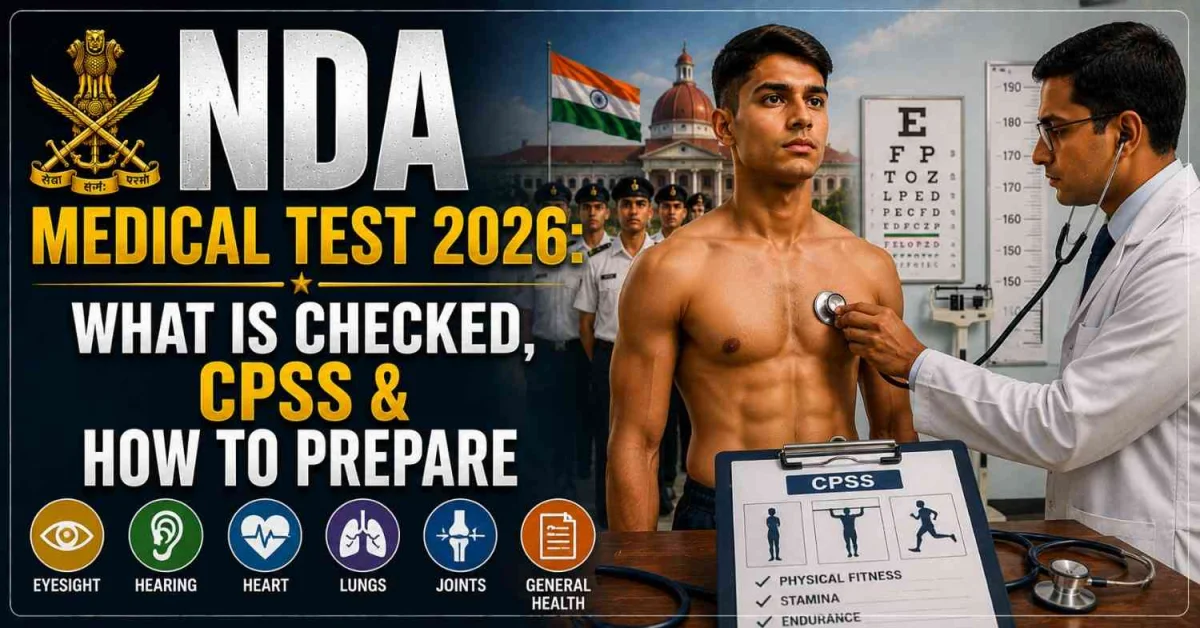
NDA Medical Test 2026: What is Checked, CPSS & How to Prepare
Clearing the NDA written examination and the SSB interview is a major achievement, but the journey to becoming an officer in the Indian Armed Forces does not end there. One of the most crucial stages of the selection process is the NDA Medical Test. Every year, a significant number of candidates who clear the written exam and SSB are declared medically unfit due to issues they were either unaware of or ignored during preparation.
Many aspirants focus entirely on Mathematics, General Ability Test (GAT), and SSB preparation but pay little attention to medical standards. As a result, they are shocked when a medical condition, poor eyesight, overweight status, or other health-related issue affects their final selection.
The NDA Medical Test 2026 is designed to ensure that candidates possess the physical and mental fitness required to handle the demanding lifestyle of military training and service. Officers in the Army, Navy, and Air Force are expected to operate in challenging environments, make critical decisions under pressure, and maintain high levels of endurance. Therefore, medical fitness is considered just as important as academic performance and leadership potential.
In this guide, we will explain what happens during the NDA medical examination, what CPSS is, the physical standards candidates must meet, common reasons for rejection, and how you can prepare well in advance.
Why the NDA Medical Test is So Important
Many candidates assume that once they clear the SSB interview, selection is almost guaranteed. However, the medical examination acts as the final quality check before a candidate enters military training.
The Armed Forces invest significant resources in training future officers. Therefore, they must ensure that selected candidates are medically capable of completing training and serving effectively for many years.
The medical board evaluates several aspects of a candidate's health, including:
-
Physical fitness
-
Vision standards
-
Hearing ability
-
Dental health
-
Musculoskeletal structure
-
Internal health conditions
-
Mental fitness
The objective is not to eliminate candidates unnecessarily but to ensure that every selected individual can meet the demands of military life.
When Does the NDA Medical Test Take Place?
The NDA medical examination takes place after a candidate is recommended by the Services Selection Board (SSB).
The overall selection process follows this sequence:
Only candidates who receive an SSB recommendation proceed to the medical stage.
This means the medical examination becomes one of the final hurdles before selection.
What is Checked in the NDA Medical Test?
The NDA medical examination is comprehensive and covers almost every aspect of a candidate's physical health.
Unlike a routine health check-up, military medical boards evaluate whether a candidate meets the specific standards required for defence service.
General Physical Examination
The first stage involves an overall assessment of physical fitness.
Doctors examine:
-
Height
-
Weight
-
Body structure
-
Posture
-
General appearance
Candidates should maintain a healthy body weight according to their height and age.
Both underweight and overweight candidates may face issues during the examination.
Eyesight and Vision Standards
Vision standards are among the most important parts of the NDA medical examination.
Military officers need excellent visual capability for operational effectiveness.
The medical board evaluates:
-
Distant vision
-
Near vision
-
Color vision
-
Binocular vision
-
Eye coordination
Candidates with severe visual defects may be declared medically unfit depending on the branch they are applying for.
Particular attention is given to Air Force candidates because aviation duties require stricter visual standards.
Hearing Test
Good hearing is essential for military communication and operational performance.
The hearing examination checks:
-
Ability to hear normal conversation
-
Ear health
-
Hearing efficiency
-
Ear infections or abnormalities
Candidates with significant hearing impairments may face medical rejection.
Dental Examination
Many aspirants are surprised to learn that dental health forms part of the NDA medical test.
The medical board checks:
-
Dental hygiene
-
Missing teeth
-
Jaw alignment
-
Oral health conditions
Poor dental health can sometimes lead to temporary or permanent medical observations.
Chest and Respiratory System
Military officers are expected to maintain strong respiratory health.
Doctors evaluate:
-
Chest expansion
-
Lung function
-
Respiratory disorders
-
Breathing efficiency
Conditions such as chronic respiratory diseases may require further evaluation.
Cardiovascular Examination
Heart health is another critical component of the medical assessment.
The board may check:
-
Blood pressure
-
Heart rhythm
-
Cardiovascular health
-
Any underlying abnormalities
Candidates should maintain healthy lifestyle habits before appearing for the medical examination.
Musculoskeletal Assessment
The medical board carefully examines body structure and movement.
Doctors assess:
-
Bone alignment
-
Joint flexibility
-
Spine condition
-
Limb functionality
Conditions such as severe scoliosis, deformities, or mobility limitations may affect medical fitness.
NDA Height and Weight Standards 2026
One of the most frequently asked questions among aspirants concerns height and weight requirements.
The Armed Forces prescribe minimum height standards to ensure operational effectiveness.
General Height Requirements
Certain relaxations may apply to candidates from specific regions or communities according to official guidelines.
Height alone is not sufficient. Weight must also remain proportionate to height and age.
Candidates who are significantly overweight or underweight may face medical objections.
What is CPSS in NDA?
One of the most misunderstood aspects of NDA selection is CPSS.
Full Form of CPSS
CPSS stands for:
Computerised Pilot Selection System
This test is specifically relevant for candidates who wish to join the Flying Branch of the Indian Air Force.
CPSS evaluates a candidate's aptitude for flying-related duties.
Unlike written examinations, CPSS focuses on:
-
Psychomotor skills
-
Hand-eye coordination
-
Cognitive ability
-
Response speed
-
Flying aptitude
The test is designed to determine whether a candidate possesses the natural abilities required for aviation training.
Why is CPSS Important?
Flying military aircraft requires exceptional coordination and decision-making abilities.
A candidate may perform extremely well in academics and SSB but still need to demonstrate flying aptitude through CPSS.
The Air Force uses this assessment to identify candidates most likely to succeed during pilot training.
Can You Attempt CPSS More Than Once?
This is one of the most important things Air Force aspirants should remember.
A candidate generally gets only one opportunity to clear CPSS.
If declared unsuitable in CPSS, the candidate cannot normally appear for the test again for Flying Branch entry.
Therefore, understanding the process beforehand is essential.
Common Medical Reasons for NDA Rejection
Every year, some candidates are declared medically unfit due to conditions that could have been addressed earlier.
Some common reasons include:
Poor Eyesight
Uncorrectable visual defects often create problems, particularly for Air Force aspirants.
Overweight or Obesity
Maintaining fitness throughout preparation is extremely important.
Underweight Condition
Being significantly below the recommended weight range can also affect medical fitness.
Flat Feet
Candidates with severe flat feet may face medical concerns because military training involves extensive physical activity.
Knock Knees
Pronounced knock knees can affect operational capability and may result in rejection.
Dental Problems
Poor oral health is more common than many candidates realize.
Hearing Issues
Even minor hearing deficiencies can attract additional scrutiny.
How to Prepare for the NDA Medical Test
The best way to prepare for the medical examination is to start early.
Medical fitness cannot usually be improved overnight.
Maintain Physical Fitness
Regular exercise helps maintain:
-
Healthy weight
-
Endurance
-
Strength
-
Cardiovascular health
Activities such as running, swimming, cycling, and strength training are beneficial.
Focus on Nutrition
A balanced diet supports overall health and fitness.
Candidates should:
-
Eat nutritious meals
-
Avoid excessive junk food
-
Stay hydrated
-
Maintain proper body weight
Get an Eye Check-Up
If you have any vision-related concerns, consult an eye specialist well before the medical examination.
Early awareness can help you understand whether your vision meets required standards.
Visit a Dentist
Routine dental check-ups can identify issues before they become medical concerns.
Correct Lifestyle Habits
Avoid habits that negatively affect fitness, endurance, or general health.
Good sleep, proper hydration, and regular exercise play a major role in medical readiness.
Medical Fitness and Military Life
The NDA medical examination should not be viewed as an obstacle but as preparation for the realities of military service.
Officers often work in:
-
High-altitude regions
-
Remote locations
-
Extreme weather conditions
-
Physically demanding environments
The medical standards exist because the responsibilities of military officers demand excellent physical and mental fitness.
Candidates who develop healthy habits during NDA preparation often find military training easier and more rewarding.
Final Verdict
The NDA Medical Test 2026 is a crucial stage in the officer selection process and deserves as much attention as the written examination and SSB interview. The medical board evaluates a candidate's overall fitness, eyesight, hearing, dental health, body structure, and general health to ensure they can handle the challenges of military training and service.
For Air Force aspirants, understanding CPSS is equally important because it determines suitability for flying duties. Since CPSS is generally a one-time opportunity, candidates should approach it seriously and understand its significance beforehand.
The best strategy is to begin preparing for medical fitness months before the actual examination. Maintaining a healthy lifestyle, staying physically active, monitoring eyesight, and addressing minor health issues early can significantly improve your chances of medical clearance.
Remember, becoming an NDA officer is not only about intelligence and leadership—it is also about demonstrating the physical and mental fitness required to serve the nation.
FAQs
What is the NDA Medical Test?
The NDA Medical Test is a comprehensive health examination conducted after the SSB interview to assess whether a candidate meets the medical standards required for military service.
What is CPSS in NDA?
CPSS stands for Computerised Pilot Selection System. It is conducted for candidates seeking entry into the Flying Branch of the Indian Air Force.
Can I attempt CPSS twice?
Generally, CPSS is considered a one-time opportunity for Flying Branch aspirants.
What is the minimum height required for NDA?
The minimum height varies by service, but it is generally around 157 cm for Army and Navy candidates and approximately 162.5 cm for Air Force candidates.
What are the common reasons for NDA medical rejection?
Common reasons include poor eyesight, obesity, underweight condition, flat feet, knock knees, hearing issues, and dental problems.