NDA 2 2026 SSB Interview: What Happens After the Written Exam?
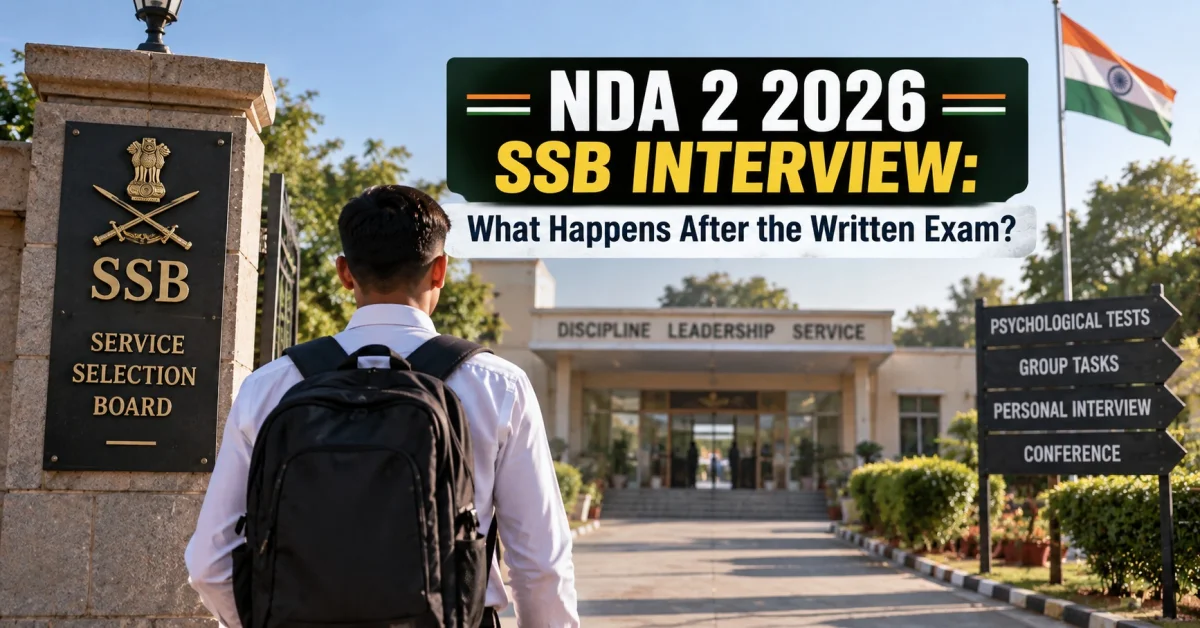
The NDA 2 2026 SSB Interview begins after the written exam and follows a five-day selection process. Learn what happens at each stage, how candidates are assessed, what to carry, common mistakes and what happens after SSB.
Most candidates spend months preparing for the NDA written exam and almost no time understanding what follows. The NDA SSB Interview is a five-day selection process that tests who you are, not what you have memorised. If you have cleared or are targeting the NDA 2 2026 written exam, this guide walks you through every stage, what assessors actually score, and the specific mistakes that eliminate otherwise capable candidates. Knowing what happens after the NDA written exam is just as important as clearing it.
From Written Result to SSB Call Letter: How the Process Works
Once UPSC declares the NDA written result, shortlisted candidates receive an SSB call letter specifying their allotted SSB centre, reporting dates, and document instructions. Centre allotment is merit-based, so there is no option to choose a preferred location. The call letter comes through the official UPSC candidate portal, which is why keeping your login credentials active after the exam is not optional, particularly for the NDA SSB Interview.
Travel entitlement covers second-class rail fare to and from your allotted centre. On Day 1, carry your call letter, originals and photocopies of all educational certificates, a valid photo ID, and passport-size photographs. Missing any document can get you turned away before the process even starts. The UPSC NDA Selection Process 2026 guide has the complete document checklist for the NDA SSB Interview.
SSB Interview Overview: Stage 1 vs Stage 2 at a Glance
The UPSC NDA selection process divides SSB assessment into two distinct stages. Understanding this split prevents confusion about what is being tested and when, including for SSB GTO tasks.
-
Stage 1 (Day 1), Screening: OIR Test and PPDT. Candidates who do not qualify are sent home the same day.
-
Stage 2 (Days 2 to 5): Psychological tests, GTO tasks, Personal Interview, and Conference Day. Only candidates who clear Stage 1 continue here.
This structure means roughly half or more of each batch never sees Day 2. Stage 1 is not a formality. The SSB Interview 5 day process is sequenced this way for a reason: the Services have no interest in assessing candidates who cannot demonstrate baseline officer potential on the very first day. More detail on each stage is available at Shiksha's NDA SSB selection process page, which also covers SSB personal interview tips.
Day 1: Screening (OIR Test + PPDT): The First Cut
The Officer Intelligence Rating test covers verbal and non-verbal reasoning questions, graded from 1 to 5 with Grade 1 being the highest. A strong OIR score does not guarantee you move forward, but a poor one almost always ends your SSB there. The OIR test verbal non-verbal reasoning sections are timed tightly, so accuracy under pressure is what separates candidates, and this matters equally for SSB psychological tests NDA.\
The PPDT (Picture Perception and Discussion Test) comes next. You observe an ambiguous image for 30 seconds, write a short story with a central character, then narrate and discuss it within a group. Assessors evaluate clarity of thought, confidence in narration, and how you behave when others push competing storylines. Candidates not screened in are informed the same afternoon and travel home that day. Stage 1 screening is exactly where many otherwise prepared candidates lose their chance.
Day 2: Psychological Tests: What the Psych Officer Evaluates
SSB psychological tests NDA candidates face on Day 2 involve four instruments administered in a single sitting. Each measures a different dimension of personality and is mapped against the 15 Officer Like Qualities (OLQs) that form the assessment framework, including the Thematic Apperception Test TAT.
-
Thematic Apperception Test (TAT): 12 pictures plus one blank slide. You write a short story for each. Assessors look for themes, not literary quality.
-
Word Association Test (WAT): 60 words displayed one at a time. You write the first sentence that comes to mind for each within 15 seconds per word.
-
Situation Reaction Test (SRT): 60 real-life situations requiring a written response. Speed and instinctive reasoning both count.
-
Self-Description Test (SD): You describe how your parents, teachers, friends, and you yourself perceive your character.
Consistency across all four tests matters far more than individual "correct" answers. The Psychologist cross-references your TAT, WAT, SRT, and SD responses to check whether your self-image aligns with your instinctive reactions. Keep this in mind specifically for the Word Association Test WAT.
Days 3 & 4: GTO Tasks: What Each Exercise Tests
The Group Testing Officer runs a full series of SSB GTO tasks across two days. Each exercise targets a specific cluster of Officer Like Qualities, not just general teamwork, and this is often misunderstood when candidates think about the Situation Reaction Test SRT.
-
Group Discussion (2 rounds): Tests communication, flexibility, and the ability to build on others' ideas.
-
Group Planning Exercise: Tests practical intelligence and group decision-making under time pressure.
-
Progressive Group Task, Half Group Task, Final Group Task: Outdoor obstacle tasks that reveal initiative, physical coordination, and persistence.
-
Individual Obstacles and Command Task: The Command Task places you in charge with a small team. Assessors score leadership under pressure specifically here.
-
Lecturette: A three-minute individual talk on a chosen topic, testing verbal organisation and confidence.
The GTO is not evaluating whether you finish each task. He is scoring how you help the group move forward, how you respond to setbacks, and whether your OLQ profile is consistent with what the Psychologist observed on Day 2. The same holds for the Self-Description Test SD.
Days 4: Personal Interview with the IO
The Interviewing Officer (IO) conducts a structured one-on-one session lasting 40 to 60 minutes, built entirely around your PIQ (Personal Information Questionnaire) submitted on Day 1. The PIQ is not a formality. Every entry becomes a potential line of questioning, which is equally true for the Board President conference.
Common IO traps include inconsistency between your PIQ answers and what you say verbally, vague responses to "Why NDA?", and thin awareness of current defence affairs. Anchor every answer to a specific personal experience. A clear, honest "Why NDA?" narrative built around real events in your life is more convincing than any rehearsed script. For SSB personal interview tips that go beyond the basics, follow Indian defence developments regularly in the months before your SSB date. This applies directly to your PIQ Personal Information Questionnaire preparation.
Day 5: Conference Day: The Final Decision
On Conference Day, the Psychologist, GTO, and IO each present their independent assessment of every candidate to the Board President. Candidates are then called into the conference room individually for a brief interaction, and the same principle applies here as it does to the medical examination armed forces stage.
A short conference, often just "Is there anything you want to add?", typically signals a straightforward case. Extended questioning by the Board may indicate a borderline assessment. The Recommended or Not Recommended result is announced the same day, and SSB recommended candidates are notified before leaving the centre.
After SSB: Medical Examination and Merit List
Recommended candidates are directed to designated service hospitals for a medical examination by the armed forces. Medical standards differ by arm: Army, Navy, and Air Force each apply specific vision, hearing, and physical fitness criteria. Candidates must remain within those standards throughout the entire process, not only at the time of SSB.
The final NDA merit list combines written exam marks with SSB marks. A strong written score can compensate for a moderate SSB performance, and the reverse is equally true, which is why neither stage should be treated as secondary. Candidates who clear the medical examination and rank sufficiently high on the combined merit list receive their joining letters.
FAQs
What happens after NDA written exam result is declared?
UPSC publishes the shortlist and issues the SSB call letter through the candidate portal. The call letter specifies your allotted SSB centre, reporting date, and document requirements.
How many days does the NDA 2 2026 SSB Interview take?
The SSB Interview 5 day process runs from Day 1 screening through Day 5 Conference Day. Candidates screened out on Day 1 leave the same afternoon.
What happens if you are screened out on Day 1?
You are informed after the PPDT group discussion results and travel home that day. You remain eligible to reappear in future NDA cycles within the age and attempt limits.
Can a candidate clear SSB without formal coaching?
Yes. SSB tests Officer Like Qualities (OLQs) that develop through life experience and character, not rote preparation. Coaching can help with familiarity, but it cannot manufacture the qualities assessors are actually looking for.
If you are still weighing your service preference before the SSB, read our guide on Indian Army vs Navy After 12th: Which Career Is Better in 2026? to align your SSB motivation answers with a well-informed career choice. Start your Day 1 document folder now, build your PIQ answers around real experiences, and treat the conference as the culmination of five days of consistent behaviour, not a separate event to perform in.