Indian Navy SSC Officer 2027: Eligibility, Branches and SSB Process
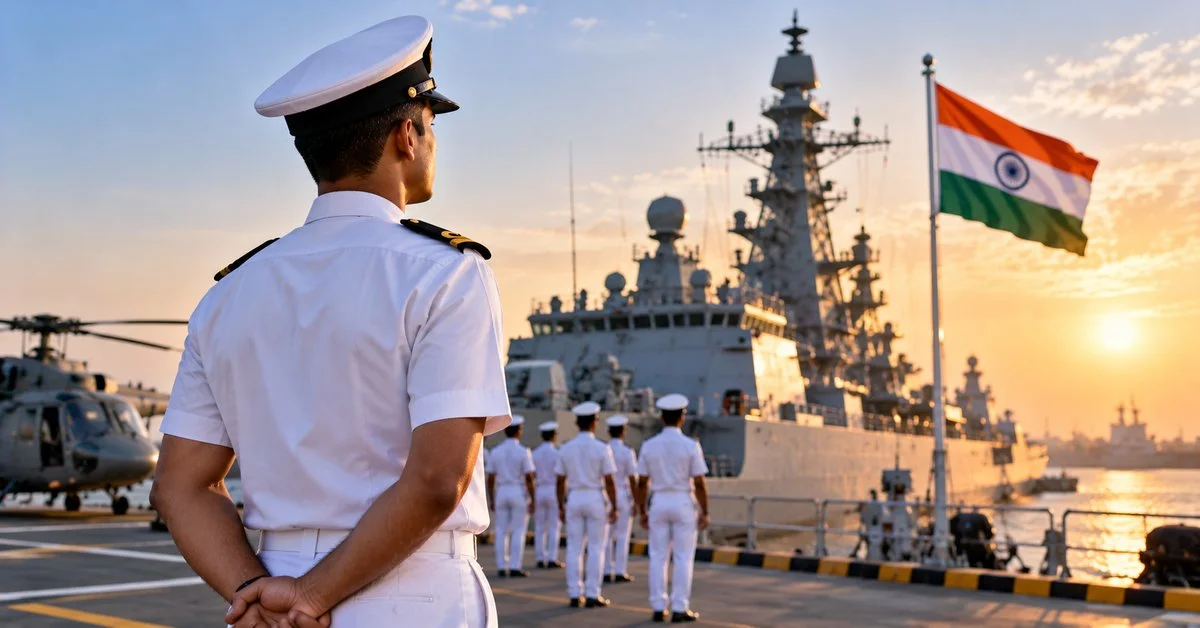
Check Indian Navy SSC officer eligibility for 2027, including branch-wise age limits and degrees, the Executive and Technical branches, the two-stage SSB selection procedure, medical standards and the 10-year tenure.
Every year, thousands of engineering graduates search for a structured career in uniform without committing to a lifetime of service. The Indian Navy Short Service Commission offers exactly that, yet most aspirants struggle to find accurate, branch-wise information in one place. This guide covers indian navy ssc officer eligibility in full, from age limits and degree requirements mapped to each branch, to the complete SSB selection process broken down stage by stage.
Whether you are a mechanical engineer weighing the Technical Branch or a science graduate eyeing General Service, the sections below give you the specific details you need to apply with confidence in 2027.
What Is Indian Navy Short Service Commission (SSC)?
Short Service Commission India refers to a fixed-tenure officer entry route into the Indian Navy, distinct from a lifetime Permanent Commission Navy appointment. An SSC officer serves for an initial period of 10 years, with structured extension options available based on service requirements and individual performance.
For engineering graduates and other professionals who want meaningful uniformed service without a lifelong commitment, the indian navy ssc officer 2027 cycle offers a clear, time-bound career path. Understanding indian navy ssc officer eligibility from the outset helps candidates identify the right branch and plan their preparation accurately.
Key features of SSC entry include:
-
Initial tenure of 10 years, extendable subject to naval requirements
-
Access to the same training pipeline and officer privileges as Permanent Commission officers
-
Mandatory compliance with navy ssc officer medical standards set by AFMSF before final joining
Full entry details are published on the official Join Indian Navy portal.
Indian Navy SSC Officer Eligibility Criteria 2027
Before checking whether you qualify, it helps to understand what the SSC route actually offers. A Short Service Commission grants you an initial tenure of 10 years, extendable in certain cases, rather than a full career commitment. That structure makes it especially attractive for engineering graduates who want disciplined, high-responsibility service without locking in permanently from day one.
The core eligibility conditions apply across all navy ssc officer branches 2027 and cover age, educational qualification, nationality, and marital status. Each published joinindiannavy.gov.in notification specifies cut-offs for that particular recruitment cycle, so always cross-check the live notice. Are you certain your degree stream maps to the branch you are targeting?
General eligibility conditions include Indian citizenship, unmarried status at entry for most branches, and clearance through the Services Selection Board process. Candidates must meet branch-specific academic and age thresholds detailed in the section below.
Available Branches Under Indian Navy SSC Entry 2027
The Indian Navy SSC entry opens across two broad categories: the Executive Branch and the Technical Branch. Each category contains distinct sub-branches, and your engineering discipline largely determines where you fit. Understanding this split before you begin the indian navy ssb process saves time and sharpens your application strategy.
Indian Navy SSC Officer Age Limit and Educational Qualification: Branch-wise
The Executive Branch General Service (X) is the largest sub-branch and historically carries the most vacancies. Other Executive sub-branches include Pilot, Observer, Air Traffic Control (ATC), Information Technology (IT), Hydrography, Law, Logistics, and Education. Candidates selected through any Executive entry complete their initial training at the naval officer training academy in Ezhimala, Kerala.
Indian Navy SSC Officer Selection Procedure 2027: Step by Step
The Technical Branch covers Engineering (E) and Electrical (L) streams. B.E./B.Tech graduates in mechanical, marine, aeronautical, metallurgy, and production engineering typically qualify for the Engineering stream, while electrical, electronics, telecommunications, and instrumentation graduates align with the Electrical stream.
Always verify current vacancy numbers against the active cycle notification on joinindiannavy.gov.in, as seat distribution changes each recruitment cycle.
Indian Navy SSB Interview Process: Stage 1 and Stage 2 Breakdown
The navy ssc officer age limit education qualification requirements differ meaningfully across branches. Getting the branch-wise breakdown right before you apply prevents last-minute disqualification.
The Technical Branch Engineering Electrical entries consistently carry higher vacancy counts compared to most Executive sub-branches, making them statistically the best-probability entry points for engineering graduates. Note that aviation entries (Pilot, Observer) also carry strict colour vision requirements Navy standards, specifically CP-I (normal colour vision), which rules out candidates with even mild colour deficiency. Always confirm the current cycle's exact figures against the official joinindiannavy.gov.in notification.
Indian Navy SSC Officer Medical Standards 2027
The indian navy ssc officer selection procedure follows a structured sequence that begins the moment the official notification drops on joinindiannavy.gov.in. For many engineering graduates, this entry serves as a credible NDA alternative engineering entry route into commissioned service.
-
Official notification and online application via joinindiannavy.gov.in
-
Shortlisting based on CGPA or aggregate percentage against branch-specific cut-offs
-
SSB call letter issued to shortlisted candidates with reporting instructions
-
Stage 1 SSB , Officer Intelligence Rating test (OIR) plus Picture Perception and Discussion Test (PPDT); candidates who do not clear this stage are returned the same day
-
Stage 2 SSB , Psychology battery, GTO tasks, Personal Interview, and Conference
-
Medical examination at a designated military hospital
-
Merit list publication and joining instructions for INS Zamorin or the relevant training establishment
Verifying indian navy ssc officer eligibility before applying for indian navy ssc officer 2027 is essential, as shortlisting is competitive and branch vacancies typically number in the dozens per cycle.
SSC Officer Tenure, Extension and Permanent Commission
The SSB interview is a 5-day assessment conducted at designated Services Selection Boards. It is the most decisive filter in the Indian Navy SSC Officer selection procedure, and understanding its two-stage structure helps you prepare with precision rather than guesswork.
Stage 1 runs on Day 1 and consists of the Officer Intelligence Rating (OIR) test followed by the Picture Perception Discussion Test (PPDT). Candidates who do not clear this gate are returned home the same day. Only those who qualify proceed to the five-day residential Stage 2 assessment.
Stage 2 covers the Psychology battery (TAT, WAT, SRT, Self-Description), Group Testing Officer tasks, and a Personal Interview, closing with a Conference on Day 5. For aviation entries across navy ssc officer branches 2027, candidates additionally appear for the Pilot Aptitude Battery Test before the Conference board. A merit list is drawn after the subsequent navy ssc officer medical standards examination, with joining at the Naval Academy typically following within three to four months of final selection.
Indian Navy SSC Officer Medical Standards 2027
The medical examination for Indian Navy SSC Officers follows AFMSF (Armed Forces Medical Standards for Flying) standards, conducted after merit listing. Candidates must meet branch-specific vision, height, and physical fitness norms before a final offer is made.
Vision requirements differ significantly by branch. General Service and Technical branch candidates require corrected visual acuity of 6/6 in the better eye and 6/9 in the worse eye. Pilot and Observer entries carry stricter uncorrected acuity benchmarks. Normal colour vision is mandatory for most combat and aviation branches; colour blindness is a straightforward disqualification for those entries.
Height norms start at 157 cm for male candidates across most branches. Common disqualifying conditions include flat feet, deviated nasal septum, and hearing impairment beyond prescribed thresholds.
Aspirants are strongly advised to complete a pre-medical check at a recognised facility before the indian navy ssb process concludes, since a medical rejection at the final stage after clearing all SSB tests, including Group Testing Officer tasks, can set a candidate back by an entire recruitment cycle.
SSC Officer Tenure, Extension and Permanent Commission
An Indian Navy SSC Officer is initially commissioned for a period of 10 years. This tenure can be extended by a further 4 years, taking total service up to 14 years, subject to the service requirement and the officer's performance record.
After completing the obligatory period, officers found suitable may be considered for Permanent Commission. A landmark development came with the post-2023 Supreme Court ruling that extended PC eligibility to women officers across branches, a detail most competitor resources still omit when discussing navy ssc officer age limit education qualification requirements alongside tenure rules.
Specialist entries such as Pilot, which require clearing the Pilot Aptitude Battery Test during SSB, follow the same 10-year initial tenure framework. Officers keen on a long naval career should plan their performance trajectory from the first year of service itself.
FAQs
What is the initial service tenure for an Indian Navy SSC Officer?
The initial tenure is 10 years. Officers may apply for extensions beyond this period, subject to service requirements and performance record.
Can women officers earn Permanent Commission under SSC entry?
Yes. Following the post-2023 Supreme Court ruling, women SSC officers are now eligible to be considered for Permanent Commission, a forward-looking change that most competitors overlook when outlining the indian navy ssc officer selection procedure.
What medical standards apply?
All candidates undergo examination under AFMSF medical standards, covering vision acuity, colour vision, height, weight, and hearing thresholds. Final medical is conducted after merit listing.
Where can I find the official notification?
Always check joinindiannavy.gov.in for the latest cycle-specific notification and vacancy details.
Your immediate next step is to visit the official joinindiannavy.gov.in portal, confirm the active notification cycle, verify your branch-specific eligibility against the latest age and qualification norms, and begin your SSB preparation well before the application deadline. If you are still comparing service branches across the armed forces, read our guide on Indian Army vs Navy After 12th: Which Career Is Better in 2026? to sharpen your decision before you apply.