BSF Physical Standard Test 2026: Events, Standards & 90-Day Plan
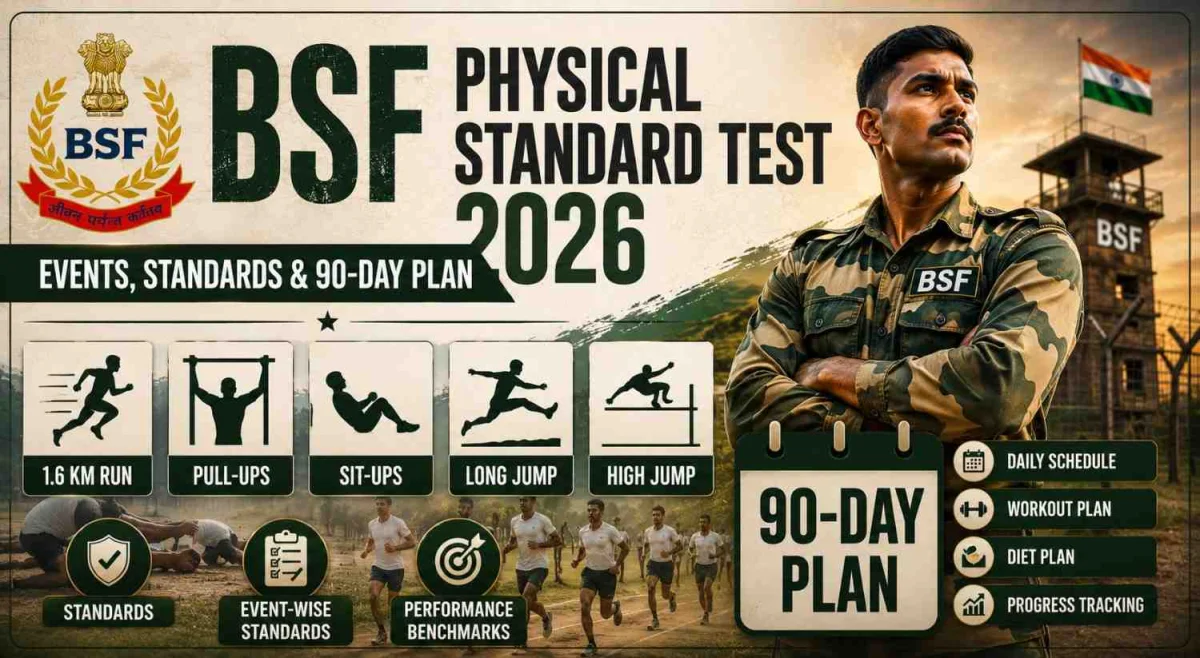
For many BSF aspirants, the written examination is only one part of the recruitment journey. The real challenge often begins after the written stage when candidates face the Physical Standard Test (PST) and Physical Efficiency Test (PET). Every year, thousands of candidates clear the written exam but fail during the physical stage because they underestimate the importance of fitness preparation.
The Border Security Force (BSF) is responsible for guarding some of the most sensitive borders of the country. Personnel are expected to work in deserts, mountains, forests, riverine areas, and difficult operational conditions. Because of this, the recruitment process includes strict physical standards to ensure candidates are capable of handling field duties and operational responsibilities.
Many aspirants wrongly assume that physical tests can be cleared with just a few weeks of running practice. However, physical fitness requires consistency, stamina, discipline, and proper preparation. Candidates who start early usually perform much better than those who wait until the last moment.
If you are preparing for BSF Recruitment 2026, understanding the complete PST and PET process can help you avoid common mistakes and improve your chances of selection.
Recent BSF and SSC GD recruitment standards continue to include height measurement, chest measurement, and running-based physical efficiency tests as important stages of the recruitment process.
What is the BSF Physical Standard Test (PST)?
The Physical Standard Test, commonly called PST, is conducted to verify whether candidates meet the required physical measurements prescribed by BSF recruitment rules.
Unlike the Physical Efficiency Test, PST does not evaluate stamina or running performance. Instead, it focuses on body measurements such as:
-
Height
-
Chest measurement
-
Weight standards
Candidates who fail to meet the required physical standards are usually eliminated from the recruitment process, regardless of their written exam score.
This is why checking your physical eligibility before applying is extremely important.
BSF Height Requirement 2026
Height is one of the first things checked during PST.
For most BSF Constable GD recruitments, the minimum height requirement remains:
Recent BSF recruitment standards continue to mention these height requirements for Constable-level recruitment.
Certain regions and categories may receive relaxation according to government norms, but candidates should always verify the official notification applicable to their recruitment cycle.
Why Height Standards Matter in BSF
Many candidates see height measurement as a simple formality, but it is actually an important operational requirement.
BSF personnel often perform:
-
Border patrol duties
-
Long-distance field movement
-
Surveillance operations
-
Security deployment in difficult terrains
Physical standards help ensure personnel can perform these duties effectively.
BSF Chest Measurement Standards 2026
Chest measurement applies mainly to male candidates.
During PST, both unexpanded and expanded chest measurements are checked.
The general chest standards are:
Recent BSF physical standard guidelines continue to mention these chest measurement requirements.
Female candidates are generally exempt from chest measurement requirements.
Weight Standards in BSF Physical Test
Weight is not evaluated through a fixed number for every candidate.
Instead, weight should be proportionate to:
-
Height
-
Age
-
Medical standards
Recent SSC GD and BSF eligibility guidelines continue to mention proportionate weight standards during medical and physical evaluation.
Candidates who are severely underweight or overweight may face difficulties during medical examination.
What is the BSF Physical Efficiency Test (PET)?
After clearing PST, candidates usually move to the Physical Efficiency Test.
PET focuses on stamina, endurance, and fitness rather than body measurements.
This stage is often considered the most challenging part of the physical process because candidates must perform under strict timing conditions.
BSF Running Test 2026
Running remains the most important part of PET.
For most BSF and SSC GD recruitments, the running standards are:
Recent SSC GD and BSF physical test standards continue to include these running requirements.
Candidates who fail to complete the run within the prescribed time are usually eliminated from the recruitment process.
Why Most Candidates Fail the Running Test
One of the biggest reasons candidates fail PET is poor preparation.
Many aspirants begin running only after the written examination, which gives them very little time to build stamina.
Common mistakes include:
-
Inconsistent practice
-
Poor breathing technique
-
Lack of endurance training
-
Improper diet
-
Panic during the test
Running performance improves gradually, which is why long-term preparation is much more effective than last-minute training.
Common Medical Issues That Cause Rejection
Even after clearing PST and PET, candidates must pass a detailed medical examination.
The medical board checks overall physical fitness and operational suitability.
Common reasons for rejection include:
-
Flat feet
-
Knock knees
-
Varicose veins
-
Vision problems
-
Hearing issues
-
Serious physical deformities
Recent BSF recruitment medical guidelines continue to mention these conditions as common medical concerns.
Candidates should therefore maintain overall health throughout preparation rather than focusing only on running.
Complete 90-Day BSF Physical Preparation Plan
Many aspirants ask how early they should begin physical preparation.
A structured 90-day plan is usually enough for most candidates if followed consistently.
The goal should not be only clearing the running event but developing overall stamina and fitness.
First 30 Days: Build Basic Stamina
The first month should focus on developing endurance gradually.
During this phase:
-
Run 2–3 km daily
-
Focus on steady pace rather than speed
-
Practice stretching regularly
-
Improve breathing control
Many beginners make the mistake of running too fast during the initial stage, which often leads to fatigue and injury.
The first month should be about building consistency.
Days 31–60: Increase Speed and Endurance
Once basic stamina improves, candidates should increase both distance and pace.
During this phase:
-
Run 4–5 km regularly
-
Include interval running sessions
-
Practice sprint finishing
-
Improve recovery speed
At this stage, the body gradually adapts to longer running distances.
Consistency remains more important than intensity.
Days 61–90: Match Exam-Level Standards
The final month should focus on achieving recruitment-level performance.
Candidates should:
-
Attempt full 5 km timing practice
-
Simulate actual PET conditions
-
Improve speed control
-
Practice under fatigue conditions
By this stage, candidates should aim to complete the running requirement comfortably rather than just barely meeting the cutoff.
Daily Fitness Routine for BSF Aspirants
Apart from running, candidates should also improve overall physical strength.
A balanced routine may include:
-
Running
-
Push-ups
-
Squats
-
Core exercises
-
Stretching sessions
These exercises improve endurance, posture, and injury resistance.
Remember that BSF duty requires overall fitness, not just running ability.
Importance of Diet During Physical Preparation
Many aspirants ignore nutrition while preparing for PET.
Fitness improvement depends heavily on proper recovery and nutrition.
Candidates should focus on:
-
Adequate protein intake
-
Hydration
-
Balanced meals
-
Reduced junk food consumption
Poor eating habits often reduce stamina and recovery speed.
Mental Preparation for Physical Tests
Physical performance is not only about fitness.
Many candidates who perform well during practice struggle during the actual test because of nervousness.
Mental preparation is equally important.
Candidates should:
-
Stay calm before the event
-
Avoid overthinking
-
Focus on pacing
-
Trust their training
Confidence improves performance significantly during PET.
Is the BSF Physical Test Difficult?
The answer depends on preparation.
For candidates who train consistently for several months, the physical test is usually manageable.
However, for those who neglect fitness and focus only on written preparation, PST and PET can become major obstacles.
The physical stage is designed to eliminate candidates who are not ready for operational service conditions.
Consistency is therefore the biggest factor behind success.
Final Tips Before the BSF Physical Test
As the physical test approaches, candidates should avoid sudden changes in training.
Focus on:
-
Regular practice
-
Proper sleep
-
Hydration
-
Injury prevention
Avoid excessive training during the final few days because fatigue can affect performance.
The objective should be arriving at the test physically fresh and mentally confident.
Conclusion
The BSF Physical Standard Test 2026 is one of the most important stages of the recruitment process. Height, chest measurement, weight standards, and running performance all play a major role in determining eligibility.
Many candidates underestimate the physical stage and focus only on written preparation, but successful BSF recruitment requires both academic and physical readiness.
A structured 90-day preparation plan, consistent running practice, proper nutrition, and overall fitness training can significantly improve your chances of clearing PST, PET, and medical examinations successfully.
For aspirants serious about joining the Border Security Force, physical preparation should begin as early as written exam preparation.
FAQs on BSF Physical Standard Test 2026
What is the height requirement for BSF GD 2026?
Male candidates generally require 170 cm height, while female candidates require 157 cm.
What is the BSF running requirement for male candidates?
Male candidates usually need to complete 5 km in 24 minutes.
What is the running requirement for female candidates?
Female candidates generally need to complete 1.6 km in 8.5 minutes.
Is chest measurement compulsory in BSF PST?
Yes, chest measurement applies to male candidates during PST.
Can candidates fail after clearing PET?
Yes, candidates must also clear the medical examination and document verification stages.


ZAP
June 4, 2026Zaproxy alias impedit expedita quisquam pariatur exercitationem. Nemo rerum eveniet dolores rem quia dignissimos.
ZAP
June 26, 2026Zaproxy alias impedit expedita quisquam pariatur exercitationem. Nemo rerum eveniet dolores rem quia dignissimos.