Agniveer Medical Test 2026: What is Checked & Common Rejection Reasons
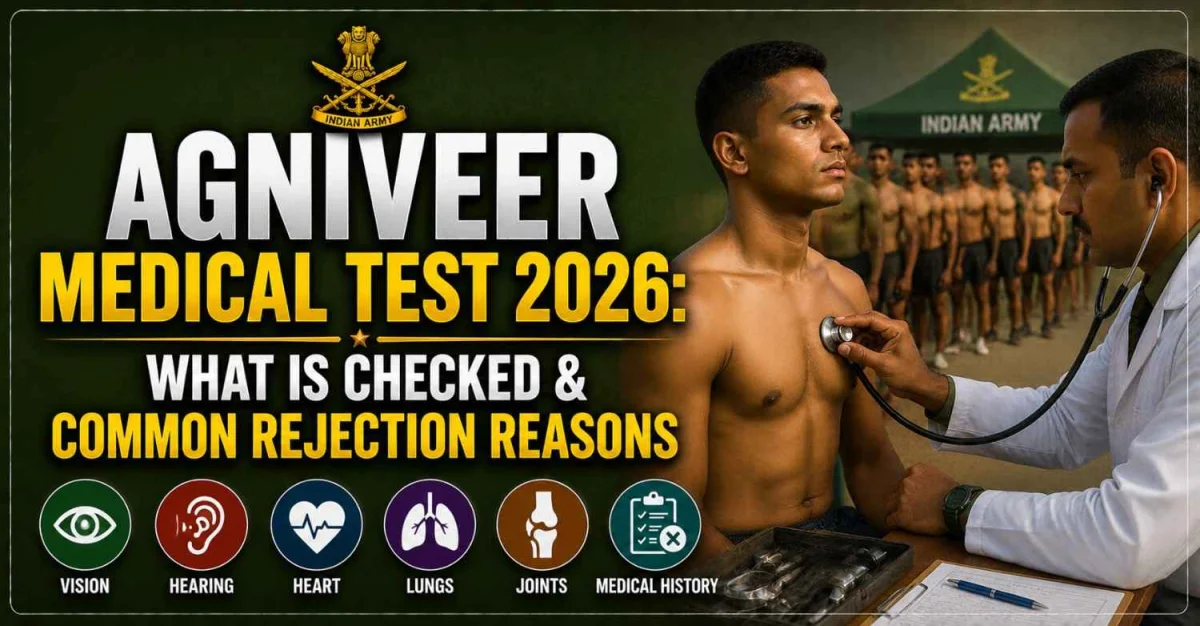
Learn everything about the Agniveer Medical Test 2026, including eyesight standards, medical examination, fitness criteria, common rejection reasons, and preparation tips.
Clearing the Agniveer written examination and Physical Fitness Test (PFT) is a significant milestone, but it does not guarantee final selection. One of the most important stages of the recruitment process is the Medical Examination, where candidates are thoroughly assessed to determine whether they are physically and medically fit to serve in the Indian Army.
Every year, a considerable number of candidates are declared medically unfit despite performing well in the written and physical stages. In most cases, this happens because they are unaware of the medical standards prescribed by the Army. Problems such as poor eyesight, knock knees, flat feet, untreated dental issues, or being overweight can lead to rejection even if a candidate has scored well in every previous stage.
The Agniveer Medical Test is not intended to eliminate candidates unnecessarily. Instead, it ensures that every selected recruit is capable of performing demanding military duties in difficult terrains, extreme weather conditions, and high-pressure operational environments. Soldiers are expected to maintain excellent physical and mental health throughout their service, which is why the medical examination follows strict standards.
If you are preparing for Agniveer Army Recruitment 2026, understanding the medical requirements well in advance can help you identify and resolve treatable health issues before appearing for the examination. In this guide, we'll explain everything that is checked during the Agniveer Medical Test 2026, the most common reasons candidates are rejected, and practical tips to improve your chances of being declared medically fit.
Why the Agniveer Medical Test is Important
The Indian Army operates in some of the world's toughest environments, including deserts, mountains, forests, glaciers, and high-altitude areas. Soldiers often work under physically demanding and stressful conditions where medical fitness is just as important as physical strength.
The medical examination ensures that every candidate is capable of handling these challenges safely and efficiently.
During the examination, doctors evaluate a candidate's overall health rather than focusing on just one or two body parts. Even minor medical issues that could affect military duties may require treatment before selection.
Agniveer Selection Process
To understand the importance of the medical stage, it is useful to know where it fits within the recruitment process.
The Agniveer Army selection process generally consists of:
-
Online Common Entrance Examination (CEE)
-
Physical Fitness Test (PFT)
-
Physical Measurement Test (PMT)
-
Medical Examination
-
Final Merit List
Only candidates who successfully clear the written examination and physical stages are called for the medical examination.
What is Checked During the Agniveer Medical Test?
The medical examination is comprehensive and covers almost every major aspect of a candidate's health.
The objective is to ensure that the candidate is physically capable of undergoing military training and performing operational duties.
General Physical Examination
The examination usually begins with a general assessment of the candidate's overall physical condition.
Doctors observe:
-
Body posture
-
General appearance
-
Physical development
-
Signs of chronic illness
-
Overall fitness
Candidates who maintain a healthy lifestyle and regular exercise routine generally perform well during this stage.
Height, Weight and Body Proportion
Although height is verified during the Physical Measurement Test, doctors once again assess whether the candidate's overall body structure is medically suitable.
Height
Height should meet the prescribed standards applicable to the candidate's region and recruitment category.
Weight
Weight should be proportionate to:
-
Height
-
Age
-
Body structure
Candidates who are significantly overweight or underweight may be advised further evaluation or declared medically unfit if they do not meet the prescribed standards.
Eye Examination
The eye examination is one of the most important parts of the medical test.
Doctors assess:
-
Distant vision
-
Near vision
-
Colour vision
-
Eye alignment
-
Overall eye health
The Army expects candidates to have good visual standards suitable for military duties.
The medical board also checks for:
-
Colour blindness
-
Squint
-
Cataract
-
Corneal disorders
-
Other eye diseases
Candidates with significant visual defects that do not meet Army standards may be declared medically unfit.
Ear, Nose and Throat (ENT) Examination
The ENT specialist examines:
-
Ears
-
Nose
-
Throat
-
Sinuses
The purpose is to identify:
-
Hearing problems
-
Chronic ear infections
-
Nasal blockage
-
Throat disorders
Clear hearing and healthy respiratory passages are essential for operational efficiency.
Hearing Test
The Army requires candidates to hear commands clearly under various operational conditions.
Doctors check whether candidates have:
-
Normal hearing
-
No chronic ear disease
-
No hearing impairment
Candidates with severe hearing loss or persistent ear problems may not qualify medically.
Dental Examination
Good oral health is another important requirement.
Doctors generally examine:
-
Missing teeth
-
Dental cavities
-
Gum health
-
Bite alignment
-
Oral hygiene
Untreated dental infections or major dental problems may require treatment before final selection.
Heart and Lungs Examination
Military service demands excellent cardiovascular and respiratory health.
Doctors assess:
-
Heart function
-
Blood pressure
-
Chest condition
-
Lung function
-
Breathing efficiency
Candidates suffering from serious heart or lung disorders may not be considered medically fit for military service.
Musculoskeletal Examination
One of the most carefully evaluated parts of the medical examination is the musculoskeletal system.
Doctors check:
-
Bones
-
Joints
-
Muscles
-
Spine
-
Body movement
The examination ensures that candidates can perform physically demanding military tasks without limitations.
Mental Health Assessment
The Army also evaluates a candidate's overall mental fitness.
Candidates should demonstrate:
-
Emotional stability
-
Mental alertness
-
Sound judgment
-
Normal behaviour
Good mental health is essential because military duties often involve stressful operational environments.
Common Reasons for Medical Rejection
Many candidates who clear the written examination fail during the medical stage because of conditions that could have been identified earlier.
Understanding these common reasons helps aspirants prepare better.
Poor Eyesight
One of the leading causes of rejection is eyesight that does not meet the prescribed standards.
Problems include:
-
Weak vision
-
Colour blindness
-
Squint
-
Serious eye disorders
Regular eye check-ups before recruitment are advisable.
Flat Feet
Candidates with significant flat feet may experience difficulty during prolonged running, marching, and military training.
Flat feet are carefully examined during the medical test.
Knock Knees
Knock knees affect balance, running efficiency, and endurance.
Candidates with this condition may be declared medically unfit depending on the severity.
Obesity or Underweight
Candidates whose weight is not proportionate to their height may face medical rejection.
Maintaining a healthy body composition is important throughout the preparation period.
Hearing Problems
Partial hearing loss or chronic ear diseases can affect communication during military operations.
Candidates should seek treatment if they experience hearing-related issues before recruitment.
Dental Problems
Serious dental issues such as multiple missing teeth, severe infections, or untreated gum disease may result in temporary or permanent medical unfitness.
Maintaining proper oral hygiene and visiting a dentist before recruitment is recommended.
Chronic Diseases
Candidates suffering from serious medical conditions may be declared medically unfit.
Examples include:
-
Heart disease
-
Severe asthma
-
Chronic respiratory illness
-
Serious neurological disorders
-
Physical disabilities affecting military duties
Can You Appeal Against Medical Rejection?
Yes.
Candidates declared medically unfit are generally provided an opportunity to appear for a Review Medical Examination (RME) according to the recruitment rules.
If a candidate believes that the initial assessment was incorrect or if a temporary medical condition has improved, they may submit an appeal within the prescribed time limit mentioned in the recruitment notification.
The Review Medical Examination is conducted by another authorized medical board.
How to Prepare for the Agniveer Medical Test
Medical fitness cannot be achieved overnight. The best preparation begins several months before recruitment.
Maintain Physical Fitness
Exercise regularly through:
-
Running
-
Strength training
-
Stretching
-
Mobility exercises
A fit body generally supports better overall health.
Get a Medical Check-up
A complete health examination before recruitment helps identify treatable problems such as:
-
Vision defects
-
Dental issues
-
Ear infections
-
High blood pressure
Early treatment can prevent unnecessary rejection later.
Maintain Healthy Weight
Follow a balanced diet rich in:
-
Protein
-
Fruits
-
Vegetables
-
Whole grains
Avoid excessive junk food and sugary drinks.
Take Care of Your Eyes
Avoid ignoring vision problems.
Consult an ophthalmologist if you experience blurred vision or other eye-related concerns.
Improve Oral Hygiene
Brush regularly, treat cavities, and visit a dentist if necessary.
Good dental health contributes to successful medical clearance.
Common Myths About the Agniveer Medical Test
Many candidates become unnecessarily anxious because of misinformation.
"Only eyesight matters."
No. The medical examination evaluates the entire body, including hearing, heart, lungs, bones, joints, dental health, and general fitness.
"Minor health issues always lead to rejection."
Not necessarily.
Many minor medical conditions are treatable and do not automatically result in permanent rejection.
"Medical preparation starts after clearing the written exam."
This is a common mistake.
Candidates should focus on medical fitness from the beginning of their preparation journey.
Final Verdict
The Agniveer Medical Test 2026 is one of the most important stages of the recruitment process because it ensures that future soldiers are medically capable of serving in demanding operational environments. The examination covers eyesight, hearing, dental health, heart, lungs, bones, joints, weight, and overall physical and mental fitness.
Many common reasons for rejection—such as poor eyesight, flat feet, knock knees, obesity, untreated dental issues, and chronic illnesses—can often be identified and addressed well before recruitment. Candidates who maintain a healthy lifestyle, undergo regular medical check-ups, and understand the prescribed standards significantly improve their chances of clearing the medical examination.
Rather than treating the medical test as the final hurdle, view it as an opportunity to ensure that you are truly ready for the responsibilities and challenges of military life.
FAQs
What is checked during the Agniveer Medical Test?
The medical examination includes eyesight, hearing, ENT, dental health, height, weight, heart, lungs, musculoskeletal system, and overall physical and mental fitness.
Can poor eyesight lead to rejection?
Yes. Candidates must meet the prescribed Army vision standards. Serious eyesight defects that do not satisfy the required criteria may result in medical rejection.
Are flat feet and knock knees checked?
Yes. Both flat feet and knock knees are carefully examined because they can affect running, marching, and overall military performance.
Can I appeal against medical rejection?
Yes. Eligible candidates may apply for a Review Medical Examination (RME) according to the recruitment rules and timelines specified in the official notification.
How can I prepare for the Agniveer Medical Test?
Maintain a healthy weight, exercise regularly, get a complete medical check-up, treat eye or dental problems early, eat a balanced diet, and follow a disciplined lifestyle throughout your preparation.